Oil gave back most of Monday’s gains after Israel and Iran halted hostilities that had threatened to derail already fragile efforts to secure a broader peace agreement in the Middle East, Saxo Bank said in a statement posted on its website on Tuesday.
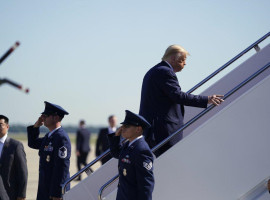
The bank noted in the statement that U.S. President Donald Trump “maintained his typically optimistic tone, saying negotiations are in the ‘final throes’ of what he expects will be a successful deal”.
In a market analysis sent to Rigzone today, Naeem Aslam, CIO Zaye Capital Markets (ZCM), highlighted that Brent and West Texas Intermediate oil was trading “with a cautious tone after the latest pause in Israel-Iran hostilities”.
Aslam outlined in that analysis that ZCM sees crude moving between two forces.
“The geopolitical risk premium is still present, but U.S. President Donald Trump’s call for Israel and Iran to stop shooting has reduced immediate supply-panic buying,” Aslam said.
“That is why oil has struggled to hold a stronger move higher, even though Middle East risk has not disappeared,” he added.
Aslam noted in the analysis that the main pressure on oil comes from the belief that de-escalation can cool the war-risk premium.
“Trump’s comments that both sides should stop shooting and that oil prices can come down if tensions ease are directly bearish for crude when traders believe shipping routes and regional supply flows may stabilize,” Aslam said.
“However, the blockade remaining in force until a final deal means oil’s downside is not clean. The market is still pricing the risk that any breakdown in talks could quickly bring supply disruption fears back into Brent and WTI,” he warned.
Aslam went on to state that yesterday’s economic data added a softer macro layer to energy sentiment.
“May one-year inflation expectations fell to 3.46 percent from 3.64 percent, while three-year expectations dipped to 3.13 percent from 3.15 percent,” he noted.
“For oil, this matters because lower inflation expectations can support rate-cut hopes and future demand, but they can also reduce the urgency of energy hedging if consumers believe fuel and transport costs are cooling,” he added.
“OPEC’s latest view still points to 2026 oil demand growth of 1.17 million barrels per day, while the IEA’s May report forecasts world oil demand contracting by 420,000 barrels per day year-over-year to 104 million barrels per day, with 2Q26 demand down 2.45 million barrels per day,” he pointed out.
Aslam went on to state in the analysis that, “with nothing important on today’s economic calendar”, oil prices “will likely be driven by geopolitics, tanker flows, the U.S. dollar, Treasury yields, inventories and whether the market trusts the pause in hostilities”.
“If calm holds, crude may remain under pressure as traders remove part of the risk premium,” he said.
“If tensions return, oil can quickly rebound as markets refocus on supply security, OPEC spare capacity and refinery demand,” he added.
“At Zaye Capital Markets, we see the current oil ecosystem as a tug-of-war between political de-escalation and physical supply uncertainty, not a simple demand story,” he continued.
In a market analysis sent to Rigzone on Monday, Crispus Nyaga, Research Analyst at Empire FX, pointed out that oil prices moved higher yesterday, “reversing recent losses as renewed military exchanges in the Middle East raised fresh doubts about the durability of ongoing diplomatic efforts”.
“The renewed hostilities have revived concerns that oil flow disruptions may persist at a time when physical market conditions are already becoming increasingly strained,” Nyaga warned in that analysis.
“At the same time, the market’s ability to absorb the shortfall in oil volumes could see increased strain as stockpiles have been steadily eroded, while exports from the region were greatly reduced,” Nyaga added.
Looking ahead in that analysis, Nyaga said oil markets “are likely to remain highly sensitive to developments in the Middle East and any additional impact on energy infrastructure”.
“If diplomatic efforts regain momentum, prices could face renewed selling pressure, although the limitations of the normalization process could constrain the pace of any price corrections,” Nyaga said.
“However, any further deterioration in regional stability risks extending supply disruptions and reinforcing the current upward bias in crude markets,” Nyaga added.
Rigzone has contacted the White House, the Iranian Ministry of Foreign Affairs, and the Israeli Ministry of Foreign Affairs for comment on Saxo Bank, Aslam, and Nyaga’s statements. At the time of writing, none of the above have responded to Rigzone.
To contact the author, email