Leningrad unit 3 gets approval to operate to 2030

Tuesday, 4 February 2025
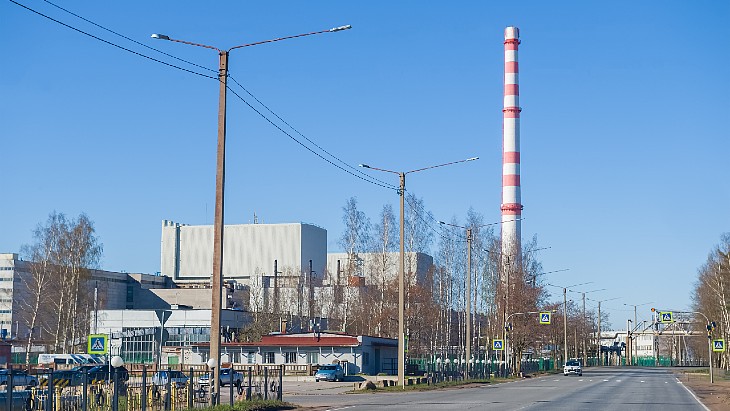
Leningrad unit 3 gets approval to operate to 2030
(Image: sikaraha/stock.adobe.com)

The RBMK-1000 unit, which entered commercial service in 1980, has generated more than 290 billion kWh of electricity, and had already had its original 30-year operating life extended by 15 years.

Rosenergoatom said that the licence was issued after a comprehensive analysis of the condition of equipment and documentation to ensure the unit’s compliance with modern safety and reliability requirements, as well as the implementation of measures to modernise equipment where necessary.

It said that the assessment concluded that it would be safe to extend operation to 50 years.

Director of the Leningrad NPP Vladimir Pereguda, said: “Work to extend the lifetime of existing power units of Russian nuclear power plants has been carried out since 1998. Our units are no exception. An additional period of operation is not only about generating electricity. These are jobs, and the continuation of the production of unique isotope products, and systematic work on the construction and commissioning of two more new VVER-1200 units.”

The operator is also in the process of seeking a licence for the operation of Leningrad unit 4 to 2030. Elsewhere in Russia, work is taking place to extend the lifetimes of Kursk 3 and 4, Smolensk 1, 2 and 3 and Kalinin unit 1.

The Leningrad plant is one of the largest in Russia, with an installed capacity of 4400 MWe, and provides more than 55% of the electricity demand of St Petersburg and the Leningrad region, or 30% of all the electricity in northwest Russia.

Leningrad units 1 and 2 – both 1000 MWe RBMK units – shut down in 2018 and 2020, respectively. As the first two of the plant’s four RBMK-1000 units shut down, new VVER-1200 units started at the neighbouring Leningrad II plant. The 60-year service life of these fifth and sixth units (also known as Leningrad II-1 and Leningrad II-2) secures power supply until the 2080s. Units 7 and 8 – scheduled to be commissioned in 2030 and 2032 respectively – will replace units 3 and 4 as they are shut.
   

  • Related Posts

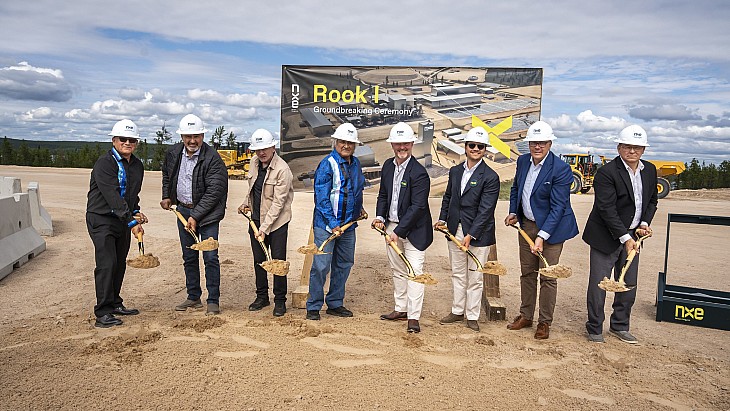
    Construction starts at Saskatchewan uranium mine

    The groundbreaking ceremony comes after the company received the final regulatory approval for the project – described by NexGen as the largest development-stage uranium project in Canada – in March.…

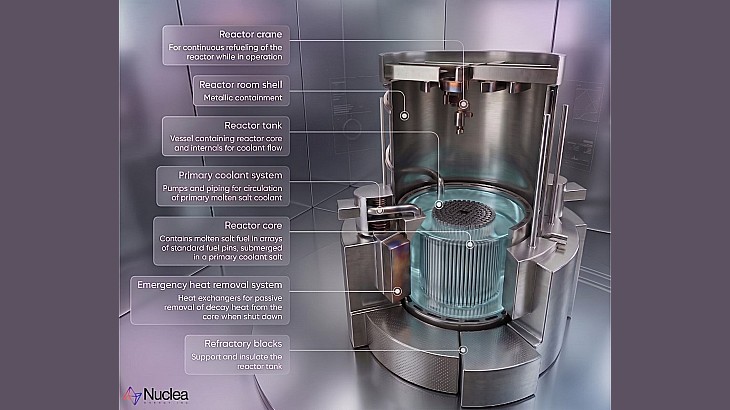
    Nuclea Energy to acquire Moltex Energy technology portfolio

    Ontario-headquartered Nuclea is designing the Morpheus microreactor, a compact, transportable and factory-fabricated lead-cooled, graphite-moderated microreactor which is currently in the conceptual design stage. The Moltex asset acquisition would extend Nuclea’s…

    Have You Seen?

    Kazakhstan Accuses Big Oil of $10.7 Billion Corruption in Kashagan Oil Project

    • August 15, 2026
    Kazakhstan Accuses Big Oil of $10.7 Billion Corruption in Kashagan Oil Project

    Hormuz Tanker Traffic Slumps as U.S.-Iran Standoff Drags On

    • August 14, 2026
    Hormuz Tanker Traffic Slumps as U.S.-Iran Standoff Drags On

    Vance Says Cheap Oil and Gas Is Top U.S. Priority in Iran War

    • August 14, 2026
    Vance Says Cheap Oil and Gas Is Top U.S. Priority in Iran War

    Middle East Oil Tankers Are Going Dark for Longer

    • August 14, 2026
    Middle East Oil Tankers Are Going Dark for Longer

    Drone Strike Sparks Blaze at Key Russian Oil and Fuel Terminal

    • August 14, 2026
    Drone Strike Sparks Blaze at Key Russian Oil and Fuel Terminal

    Hormuz Crisis Pushes Asian Refiners Toward U.S. Oil

    • August 14, 2026
    Hormuz Crisis Pushes Asian Refiners Toward U.S. Oil

    India’s Coal Demand Set to Hit 1.6 Billion Tons by 2030

    • August 14, 2026
    India’s Coal Demand Set to Hit 1.6 Billion Tons by 2030

    Holcim UAE starts cement carbon capture pilot project

    • August 14, 2026
    Holcim UAE starts cement carbon capture pilot project

    Qatar Ras Laffan train five ‘goes offline’

    • August 14, 2026
    Qatar Ras Laffan train five ‘goes offline’

    Vietnam’s Bac Ninh semiconductor investment hits $2.7bn

    • August 14, 2026
    Vietnam’s Bac Ninh semiconductor investment hits $2.7bn