Long-dated prices still support drilling as buyers seek alternatives to Middle East barrels.
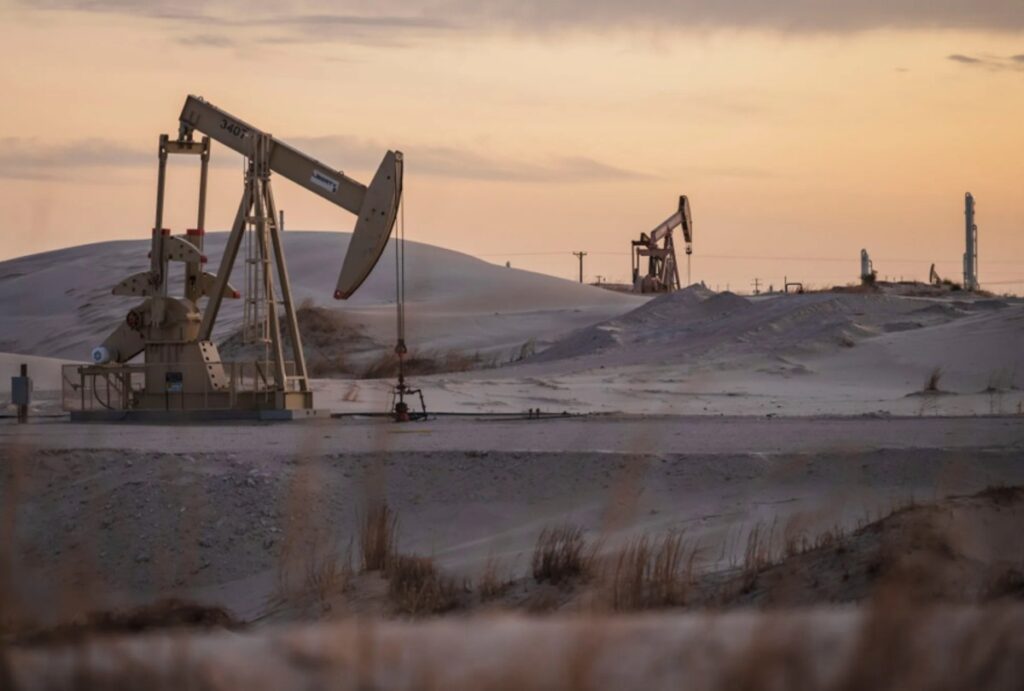
Just over a month ago, shale heavyweight Diamondback Energy Inc. announced the “light has turned green” for US production growth.
With oil trading for more than $100 a barrel at that point as the war in Iran strangled supplies, crude buyers were looking to the Americas, and particularly Texas, to ease production shortfalls from the Middle East.
Get the Latest US Focused Energy News Delivered to You! It’s FREE:
Since then, oil has dropped by nearly 30%, and President Donald Trump continues to assure markets that the flow of tankers through the Strait of Hormuz will soon recover to prewar levels once a memorandum of understanding is signed later this week.
At first glance, it appears shale decided to ramp up at exactly the wrong time. Yet the futures market suggests producers can afford to look past a temporary wartime spike.
Long-dated crude prices remain high enough to support drilling for years, even as spot prices retreat. US shale operators can sell their production at more than $70 a barrel all the way through mid-2027. Importantly, futures are pricing crude for delivery through 2029 at $66 a barrel or more, the average needed to profitably drill a well, according to the Federal Reserve Bank of Dallas.
Such prices are still “pretty enticing” to US producers, said Rebecca Babin, an energy-focused senior equity trader for CIBC Private Wealth. That’s especially when you consider mid-2027 prices were about 15% lower before the US-Iran war.
“There’s probably a bigger pull on US barrels” because buyers want “that secure kind of barrel without a lot of risk being built in,” Babin said at the Bloomberg Live Energy Security Briefing on June 12. Demand for US crude has soared since the war in Iran began, with exports reaching a record high.
Exxon Mobil Corp., Continental Resources Inc. and Matador Resources Co. are among the US shale operators looking to increase production this year. While they haven’t updated those plans in the days since the peace deal has become more concrete, industry observers are counting on demand for non-Gulf barrels to persist.
If the market is right, the value of future US production extends beyond the latest disruption in the Middle East.
—Kevin Crowley, Bloomberg News
Share This:
More News Articles