By
57 min ago 3 min read
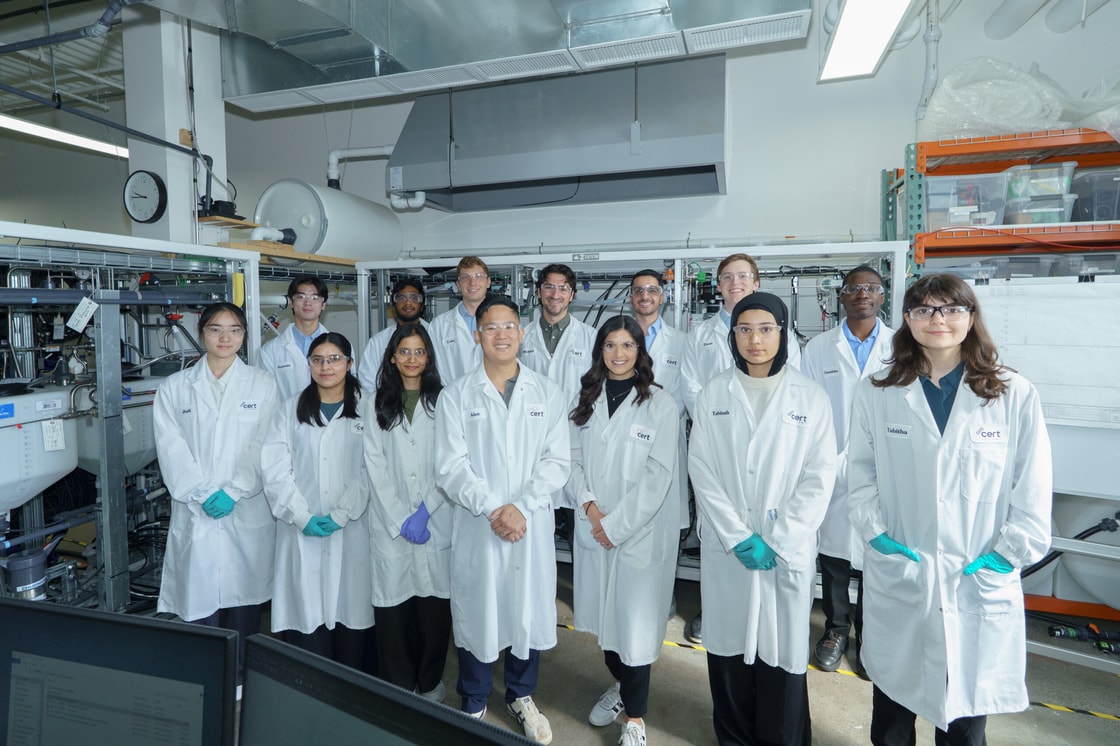
Clean technology and carbon-conversion company Cert Systems is targeting its first pilot by the end of this year and demo module within 18 months after being awarded Carbon X 2.0 prize funding.
The company transforms industrial carbon dioxide (CO₂) emissions into essential chemical building blocks like ethylene and renewable fuels, using only water and electricity. It received funding in the carbon capture and utilisation category, along with US-based Seerstone.
Speaking to gasworld, Cert Systems’ Co-Founder and Co Alexander Ip said, “The way our technology works, it’s very much like a modular system, so we’re always looking at ways we can accelerate it with the right partners.”
CO₂ electrolysis durability is currently limited by carbonate precipitation, catalyst degradation, anion-exchange membrane (AEM) failure, and electrode flooding.
“We’ve put a lot of focus on the durability side of things and been able to demonstrate into the thousands of hours of continuous operation,” added Ip.
“In our previous version we had a large range of byproducts coming out of the process – but with the revised one, mostly separating out ethylene and hydrogen, it makes things easier and more cost effective.”
“Obviously electricity cost and availability is one of the bottlenecks for scaling, so sourcing that is something we’re always looking at. We can ramp up and down relatively easily, so we can take demand of renewable electricity when there’s lower demand and higher generation, and that will mean the costs are lower.”
He said its key focus will now be on certification. “We don’t really have concerns about that but it obviously needs to be done for certain applications.”
He was confident that for sustainable aviation fuels (SAF), ethylene is a “really good feedstock” and it sees a good pathway for scaling it into the SAF market.
“The policy mandates are making a lot of airlines sweat about how they’re going to supply it, so that’s where we see a really big growth opportunity, post 2030,” he added.
Ip said he was still optimistic about hydrogen, despite the well-documented challenges.
“I think a lot of the key [benefits] will be where it is used that we can reduce emissions,” he said. “Maybe a couple of years ago there was a lot of hype, and I think for all these technologies, you have to look at where it really makes a lot of sense, and where it is already being used and easy to substitute in.”
The CarbonX program was initiated by Chinese firm Tencent, together with industry and investment partners. It is dedicated to supporting emerging low-carbon technologies with catalytic funding and resources, focusing on CCUS, carbon removal and energy storage. It aims to build first-of-its-kind pilot projects in real industrial settings, incubate high-potential startups and support capacity-building projects.
Tencent announced 16 winners of CarbonX 2.0, a global initiative designed to help promising climate solutions grow and scale. The winners will receive a share of nearly $30m in catalytic funding, supported by technical resources, expert networks, and opportunities to pilot and scale their solutions for real-world impact.