By
17 min ago 2 min read
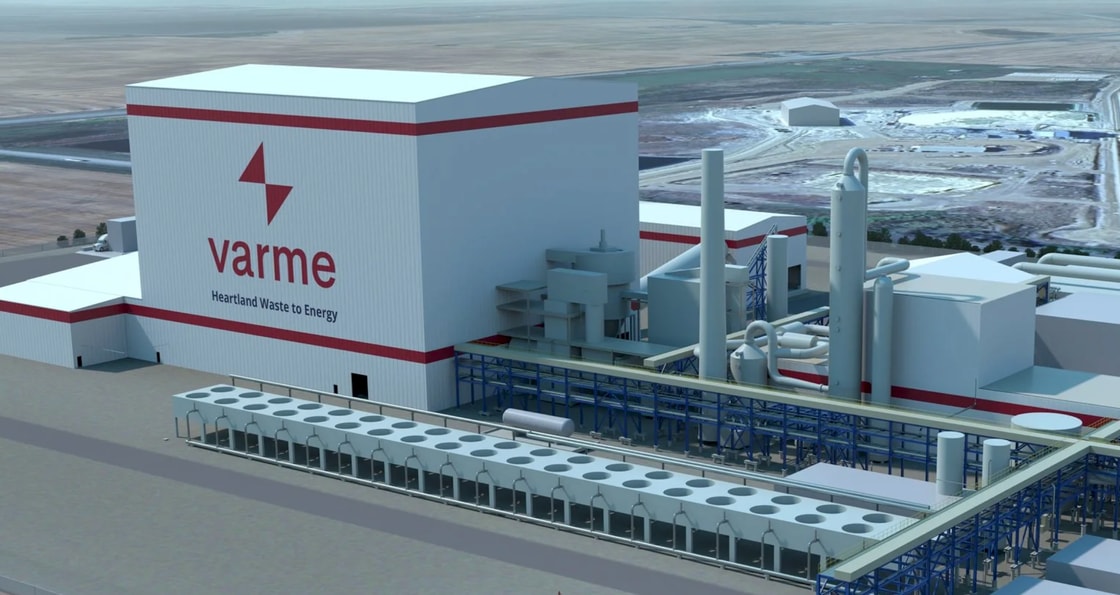
Plans for a waste-to-energy plant in Edmonton are under threat after Canada amended its national industrial carbon price.
The price was supposed to rise to C$170 ($119) a tonne by 2030, but a revised deal last month between Prime Minister Mark Carney – who referred to Canada’s carbon market as “broken” – and Alberta Premier Danielle Smith means the price would instead reach C$115 ($81) per tonne by 2030, with a floor price of C$60 ($42), and C$140 ($98) by 2040.
For plant developer Varme Energy, the policy change is putting pressure on commercial viability. The project, which is target final investment decision in 2026, has an expected operating cost of about C$118 ($83) a tonne. The facility aims to convert municipal solid waste from Edmonton into electrical power.
Writing in the Edmonton Journal, CEO Sean Collins said the winds of policy have changed the equation.
“The carbon revenues to most projects are materially below that figure (C$118). One of the strongest carbon contracts available in Canada still leaves Varme losing more than C$30 ($21) per tonne before accounting for capital costs, which is no mere financing challenge.”
“Meanwhile in the US, permanently sequestered carbon can generate the equivalent of roughly C$120 ($84) per tonne through American federal incentives alone, plus they can still sell their CO2.”
Varme supported a 13-company coalition requesting Bio-CCS and direct air capture tax credits are harmonised.
Collins added that a straightforward solution exists, to allow geologically stored carbon removal credits from Canadian carbon capture projects to trade into the clean fuel regulations market.
“The result would be a win-win. Lower compliance costs help keep fuel prices down for all Canadians while carbon removal projects gain access to the revenues needed to attract investment, secure financing and get built.”
The Canadian government announced for five carbon capture, utilisation and storage (CCUS) projects in March, in a bid to advance storage validation, CO2 tracking, and industrial utilisation technologies.