The Energy Secretary commissioned Great British Energy – Nuclear (GBE-N) in late 2025 to conduct a technical study into potential suitable areas in Scotland for possible new nuclear developments in the future, including small modular reactors or large-scale power plants.
“This study focused on land types of particular interest; specifically, former and existing nuclear and other energy generation sites, brownfield sites and previously undeveloped land, with particular interest in land areas designated for development or adjacent to existing infrastructure,” says. “Several areas of interest have been found in all categories: there are strong candidates in the first two categories, whilst there are also areas of apparently undeveloped land that may satisfy the constraints with varying potential. All prospects are either coastal or sited on major rivers or estuaries.”
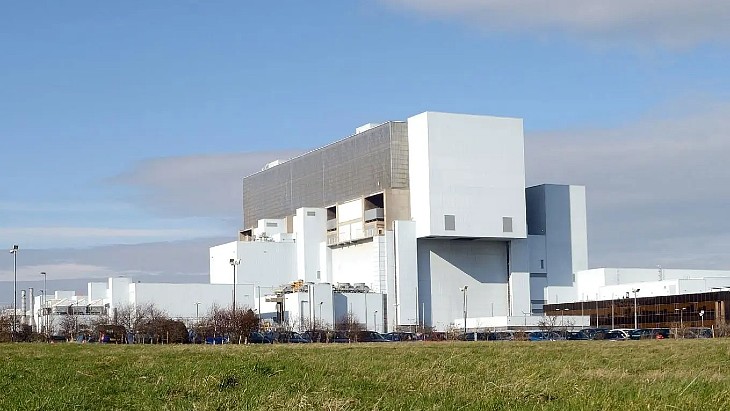
The study identified the following areas currently associated with nuclear power: Torness, East Lothian; Dounreay, Caithness; and Hunterston, North Ayrshire. It also identified other potential areas around the Firth of Forth Estuary and the eastern coast of Scotland.
“The land areas identified by the study are not intended to provide an exhaustive list of potentially suitable locations in Scotland,” GBE-N notes. “Identification of any land area as potentially suitable does not imply endorsement or development intent. Confirmation of site suitability would only be achievable through detailed, site-specific assessment and the application of the full regulatory and planning processes, including early and extensive engagement with communities and stakeholders.”
In November, GBE-N was further commissioned to undertake a wider study to consider land areas potentially suitable for deploying large-scale reactor technology in England, Wales and Scotland. That study – due to conclude later this year – will “substantially improve understanding of the relative value of the land areas identified in this report”, GBE-N said.
Nuclear policy is set at a UK-wide level by the UK government. Scotland has a long history of nuclear energy generation and hosts a small number of nuclear energy facilities, the majority of which are now being decommissioned. However, the Scottish government has a long-standing policy that it will not grant planning consent to new nuclear projects in Scotland.
“Should the policy position of the Scottish government change, specific local considerations and uncertainties notwithstanding, several significant land areas appear to offer suitable terrain, ready access to a source of cooling water, transport access by road, rail and sea as well as access to a skilled workforce, indicating a new nuclear power plant could be hosted,” GBE-N said. “UK ministers remain open to discussions with the Scottish government on deploying new nuclear technologies in Scotland.”
Energy Minister Michael Shanks said: “For decades, thousands of Scots have worked in the nuclear sector and provided the country with low-carbon, reliable power. This new report shows there is potential for new nuclear in Scotland, which could boost the country’s energy security and deliver new jobs.”
Tom Greatrex, Chief Executive at the Nuclear Industry Association, said the report “confirms what nuclear communities have long known: Scotland has excellent potential to host new nuclear projects. With suitable sites, a highly skilled workforce, and decades of nuclear expertise, Scotland is ready to benefit from the next generation of nuclear technologies”.