By
1 min ago 2 min read
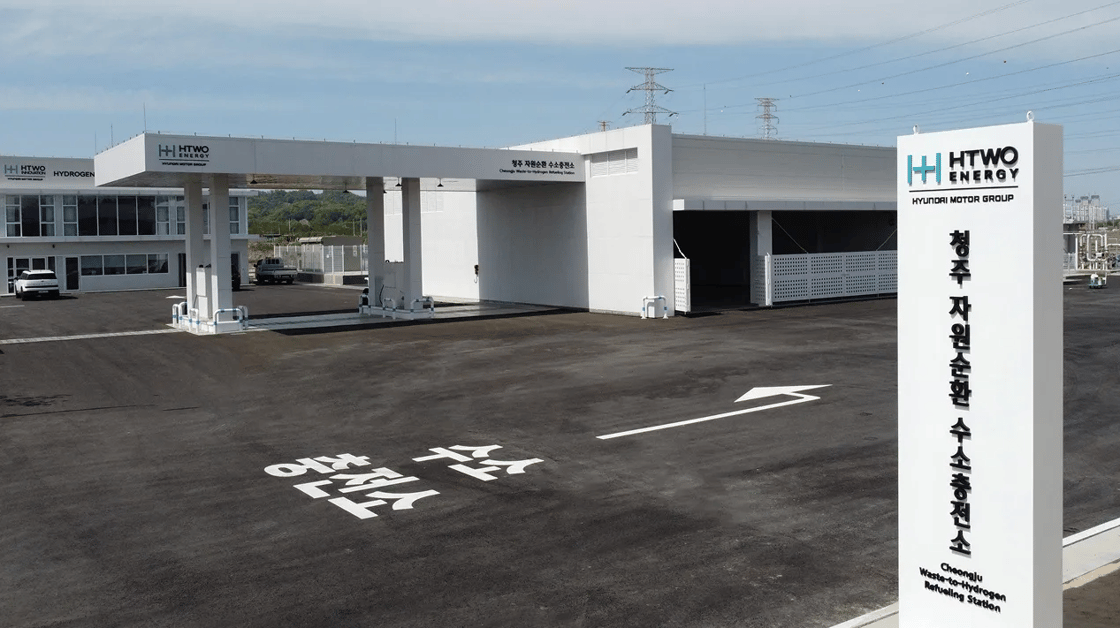
Hyundai Motor Group has completed its 500kg per day waste-to-hydrogen (W2H) facility in North Chungcheong Province, South Korea, with plans to upgrade capacity to two tonnes-per-day by 2030.
Constructed at a wastewater treatment site, the HTwo Energy Cheongju project produces clean hydrogen using biogas extracted from sewage sludge.
The facility purifies biogas into biomethane, which is then steam reformed to produce hydrogen and carbon dioxide (CO2).
Hyundai said the hydrogen will supply an on-site refuelling station with capacity to fill 100 fuel cell cars per day, while CO2 will be purified and compressed.
It comes after Cheongju city was selected by South Korea’s Hydrogen City Development project last year, a major Ministry of Land, Infrastructure and Transport initiative aiming at widespread hydrogen adoption in 40% of cities by 2040.
Hyundai said it is “actively pursuing” further W2H projects alongside domestic and international entities.
In May, it backed efforts to build a , integrating W2H processes by the end of 2030, and has also been advancing technologies to produce hydrogen from plastic waste streams.
South Korea already produces around 2.5TWh of biogas per year from landfill gas and sewage sludge. With plans to increase production, other players are looking to produce hydrogen from the gas.
Last month, US-based Utility Global said it could build its off-gas-to-hydrogen plant at an anaerobic digester in Daejeon with industrial manufacturing firm Samjin E&I.
Never miss a hydrogen headline
Hydrogen moves fast – stay on top of it with our daily and weekly briefings.
- Daily: The top five hydrogen stories, straight to your inbox
- Weekly: The week’s biggest news, features, interviews and analysis
- North American Bulletin: Dedicated coverage of the region’s key hydrogen developments