Explained: Virtual Power Plants (VPPs)—Connecting Solar, Storage and Smart Loads into One Intelligent Power Plant

As renewable energy becomes increasingly decentralized, electricity is no longer generated solely by large power stations. Rooftop solar systems, Battery Energy Storage Systems (BESS), electric vehicles (EVs), and flexible energy consumers are emerging as valuable energy resources. The challenge, however, is coordinating thousands of these distributed assets to operate efficiently. This is where Virtual Power Plants (VPPs) are transforming the modern power system.

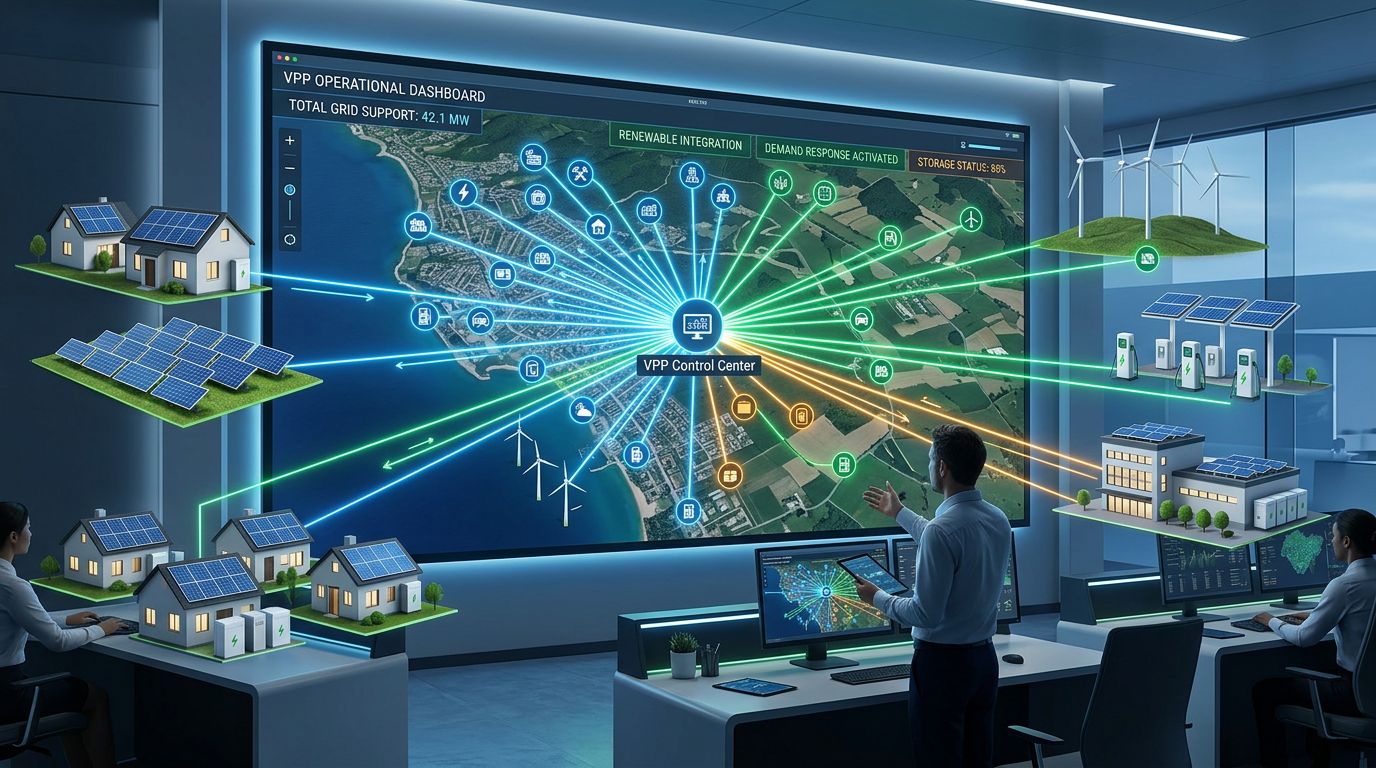
A Virtual Power Plant (VPP) is a digitally connected network of distributed energy resources (DERs) that are managed and operated as a single, coordinated power plant. Unlike conventional power plants that generate electricity from one location, a VPP aggregates numerous smaller assets—including rooftop solar, battery storage, EV chargers, smart appliances, and controllable industrial loads—through cloud-based software and advanced communication technologies.

A VPP continuously collects real-time data from connected assets, including electricity generation, battery charge levels, weather forecasts, and grid demand. Using artificial intelligence, predictive analytics, and energy management software, the platform determines when individual resources should generate, store, or consume electricity. This coordinated operation helps balance electricity supply and demand while maximizing renewable energy utilization.

Although both integrate distributed energy resources, a VPP and a microgrid serve different purposes. A microgrid is a localized electrical network that can operate independently of the main grid during outages. A VPP, on the other hand, remains connected to the wider electricity network and virtually coordinates geographically dispersed assets to provide grid support and participate in electricity markets.

Virtual Power Plants offer significant benefits for renewable-rich power systems. They improve grid flexibility by shifting energy consumption, optimizing battery dispatch, reducing peak demand, and minimizing renewable curtailment. VPPs can also provide ancillary services such as frequency regulation and voltage support, enhancing overall grid reliability without requiring major investments in new generation infrastructure.

The widespread adoption of VPPs depends on interoperable communication standards, robust cybersecurity, supportive regulatory frameworks, and active consumer participation. As distributed energy resources continue to grow, VPPs are expected to become a cornerstone of future electricity systems. By intelligently coordinating thousands of decentralized assets, they are enabling cleaner, more flexible, and more resilient power grids—demonstrating that the power plant of the future may not be a single facility, but a connected network working as one.


Subscribe to get the latest posts sent to your email.
 

  • Related Posts

    Brazil’s Clean Energy Ecosystem Enters a New Era Ahead of The smarter E South America 2026  

    Brazil’s clean energy transition is no longer defined by solar power alone. While the country continues to lead Latin America in photovoltaic (PV) deployment, the next phase of growth is…

    Dinto Solar Signs 20 MW HJT Module Distribution Agreement in Egypt

    Dinto Solar has signed a 20 MW distribution agreement with an Egyptian partner to supply its high-efficiency 740 W G12-132 heterojunction (HJT) modules, marking a further milestone in the company’s…

    Have You Seen?

    Indonesia and Singapore explore CCS and green industry potential

    • July 10, 2026
    Indonesia and Singapore explore CCS and green industry potential

    Brazil’s Clean Energy Ecosystem Enters a New Era Ahead of The smarter E South America 2026  

    • July 10, 2026
    Brazil’s Clean Energy Ecosystem Enters a New Era Ahead of The smarter E South America 2026  

    Dinto Solar Signs 20 MW HJT Module Distribution Agreement in Egypt

    • July 10, 2026
    Dinto Solar Signs 20 MW HJT Module Distribution Agreement in Egypt

    Gujarat Tops 1H 2026 Solar Installations With 7.69 GW As India’s Total Solar PV Capacity Crosses 162 GW

    • July 10, 2026
    Gujarat Tops 1H 2026 Solar Installations With 7.69 GW As India’s Total Solar PV Capacity Crosses 162 GW

    EAAIF Provides USD 30 Million Loan to Hassan Allam Utilities for 1 GW Solar and 660 MWh BESS Project in Egypt

    • July 10, 2026
    EAAIF Provides USD 30 Million Loan to Hassan Allam Utilities for 1 GW Solar and 660 MWh BESS Project in Egypt

    Sri Lanka Clean Energy Week 2026 to Unite Industry Leaders Accelerating the Country’s Clean Energy Future  

    • July 10, 2026
    Sri Lanka Clean Energy Week 2026 to Unite Industry Leaders Accelerating the Country’s Clean Energy Future  

    LONGi Begins Mass Production of ACM Solar Cells with 27.6% Certified Efficiency and 672 W Module Output

    • July 10, 2026
    LONGi Begins Mass Production of ACM Solar Cells with 27.6% Certified Efficiency and 672 W Module Output

    NTPC REL Invites Bids For 3-Year O&M Of 4 Pooling Substations At 4,750 MW Khavda Renewable Energy Park

    • July 10, 2026
    NTPC REL Invites Bids For 3-Year O&M Of 4 Pooling Substations At 4,750 MW Khavda Renewable Energy Park

    CEA Issues Nationwide Electrical Safety Advisory Amid Rising Heatwave And Increased AC Usage

    • July 10, 2026
    CEA Issues Nationwide Electrical Safety Advisory Amid Rising Heatwave And Increased AC Usage

    E.ON Extends RWTH Aachen Partnership with €7.5 Million for Smart Grid and Energy Storage Research

    • July 10, 2026
    E.ON Extends RWTH Aachen Partnership with €7.5 Million for Smart Grid and Energy Storage Research