In a post on the X social media site the President’s Official Spokesman said: “This is the first commercial version of this reactor, the first nuclear reactor financed 100% with private capital, and the largest investment in the history of the Argentine nuclear sector.
“The project envisions the creation of 2,000 direct jobs during the development, construction, commissioning, and operation stages, thereby generating an expansion of the nuclear sector like never before. This investment is the result of the modernisation of the nuclear sector and the joint work of government authorities.”
The proposal is to build an ACR-300 small modular reactor, which has been under development by Argentina’s INVAP and which is described as using “proven light‑water technology … [with the] lowest physical construction burden per megawatt among grid‑scale SMRs”.
Secretary of Nuclear Affairs Federico Ramos Napoli, also writing on X, said: “Argentina has more than 70 years of nuclear track record, top-level institutions, and talent recognised worldwide. That a private company chooses our country to build its first reactor confirms that this technical capital, with the right conditions, turns into investment, jobs, and baseload clean energy.”
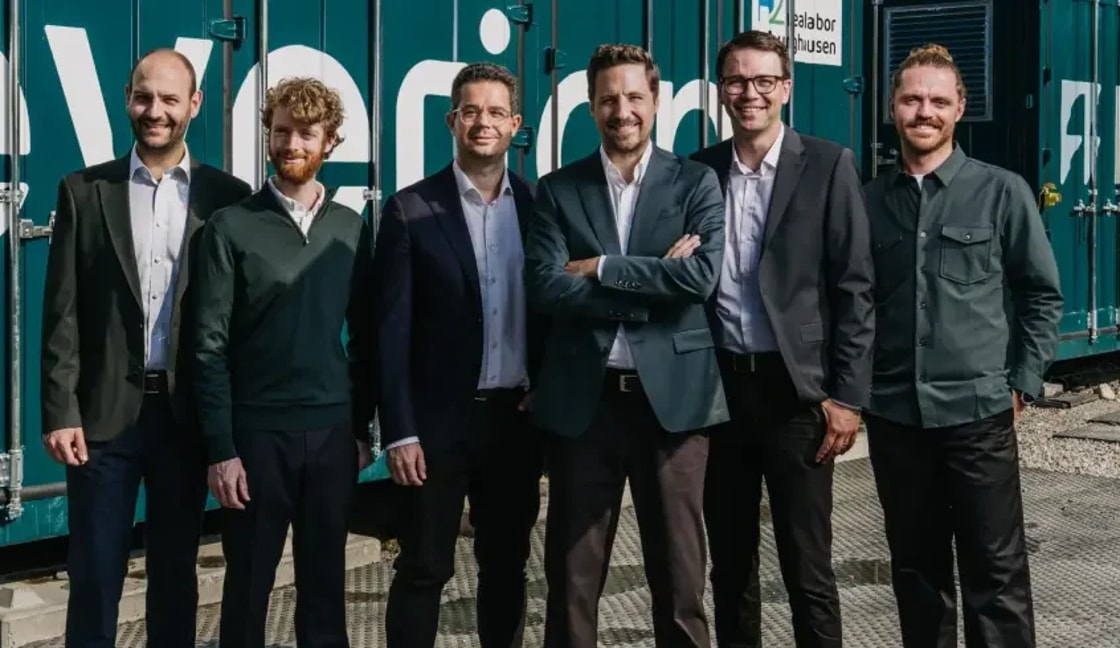
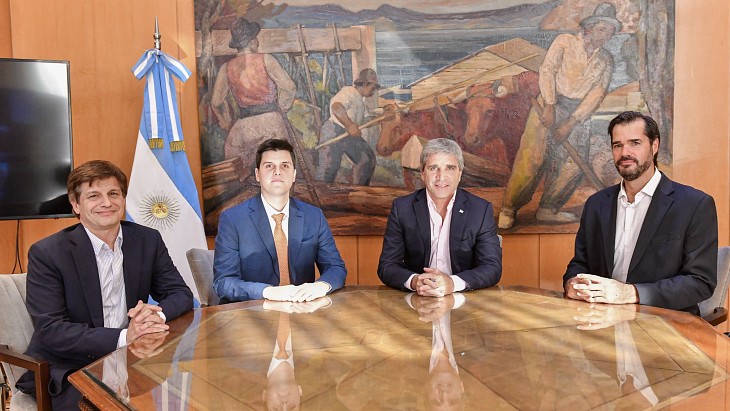
Economy Minister Luis Caputo, posted a picture on X of the meeting with Meitner Energy executives (see above), and said: “The project will have an estimated investment of USD1.2 billion and will be funded through US private capital based on an Argentine patent. It involves the ACR-300, an SMR reactor of Generation III+ and PWR technology, with an approximate power output of 300 MWe. This project will create around 2,000 direct jobs during the development, construction, commissioning, and operation phases.”
Last year’s national nuclear plan for Argentina included four of the ACR-300 SMRs to be located at the Atucha Nuclear Power Plant site. It said at the time it expected that the ACR-300 would have a construction timeline of five years.
Argentina currently has three operable nuclear power units – Atucha 1, connected in 1974, Atucha 2, which was connected in 2014 and Embalse which was connected to the grid in 1983. Between them they generate about 5% of the country’s electricity. There had been plans for a fourth unit, as Atucha III, but it appears that has been superseded by the SMR plans.
Argentina has already had an SMR in development: the CAREM SMR – the name comes from Central Argentina de Elementos Modulares – a 32 MWe prototype and is Argentina’s first domestically designed and developed nuclear power unit. First concrete was poured in 2014, but construction has since been suspended a number of times, most recently when about two-thirds complete. Work on it is widely reported to be currently halted and the privately financed ACR-300 SMR was described as “the centrepiece of the Nuclear Power Plan” last year.