(Update) August, 19, 2026, 3:02 PM GMT: Article updated to show another u-turn and secretive crossings.
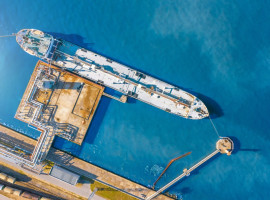
Three China-linked supertankers have U-turned in the Strait of Hormuz as risks to shipping remain elevated, with prospects for a normalization of traffic dimming after President Donald Trump took a hard line on Iran.
The Sea V, laden with Iraqi crude, was heading toward Hormuz from the Persian Gulf on Tuesday when it turned around, and is now idling near the entrance to the strait, ship-tracking data and fixtures show. In the opposite direction, the Hestia transited into the gulf along the Omani coast early Wednesday before changing direction and sailing out, while the Iraq-bound Erecter has also U-turned. It’s unclear why the vessels suddenly changed course.
The very large crude carriers are flagged to Hong Kong and were broadcasting that they had Chinese crew on board. On Tuesday, a fuel tanker called Amara linked to the United Arab Emirates made several U-turns in the strait and remains in the waterway near Iran as of Wednesday.
Visible traffic through the narrow waterway has slowed to a trickle as the threat of attacks from Iran remains high. On Tuesday, the UK Navy reported a vessel had been struck by an unknown projectile as it was exiting the gulf along the Omani coast, adding to a string of recent attacks on ships.
The risks to shipping are set to continue after Trump insisted that there were no ongoing talks with Tehran, leaving the simmering conflict in the Middle East in limbo. Iran’s lead negotiator with the US also said Hormuz won’t reopen until Washington agrees to a list of measures, including lifting its naval blockade, removing oil sanctions and ending military operations.
Despite the threats, ships still appear to be transiting Hormuz in both directions. The Sweden Prosperity, a Liberia-flagged VLCC, has crossed into the gulf with its transponders off, re-emerging early Wednesday and signaling that it’s headed to the Dubai anchorage.
The Singapore Prosperity, another Liberia-flagged VLCC, appeared fully laden off Fujairah early Wednesday after it was last seen near Saudi Arabia in the gulf, indicating that it had crossed Hormuz overnight without signaling its location.
What do you think? We’d love to hear from you, join the conversation on the
The is a new social experience created for you and all energy professionals to Speak Up about our industry, share knowledge, connect with peers and industry insiders and engage in a professional community that will empower your career in energy.