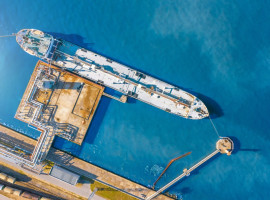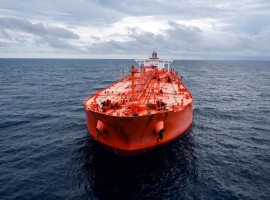
Two Chinese very large crude carriers have made U-turns in the Strait of Hormuz, currently idling in the area, Bloomberg reported today, citing ship-tracking data.
One of the supertankers, Sea V, loaded crude oil in Iraq and set off for Hormuz yesterday, but turned back and is now idling in the waterway, the data showed. The Sea V is sailing under a Hong Kong flag, with Marine Traffic reporting a “Chinese crew owner”.
The other vessel, Hong Kong-flagged Hestia, sailed into the Persian Gulf earlier this week, entered Hormuz but later U-turned and is currently in the Gulf of Oman, according to the latest data from Marine Traffic. The vessel has an all-Chinese crew.
Earlier this week, Reuters reported that two Chinese shipping majors had diverted their vessels from the Strait of Hormuz and Bab el-Mandeb amid the elevated risk of drone and missile strikes in the waterways.
Per the report, state-owned COSCO Shipping Energy Transportation and China Merchants Energy Shipping had stopped sending ships to the two straits in July, based on data from Vortexa. Reuters noted that COSCO and CMES together operate more than 100 very large crude carriers and before the war handled about half of China’s oil imports from the Middle East.
“The tankers remain engaged, but (they are) sailing longer voyages, experiencing longer waiting time amid greater uncertainty,” one unnamed Chinese shipping executive told Reuters.
Separately, Kpler data showed that Chinese tanker operators are doing ship-to-ship transfers in the Gulf of Oman, outside the Strait of Hormuz, at an average rate of 600,000 barrels daily over June and July, Reuters also reported this week.
“They are avoiding the two straits, but sending vessels to the new STS (ship-to-ship) points outside the Gulf – low risk and good profits,” another unnamed Chinese shipping executive told Reuters.
By Irina Slav for Oilprice.com
More Top Reads From Oilprice.com
- Distillate Stocks Sink Further as U.S. Crude Inventories Barely Budge
- Iraq-Syria Oil Pipeline to Bypass Hormuz Is 4 Years and $15 Billion Away
- China’s Renewables Boom Faces Record Clean Power Curtailments