By
2 min ago 2 min read
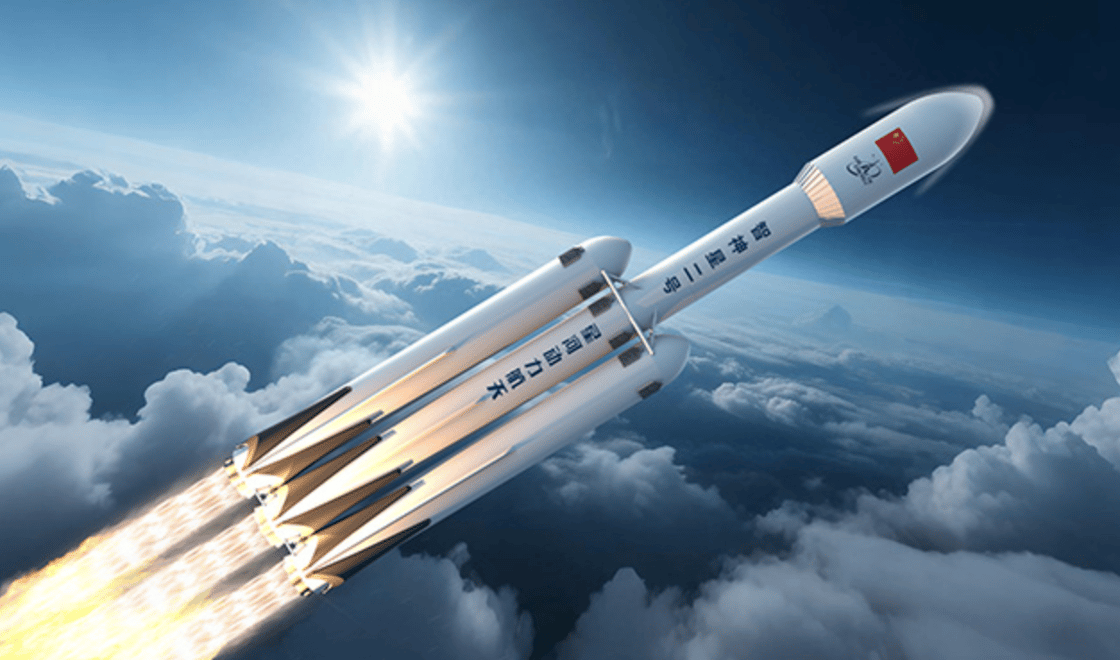
Beijing-based private rocket maker Galactic Energy has conducted the debut flight of its Pallas-1 liquid propellant rocket.
The launch took place at Jiuquan Satellite Launch Center in northwest China.
The medium-to-large reusable rocket features seven Welkin engines burning RP-1 and liquid oxygen in its first stage, and contains a maximum payload of seven tonnes.
In liquid propellant rockets of this size, roughly 90% of the total liftoff mass consists of fuel and oxidiser, leaving the remaining 10% for the dry structural weight and payload. When fully loaded, the Pallas-1 rocket holds an estimated 175 to 185 metric tonnes of liquid oxygen.
The company plans to introduce descent-control hardware (including grid fins, braking, and re-entry control) from its third flight onward. The ultimate goal is achieving vertical landings on land or at sea to allow booster reflights up to 25 times.
It is focusing heavily on developing the higher-thrust CQ-90 liquid oxygen/kerosene engine, which is about 90% 3D-printed by weight and features a wide throttle range.
Reusable rockets slash launch costs and boost mission frequency, which is useful for satellite deployment, crewed missions, space-station resupply, and deep-space exploration.
The global reusable launch vehicle market is valued between $6.43bn and $12.09bn, depending on market scope boundaries. The sector is experiencing rapid expansion and projected to reach up to $32bn by 2034-35, driven by a strong industry-wide shift away from expendable rockets to lower launch costs, according to Fortune Business Insights.
The rapid rise of fully and partially reusable rockets is triggering a massive paradigm shift in industrial and specialty gas markets.
Historically space launch was a niche, low-volume customer for gas companies but today’s high-frequency flight cadences made possible by reusability are transforming the aerospace sector into a major driver of volume, infrastructure investment, and advanced material synthesis.