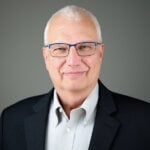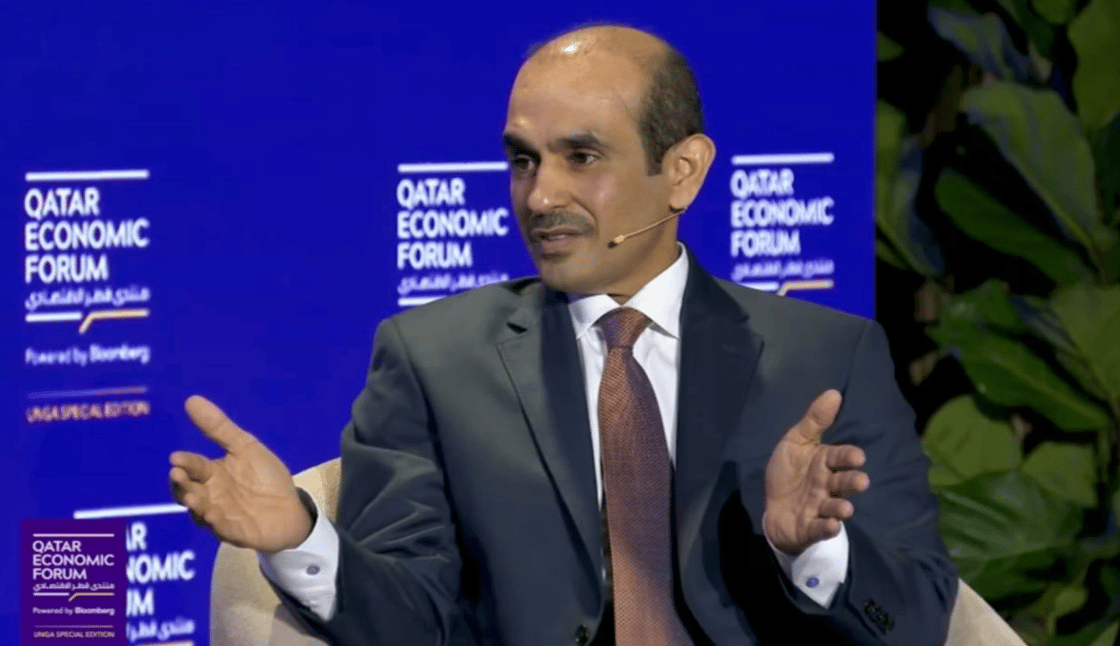
©QatarEnergy / CEO speaking at the Qatar Economic Forum
You’ve read 1 of 1 of your free articles this month.
It will take three years to repair the two LNG trains at Ras Laffan damaged during the Middle East conflict, H.E Minister Saad Sherida Al-Kaabi, President and CEO of QatarEnergy, has confirmed.
But in an encouraging move, the CEO added that repairs on the GTL train at Ras Laffan will be concluded in Q1 2027, meaning it may be back on stream . He made the comments during the Qatar Economic Forum.
To counter the supply shock, he outlined its ambition to become “the largest LNG trader globally” and outlined further US expansion plans – saying the second and third trains of are due to be fully operational next year.
But he ruled out developing pipelines amid the ongoing shipping constraints.
“We will have to transport it by pipelines as gas and then liquefy it at receiving terminals … this means we are building redundant facilities to the ones we are already building in Qatar as part of the North Field expansion project. This makes no economic sense,” he said.
The minister was confident Qatar could resume normal operations “within a few weeks” of the reopening of the Strait of Hormuz.
On , he said throughout its history, QatarEnergy has been a reliable producer and supplier with zero defaults on any shipment but the current situation is beyond its control.
He rejected the notion that the strait would become obsolete. “The waterway carries trade in all products, not only oil and gas, to and from all its adjacent countries,” he said.
Last week research firm Wood Mackenzie forecasted that repairing Qatar’s damaged Pearl GTL complex and Barzan gas plant .
The prolonged outage of the LNG trains will place further strain on the helium market, where suppliers are placing further emphasis on .