Thursday, 13 February 2025
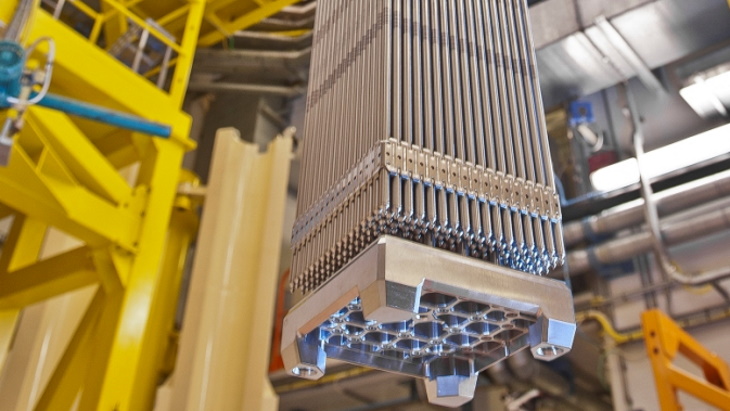
The Federation of Electric Power Companies (FEPC) announced in May 2023 that it will work with Orano on demonstration research and development for the reprocessing of used mixed oxide (MOX) fuel. At the time, FEPC said that in order for Japan to continue using nuclear power generation, it was necessary to safely and reliably process and dispose of fuel, including used MOX fuel that is removed from Japanese reactors that are implementing the use of MOX fuel.
When originally announced, plans called for about 200 tonnes of used fuel (comprising about 10 tonnes of used MOX fuel and about 190 tonnes of used uranium fuel) to be sent from Kansai Electric Power Company’s inventory of used fuel.
“We have [since] been working with related parties, including Orano, the contractor for reprocessing, to conduct a reprocessing demonstration study in order to obtain the technical knowledge necessary for the practical application of spent MOX fuel reprocessing, such as the properties of spent MOX fuel and its impact on reprocessing equipment, and to demonstrate that MOX fuel used at domestic nuclear power plants can be reprocessed in commercial plants,” FEPC said.
“During the review process, Orano, a French company that confirmed the detailed specifications of the spent MOX fuel held by Kansai Electric Power, proposed to increase the target quantity of the demonstration study in order to enhance the amount of data obtained based on the properties and characteristics of spent MOX fuel from the perspective of optimising the actual operation of reprocessing.
“As a result of our review as a nuclear operator, we have determined that enhancing the amount of data obtained is necessary to deepen the technical knowledge gained from the demonstration study from the perspective of optimising the actual operation of reprocessing and to further increase the effectiveness of the reprocessing demonstration study. Therefore, we reported this to the Steering Committee of the Spent Fuel Reprocessing and Decommissioning Promotion Organisation, which approved it today, and we are pleased to announce the change in the target quantity.”
FEPC said a total of about 400 tonnes of used fuel (about 20 tonnes of used MOX fuel and 380 tonnes of used uranium fuel) will now be sent by Kansai to France for use in the research.
Kansai said it plans to start transporting 100 tonnes of that amount in FY2030, which ends 31 March 2031.
It added: “Our company will work to establish a nuclear fuel cycle through demonstration research in order to utilise nuclear power in the medium to long-term, which is essential for improving Japan’s energy self-sufficiency rate, ensuring a stable supply of electricity, and achieving carbon neutrality.”
While only four Japanese reactors have so far been restarted using MOX fuel, FEPC envisages at least 12 units running on the fuel by FY2030. FEPC represents the 11 power companies, comprising nine utilities (excluding Okinawa Electric Power), Japan Atomic Power Company and the Electric Power Development Company (J-Power).
As long ago as the 1950s, Japanese nuclear energy policy recognised that the energy resource-poor country must recycle uranium and plutonium recovered from used nuclear fuel. Up until 1998, Japan sent the bulk of its used fuel to plants in France and the UK for reprocessing and MOX fabrication. However, since 1999 it has been storing used fuel in anticipation of the full-scale operation of its own reprocessing and MOX fabrication facilities.
Construction of a reprocessing plant at Rokkasho in Aomori Prefecture began in 1993 and was originally expected to be completed by 1997. The facility is based on the same technology as Orano’s La Hague plant in France. Once operational, the maximum reprocessing capacity of the Rokkasho plant will be 800 tonnes per year. Construction of a 130-tonne per year MOX plant, also at Rokkasho, began in late 2010. However, completion of both the reprocessing plant and the MOX fuel fabrication plant has faced several delays. Japan Nuclear Fuel Limited said in August it now expects the reprocessing plant and MOX fuel plant to be completed during fiscal years 2026 and 2027, respectively.