Diesel has become the focus of an unusually coordinated diplomatic effort.
That’s what J.P. Morgan analysts, including J.P. Morgan’s Head of Global Commodities Strategy Natasha Kaneva, said in a J.P. Morgan report sent to Rigzone recently.
In the report, these analysts highlighted that, over the past couple of weeks, the G7 pledged to accelerate releases from emergency inventories, Washington reached an agreement with Moscow to facilitate Russian diesel exports, and U.S. President Donald Trump urged China to increase refined product supplies.
“Together, these measures raise an obvious question: how much additional diesel could reach the market, and what would that mean for prices?” the analysts asked in the report.
“The answer depends less on the size of the announcement than on the government’s willingness to deliver the promised barrels and, crucially, how much of this supply would be genuinely incremental,” they added.
A G7 leaders’ statement published on the websites of the European Union and the President of France on October 2 revealed that the leaders of the G7 had convened a virtual meeting “to address the deepening challenges to our energy security”.
“The G7 requests the IEA to monitor the immediate and full implementation of the March 2026 commitments,” that statement noted.
“In this regard, taking into account commitments that have already been fulfilled, we will implement our commitments with a coordinated release through the IEA of 100 million barrels to begin immediately over four months, including a frontloaded substantial diesel release within the first 20 days by G7 members and partners,” it added.
In a statement sent to Rigzone on October 7 by the International Energy Agency (IEA), IEA Executive Director Fatih Birol revealed that, in a meeting that week, IEA member governments “expressed support for accelerating the oil stock releases announced in the Collective Action of March 2026, with a view to completing them as soon as possible”.
A statement posted on the IEA’s website on March 11 announced that the 32 member countries of the organization unanimously agreed to make 400 million barrels of oil from their emergency reserves available to the market “to address disruptions in oil markets stemming from the war in the Middle East”.
In a statement posted on his Truth Social page on October 9, Trump said, “I have just concluded a highly successful discussion with President Vladimir Putin, of Russia, wherein it was agreed that Russia will immediately supply over 300,000 Tons of Diesel Fuel to the American and Global Marketplace, another 500,000 Tons during the month of November, and 1,000,000 Tons immediately thereafter”.
“Additionally, based on the condition of their Diesel Refineries, Russia will then deliver, within a short period of time, 3,000,000 Tons of Diesel Fuel,” he added.
In a statement posted on the President of Russia’s website on October 9, which was translated from Russian, Russian President Vladimir Putin said, “during a telephone conversation with U.S. President Donald Trump on October 9 … Russia confirmed its readiness to supply oil and petroleum products to the American and global markets”.
A fact sheet posted on the White House website on September 25 highlighted that President Trump urged China’s President Xi “to increase production of refined petroleum products to stabilize global supply”.
Largest Immediate Effect
The J.P. Morgan analysts noted in their report that the European stock release could have the largest immediate effect, “particularly if a meaningful share constitutes diesel and deliveries are concentrated in the first 20 days”.
“That is, of course, if Europe actually releases the barrels,” the analysts said.
“So far, European governments have been reluctant to draw down emergency inventories, even as European oil stocks recovered to their spring levels by August,” they added.
The analysts went on to state that the Russian agreement “is particularly interesting”.
“Russia has continued to ship around 140,000 barrels per day of diesel by sea per month despite its export restrictions,” the analysts highlighted.
“This raises the possibility that the agreement changes the legal status and destinations of Russian exports more than their overall volume,” they said.
“In other words, the agreement could prove considerably more significant politically than in terms of additional barrels reaching the market,” they continued.
The analysts also pointed out in the report that China “potentially has greater capacity to influence global diesel supplies than its current export quotas imply”.
“Its refining system can respond to policy decisions, but the October‘s approval of 3.7 million tons of diesel, gasoline, and jet fuel combined is below September’s expected volume,” they said.
“A meaningful increase in supply would require higher diesel-specific export allocations and potentially higher refinery runs,” they noted.
The J.P. Morgan analysts went on to reveal in the report that, if all commitments are fully delivered, these measures could cover up to 80 percent of the diesel deficit from November through December, “materially easing market tightness”.
“For now, the announcements are already helping to keep market sentiment in check,” the analyst said.
“In Europe, the diesel-crude spreads have fallen 19 percent from a month ago, although they remain roughly 200 percent above pre-conflict levels,” they added.
“If inventory releases and additional exports fail to materialize, however, the persistent supply shortfall, compounded by disrupted refining logistics and record freight rates, will likely keep pressure on product markets,” they warned.
Looking to put the recent announcements into perspective, the analysts pointed out in the report that the global diesel market was in a deficit of approximately one million barrels per day in September, “with global diesel trade averaging 6.1 million barrels per day, down from 7.1 million barrels per day a year earlier”.
They noted that the decline was driven primarily by a 0.7 million barrel per day reduction in Russian exports and a further 0.8 million barrel per day loss from the Middle East, and partially offset by higher exports from APAC (0.3 million barrels per day), the U.S. (0.3 million barrels per day), and “other origins” (0.1 million barrels per day).
“Despite elevated global refinery runs, supply has remained insufficient – particularly during the seasonal peak diesel demand in September and October,” the analysts stated.
Crude Quality, Russian Diesel, China
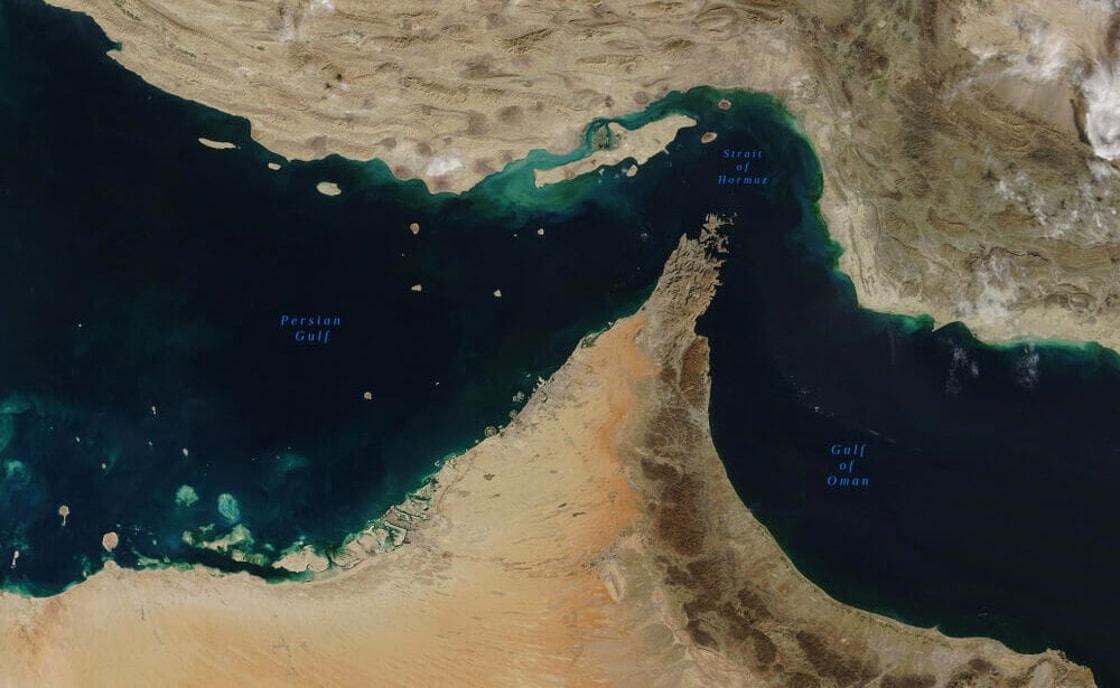
Crude quality remains an additional constraint, according to the analysts, who noted in the report that, “despite higher volumes of crude transiting the Strait of Hormuz in September, the market continues to face limited availability of medium grades”, which they said are better suited for producing middle distillates and typically help maximize distillate yields.
“As a result, global refinery runs optimized for distillate production remain depressed by roughly one million barrels per day,” they pointed out.
The analysts stated in the report that Russian diesel could help ease market tightness but warned that a meaningful impact is unlikely before December.
“Under the agreement, Russian diesel exports are set at 75,000 barrels per day in October and 125,000 barrels per day in November,” they pointed out.
“However, Russia exported roughly 140,000 barrels per day on average between July and September, suggesting that the agreed volumes for October and November would not represent incremental supply relative to recent export levels,” they added.
They went on to state that China could further increase diesel exports following the Golden Week holidays as domestic demand eases, “potentially lifting exports from 350,000 barrels per day in September to up to 700,000 barrels per day”.
“As winter progresses, however, this support is likely to fade as demand increases, reducing the volume available for exports,” they noted.
Diesel Diplomacy
In a report sent to Rigzone by the Standard Chartered Bank team on October 13, Standard Chartered Bank Energy Research Head Emily Ashford highlighted that Washington was continuing to pursue lower diesel prices ahead of the midterms.
Ashford pointed out, however, that the 9 October announcement that the U.S. would import Russian diesel “was met with broad skepticism and highlights the extraordinary lengths the U.S. is prepared to consider to lower consumer diesel prices before the critical midterm elections”.
“We believe meaningful supply relief from the agreement is unlikely, given opposition from U.S. lawmakers, damage to Russian refineries (many of which will require months of remediation to reach nameplate capacity after drone and missile attacks), and elevated freight and insurance costs,” Ashford said.
“Therefore, promises may never materialize into meaningful additional barrels or lower prices. We expect middle distillates to remain the most politically sensitive and headline-grabbing part of the barrel in the near term,” Ashford noted.
In the report, Ashford outlined that the U.S.-Russia deal marked a “striking reversal” in U.S. energy diplomacy.
“The world’s largest diesel exporter is seeking additional fuel from one of the world’s most heavily sanctioned energy producers, rather than restricting its own exports to preserve domestic supply,” Ashford highlighted.
“At least temporarily, the U.S. administration appears to have concluded that the political cost of relaxing Russian sanctions is more manageable than the domestic and international consequences of restricting U.S. diesel exports,” Ashford added.
Can Russia Deliver the Barrels?
The Energy Research Head went on to reveal in the report that, in Standard Chartered Bank’s view, the most immediate question is whether Russia can deliver the promised volumes.
“Ukrainian attacks have significantly impaired Russia’s refining capacity, while domestic fuel shortages and export restrictions have already constrained its ability to supply international markets,” Ashford said.
“A ceasefire would be central to Russia’s ability to restore refining capacity, but the absence of a confirmed reciprocal agreement makes it a particularly uncertain foundation for the promised recovery in diesel supply,” Ashford added.
“Even a sustained cessation of attacks would not immediately restore damaged processing units or normal refinery utilization. Sanctions on specialized refinery equipment also make it harder to restore the facilities,” Ashford continued.
Ashford went on to warn that Russia must balance additional export commitments against its domestic requirements.
“Moreover, the announced volumes cannot automatically be treated as incremental global supply: barrels redirected to the U.S. or other buyers would simply become unavailable to existing customers,” Ashford said.
“The critical distinction is therefore between a political commitment to increase shipments and a demonstrable recovery in Russian diesel production,” Ashford added.
Standard Chartered Bank’s Energy Research Head also highlighted that the U.S.-Russia agreement “illustrates the broader limitations of political intervention in a physically constrained energy market”.
“Ministers from OPEC and participating non-OPEC producers, meeting alongside the International Energy Forum and World Petroleum Congress in Riyadh on 12 October, warned that shipping and insurance costs had risen to more than one-third of the commodity’s value,” Ashford pointed out.
“Although this figure is not representative of every trade route, it highlights the extraordinary costs associated with disrupted energy flows,” Ashford added.
“Even where crude and product exports recover, longer voyages, additional handling, elevated insurance premiums and reliance on alternative routes continue to raise the cost of delivering supplies to consumers,” Ashford continued.
“Recovering volumes are therefore not synonymous with normalizing market conditions,” Ashford warned.
Ashford went on to state that political agreements “may improve expectations of availability” but highlighted that “they cannot immediately restore damaged infrastructure, efficient trade routes, or the lower delivered costs that characterized the market before the disruption”.
To contact the author, email