There’s enough uranium in the world’s oceans to power humans’ current energy needs for hundreds of thousands of years. The challenge is finding a way to extract it at a cost that makes it a viable option.
There have been various studies and trials carried out over the years – including recently in China and Japan – but Bryan is bullish about his US-based plan being able to harvest uranium from the sea at prices which, at worst, match current prices.
Bryan, who was a co-founder of Uranium Energy Corp and spent more than a decade as Terrestrial Energy’s chief commercial officer, acknowledges that the idea of sourcing uranium from seawater had been seen as a “mythical technology”, one that, like fusion, was being worked on “but always a few years away”.
“In fact we’ve learned that’s not true – with the serious engineering work we’ve been doing, we’ve been able to dispel a lot of those myths,” he says.
The goal is clear – if successful, it would solve supply issues, including geopolitical ones, which impact the existing nuclear fuel supply chain, he says.
In July, Austin, Texas-based Supercritical Materials announced it had secured an exclusive licence from Battelle Memorial Institute – which manages eight national laboratories for the US government – to a patented uranium adsorbent technology for the extraction of uranium from seawater, originally developed by the Pacific Northwest National Laboratory and research partners.
In its announcement it said: “The technology has demonstrated the feasibility to extract uranium from seawater. Supercritical has been granted rights to the technology and to deploy it in the United States with the goal of reaching industrial scale and will seek to expand to allied nations.”
Their challenge is to scale-up a process which has been proven to work at small, experimental scale. They are currently in the preliminary economic assessment phase, with a target timeline of 2033 for the first industrial-scale facility.
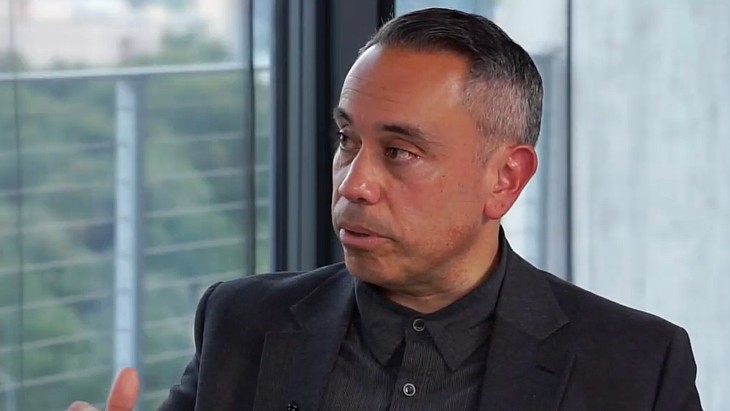
Canon Bryan (Image: Supercritical Materials)
As to the amount of uranium in seawater, it is, he says, about 3.3 parts per billion, so it’s very low, and the technology “has a way of concentrating that uranium to much, much, much higher levels, commercial levels of uranium concentration”.
How does the process work?
Bryan explains: “It is actually a very simple concept. The DOE invented a special fibre, a specialised fibre, but not exotic, so it’s not difficult to produce. That fibre is treated with a special chemistry. It’s deployed to seawater and the fibres interface with the uranium mineral in the ocean in such a way that it creates an ionic bond. The uranium adsorbs onto the fibre. And once there, once the fibre has been submerged long enough and the concentration is high enough, the fibres are removed.”
They are then chemically treated with a processing stage to get it from concentrate to something which is a marketable product
“The real engineering challenge here is how do we get a certain quantity of fibre, in our case, for our industrial scale design, 10,000 tonnes of fibre per year, how do we get that quantity of fibre to interface with a certain quantity of ocean water to give us the production that we are seeking, which is 1.85 million pounds per year per industrial facility. The volume of ocean water may seem extraordinarily large – we would need the 10,000 tonnes of fibre to interface with approximately 250 cubic kilometres of seawater per year.”
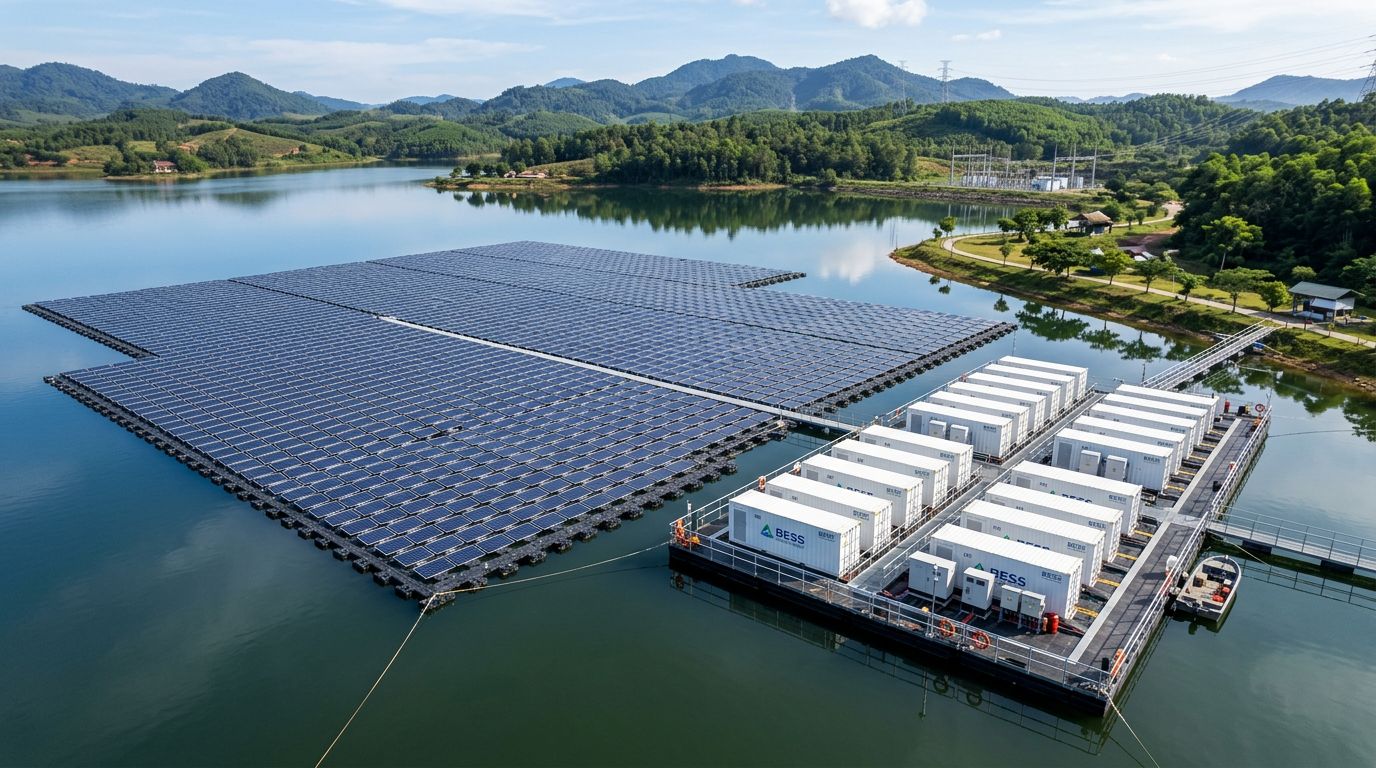
Their design is for piers to be installed initially in the Gulf of Mexico where the currents have sufficient flow rates. It also has the benefit of being warmer – an increase of 10C in water temperature would have a 50% increase in the recoverability of uranium “so it’s a sweet spot”, he says. “We have a quite strong indication now, based on the project economic work that we’ve been doing, that this design will yield production of uranium that is profitable at today’s uranium price, not some theoretical greater, higher uranium price in the future, but today’s uranium price. We’re very excited by what we’re working on. We think this is a very special project and has huge implications – we may have a fuel, a low-cost fuel for nuclear energy, for a major energy source forever, and with an effective price cap.”
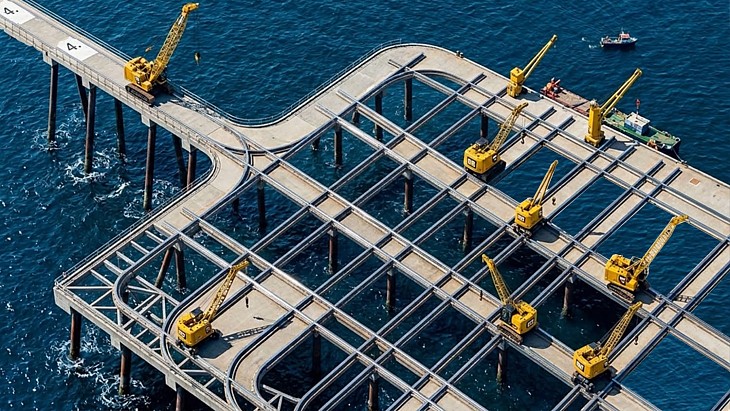
How one of the piers might look (Image: Supercritical Materials)
As to progress so far, he says the next stage will be the pre-feasibility study, followed by a further series of studies before a final investment decision, which is the point at which it is determined whether or not the project gets financed and built. He says they are targeting that final investment decision for 2029.
What about the reaction from friends and colleagues in the uranium and wider nuclear sector? Bryan says: “I think there’s a big part of the sector, let’s say the lion’s share of the sector and the rest of the world, that has either never heard of this or they have heard of it and they think it’s insane. And then there’s the small but increasing group of people that have heard of it and have seen our thesis and our particular methodology for commercialising this technology. And they know me to a degree. I mean they know I’m nuts, but they also know that the things that I’ve worked on, generally come to fruition. So there is a little bit of a belief system there that, ‘you know, this thing could actually be less crazy than we’ve been led to believe. And I would say that those people have the closest idea to reality’.”
Among people who have seen the company’s particular methodology for commercialising the technology the feedback has been “overwhelmingly positive”, he says.
You can listen and subscribe on all major podcast platforms:
Episode credit: Presenter Alex Hunt. Co-produced and mixed by Pixelkisser Production
Email newsletter: