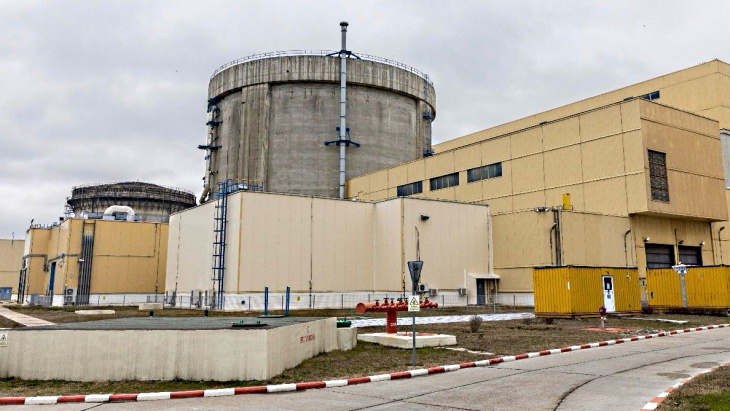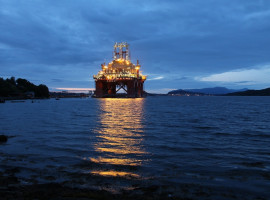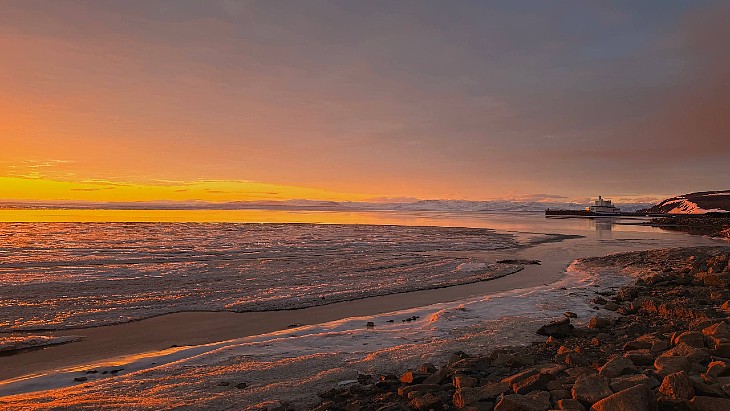
According to the operators of the Akademik Lomonosov floating nuclear power plant in Chukotka, on eastern Russia’s Arctic coast (pictured above), “after transferring a significant portion of the city’s heating load to the floating nuclear power plant, gross emissions of pollutants into the atmosphere decreased almost fivefold – from 11.64 to 2.281 tonnes”.
There are 11 automated radiation monitoring stations, plus four in the city of Pevek – population of 5,000 – as part of the environmental monitoring.
The report says that measurements of air emissions, water discharges, soil impacts and waste generation “all comply with established standards. On average, these levels are less than 10% of the maximum permissible values”.
According to Russia’s state nuclear corporation Rosatom, monitoring of the Chaunskaya Bay in the East Siberian Sea also shows no significant changes. This means, they say, the ecosystem is not experiencing any negative impact from the nuclear power plant.
Chukotka Governor Vladislav Kuznetsov said: “The environmental agenda is our region’s number one priority. The Arctic is a fragile and vulnerable territory, and we must work here with particular attention to nature, human health, and the future of Pevek.”
Dzhumberi Tkebuchava, First Deputy Director General of Rosenergoatom, said: “The floating nuclear power plant is of great importance for Chukotka and the Russian Arctic. It is a unique energy facility, closely monitored by the entire international community … the industrial environmental monitoring system at each of our nuclear power plants is evolving and improving year after year, as evidenced by the annual improvement in their environmental impact.”
The Akademik Lomonosov
The Akademik Lomonosov began commercial operation in May 2020 and is the world’s only operating floating nuclear power plant. It is based, with its coastal infrastructure, by the city of Pevek to which it supplies heat and power.
The Akademik Lomonosov has two KLT-40S reactors generating 35 MWe each, which are similar to those used in a previous generation of nuclear-powered icebreakers. It is also providing energy for the development of mining of the Baimskaya ore zone. It has the capacity to provide electricity to a city with a population of up to 100,000 people.
Rosatom is in the process of constructing four floating power units and is targeting the export market for floating nuclear power plants with capacity of at least 100 MWe and an assigned service life of up to 60 years featuring RITM-200M reactors, derived from those used on Russia’s latest nuclear-powered icebreakers.