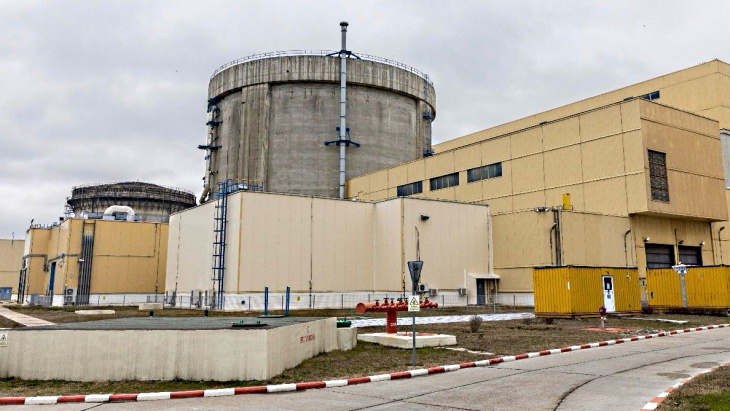
Nuclearelectrica shut down Cernavoda unit 1 and disconnected it from the National Energy System on 28 July “due to the unprecedentedly low level of the Danube, caused by severe drought”.
Water levels in the Danube continued to fall and on the morning of 12 August, reached 182 centimetres – below the 185-centimetre mark required for the normal operation of the Cernavoda plant, and unit 2 was shut down.
The low water levels in the Danube this summer have also affected the nuclear power plants in Hungary and Bulgaria, although they are now both currently in operation.
A new update from the Romanian company said: “A rise of approximately 10 cm in the water level measured in the pump intake basin at Cernavodă Nuclear Power Plant has recently been achieved, as a result of the rise in the level of the Danube. This is a localised rise, which is not, as yet, accompanied by a general rise across the entire Danube River basin upstream of Cernavodă. This development is positive and reflects a current improvement in hydrological conditions compared with previous days.
“At present, although the conditions are favourable, current forecasts do not indicate that all the criteria required to make the decision to reconnect at least one of the units will be met.”
It said the water level in the power plant’s intake basin “remains below the threshold considered necessary for the reconnection of one or both units”. It added that the level required for the safe reconnection of the units “must be maintained over a period of several days and must show an upward trend”.
Mihai Gioară, CEO of Nuclearelectrica, said: “Once we reach the level required for the safe reconnection and operation of the Cernavodă Nuclear Power Station, we will request, as a matter of priority, that the plant be connected to the National Energy System.”
Cernavoda is the only nuclear power plant in Romania and consists of two 650 MWe Candu reactors, generating about one-fifth of its electricity. Unit 1 went into commercial operation in 1996 and unit 2 in 2007.
Nuclearelectrica stressed that the plant has multiple cooling systems, designed to operate at different cooling water levels, which ensures that nuclear safety functions are fully ensured at all times.
Hungary’s Paks nuclear power plant was also affected by the drought-hit Danube’s low water levels. Emergency engineering works carried out allowed it to resume full operation by the end of August. In Bulgaria, the government is exploring options to ensure its plants are able to cope with lower Danube water levels in the future.