US President Donald Trump indicated he’s keen to pursue diplomacy with Iran and wind down the war following a White House meeting with the prime minister of Qatar, the main mediator between the warring sides.
Further strikes on Iran won’t be necessary, though the US remains “locked and loaded,” Trump said on Monday after talks with Sheikh Mohammed bin Abdulrahman Al Thani. “Iran, militarily, is effectively over. We’re just keeping it at the status quo, and we’re doing that really at the behest of countries that are their neighbors.”
The comments reflect the change in Washington since the Nov. 3 midterm elections. Many members of Trump’s Republican party blamed the war and resulting surge in energy prices for their loss of both houses of Congress to the Democrats.
Sheikh Mohammed thanked Trump and Vice President JD Vance — who said the conflict was the primary reason for the Republicans’ rout — and said he was “grateful for the positive discussions on reaching a deal and bringing peace to the region.”
Negotiations between Iran and the US will carry on and there likely won’t be any military escalation while they do, according to an official familiar with the matter. In the meeting with the Qatari prime minister, the US signaled that maintaining the status quo of diplomacy and applying economic pressure on Iran was the best way to resolve the conflict, said the person, who declined to be named discussing sensitive matters.
The comments from Trump and Sheikh Mohammed built on signs over recent days that the US and Iran are closer to a diplomatic breakthrough.
Oil prices, while still up 50 percent this year, are down heavily since the midterms, with Brent crude now well below $100 a barrel. It fell another 1.6 percent in early trading on Tuesday to $91.10, its lowest on a closing basis since August.
“The political window for escalation has closed,” Eurasia Group analysts including Gregory Brew and Clayton Allen said in a note to clients late Monday, lowering their odds of such an outcome to 30 percent from 60 percent. That’s “based on evidence of increasing political constraints on Trump following last week’s midterm elections and the mounting opposition from inside the administration and the Republicans” to another round of all-out hostilities.
There are still plenty of obstacles to an accord between Iran and the US, with both showing little willingness to concede on key points.
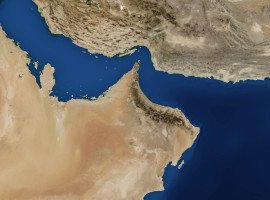
Tehran wants the US to lift a naval blockade of its Persian Gulf ports and drop sanctions as preconditions for peace talks. Washington is pressing Iran to immediately cease attacking ships in the Strait of Hormuz and make concessions regarding its nuclear program.
Talks may drag on for weeks, if not longer, with the risk of either side opting to revert to mass strikes.
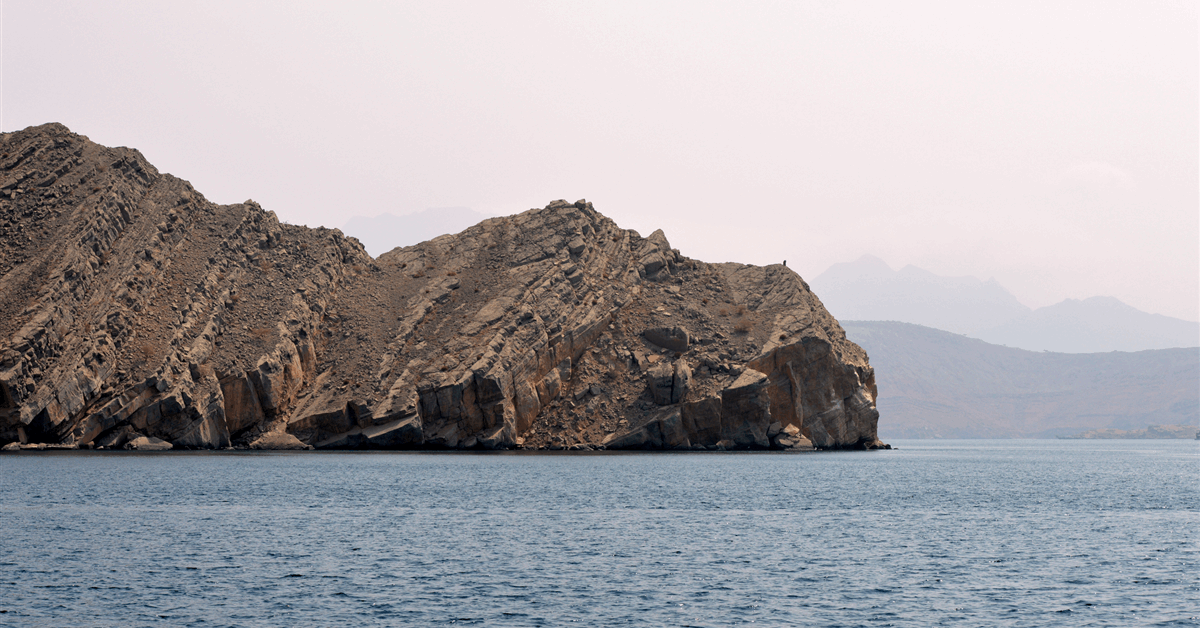
The US has twice launched limited strikes on Iran’s Qeshm Island since early last week, saying they were defensive in nature and designed to help energy tankers and other vessels get through the Hormuz strait safely.
Iran continues to assault ships going through the strait with drones and missiles, hitting several each week on average. Islamic Republic of Iran Broadcasting reported on Tuesday that “enemy navigation aid systems” in the southern part of the waterway had been destroyed, without saying when the incident happened.
Washington and Tehran agreed on a so-called memorandum of understanding in mid-June that included a ceasefire and a pledge to negotiate a final peace deal. It broke down after about two weeks, with Iran restarting attacks on vessels around Hormuz and accusing the US of refusing to ease sanctions and unfreeze Iranian assets as quickly as it was meant to.
Trump’s tone on Monday contrasted with that of Secretary of State Marco Rubio just a day earlier. The US’s chief diplomat told reporters there was no progress to report and the two sides weren’t on the verge of a breakthrough.
“Right now it hasn’t been very productive, because the Iranian demands are simply not just unacceptable but, in some cases, outrageous and ridiculous and really not realistic,” Rubio said on Sunday.
Trump, moreover, hasn’t decided to pull US forces back from the region. The Pentagon ordered a third aircraft carrier, the USS Theodore Roosevelt, to the Middle East in early October, though it probably won’t arrive for at least another two weeks, the Wall Street Journal reported on Saturday.
The president framed his latest approach largely as a concession to US Arab allies including the United Arab Emirates, Bahrain and Saudi Arabia. They, as well as Qatar, Kuwait, Jordan, Oman and Iraq, were attacked by thousands of Iranian drones and missiles during the first phase of the war between Feb. 28 and a truce in early April.
Many of them have been struck several times since then by Iran or Tehran-backed militias in Yemen and Iraq.
The Houthis, based in Yemen and part of Iran’s anti-US and anti-Israel “axis of resistance,” are firing upon Saudi Arabia daily.
The kingdom’s East-West pipeline, which takes oil from its massive fields to the Red Sea port of Yanbu, was targeted Monday in the Medina region, causing a limited fire that was extinguished, the state-run Saudi Press Agency reported, citing an unidentified energy ministry official. There were no casualties, SPA said.
The pipeline – which provides the Saudis a way to bypass Hormuz for most oil exports – was shut for part of September after an attack the kingdom blamed on Iraq-based militias.
The US and Israel began the war by bombing Iran and killing its supreme leader, saying it was necessary to stop the Islamic Republic getting a nuclear weapon. Tehran’s leaders have always denied they want to do that, though they enriched uranium far beyond the levels needed for nuclear power plants.
Trump and Israeli Prime Minister Benjamin Netanyahu also talked up the possibility of regime change in Iran. Trump pledged to wrap up hostilities withing four to six weeks and has been frustrated by the Islamic Republic’s resilience, as well as its ability to create havoc across the region with counterattacks.
The president acknowledged the war hurt him and his party in last week’s elections, but insisted he had little choice as Iran was close to getting an atomic bomb.
Any resumption of all-out conflict between Washington and Tehran would likely push up oil and energy prices, and lead to fresh assaults by Iran on its neighbors, further damaging their economies.