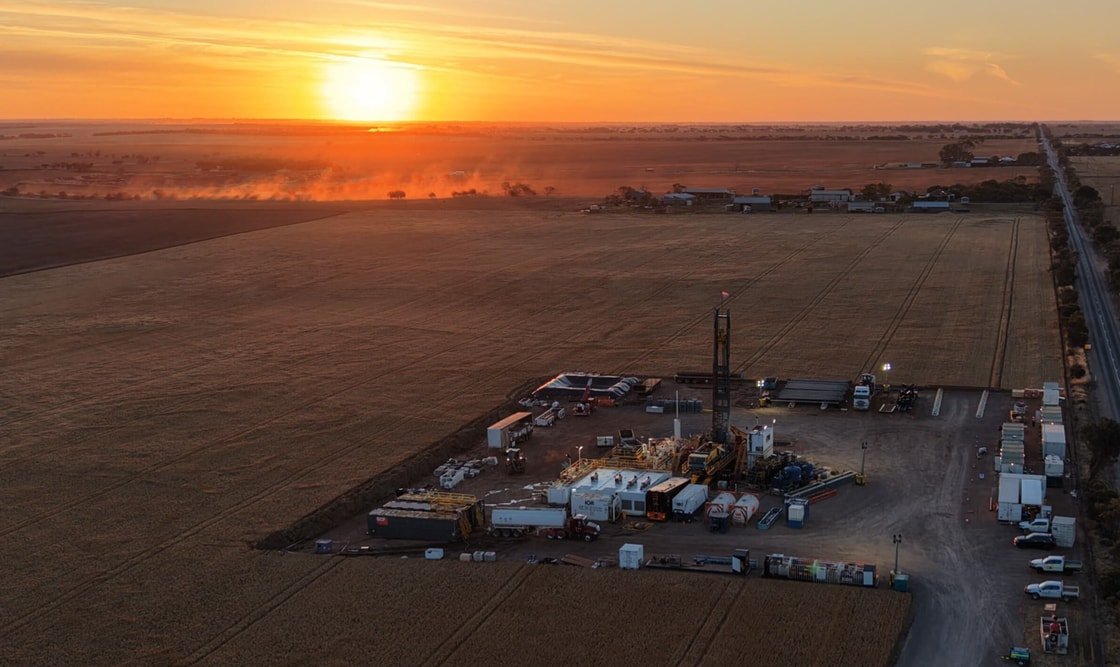
Ramsay Project © Gold Hydrogen
You’ve read 1 of 1 of your free articles this month.
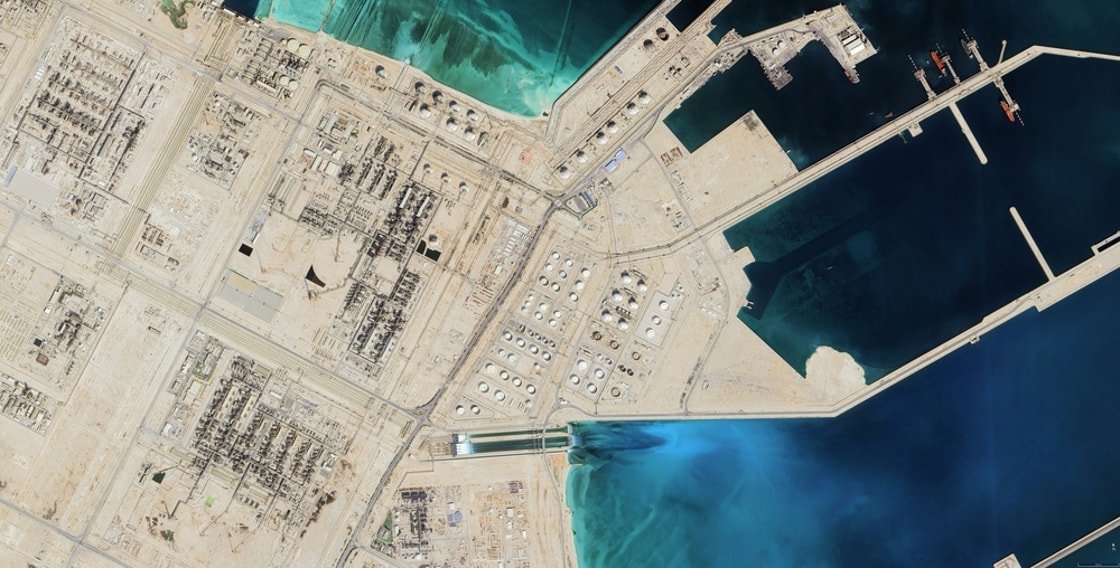
Natural hydrogen and helium exploration firm Gold Hydrogen claims to have detected helium-3 concentrations across all six gas samples analysed from its Ramsay project in South Australia.
The company said independent laboratory analysis of the samples confirmed argon-corrected helium-3 concentrations of 504 to 534 ppt at Ramsay 1, 853 to 881 ppt from the Ramsay 2 Kulpara Dolomite test and 1,191 to 1,220 ppt from the Ramsay 2 Hiltaba Basement test.
The results have been corrected for argon dilution after argon was used to purge the flow test system during start-up to reduce air contamination of the gas stream.
Helium-3 is a rare, non-radioactive isotope of helium used in high-tech research, security screening, and low-temperature physics. Volumes available today are obtained from the natural decay of tritium and are extremely rare on Earth.
Richard Brook, CEO of helium consultancy Garrison Ventures, previously told gasworld that trace amounts of helium-3 are found mixed in with helium-4, but only at around 150 ppb.
Neil McDonald, Managing Director of Gold Hydrogen, said, “We look forward to…engaging with specialist technology partners to assess the potential to separate and commercialise helium-3 as part of a future Ramsay helium development.”
There are considerable technical challenges associated with the separation of helium-3 from helium-4, and the technology has not yet been proven on a commercial scale.
In October, helium exploration company Pulsar Helium said it will evaluate at its Topaz project in Minnesota alongside US aerospace and resource development firm Lunar Helium-3 Mining (LH3M).
In July, US natural resources company Interlune said it had produced 99% pure helium-3 by Grade A helium resources during a lab-scale demonstration at its Seattle facility.
Read more: