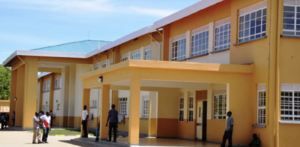
On World Pneumonia Day, medical oxygen access remains a critical challenge for healthcare facilities in many low- and middle-income countries (LMICs). Uganda provides a stark example, with millions of dollars’ worth of oxygen generation infrastructure lying idle at several regional hospitals.
Pneumonia remains the world’s leading infectious cause of death among children under five, claiming more than 700,000 young lives annually, according to UNICEF. Timely access to medical oxygen is critical for patients experiencing severe pneumonia and dangerously low blood oxygen levels.
“For a child with severe pneumonia and low blood oxygen, medical oxygen is not optional. Without it, children face a far higher risk of dying,” said Steffi Van Uytfanghe, who works on medical oxygen access at the Access to Medicine Foundation.
However, ensuring oxygen reaches patients when needed requires more than simply installing generation equipment. Reliable electricity, trained personnel, maintenance capabilities and distribution networks all play an important role.
The challenge is illustrated by in Uganda, where three regional referral hospitals are grappling with non-functional medical oxygen generation plants.
A report from Uganda’s Committee on Public Accounts (Central Government), presented to Parliament last week, found that oxygen plants at Moroto, Yumbe and Soroti Regional Referral Hospitals have produced little or no oxygen.
At Moroto, two plants have remained non-functional for three years because of an unfinished plant house, while an incomplete facility at Yumbe has also prevented oxygen production.
In Soroti, two of the hospital’s three oxygen plants are not operational, with maintenance delays and outstanding handover procedures among the issues identified.
The committee called for the completion and handover of the affected facilities, alongside servicing of the two plants in Soroti, within 60 days of the report’s adoption.
The findings echo concerns by Van Uytfanghe in an interview with gasworld, in which she described Uganda as facing a major medical oxygen crisis, with plant breakdowns and delays in sourcing replacement parts leaving hospitals without supplies for extended periods.

Two plants have remained non-functional for three years at Moroto hospital in Uganda ©Steven Ariong
“Sometimes there are delays of six months,” she said. “If you have a delay for six months to repair an oxygen plant, there’s no oxygen in that hospital for six months.”
Van Uytfanghe identified maintenance capacity, access to spare parts and shortages of trained technical personnel as persistent barriers to keeping medical oxygen systems operational across low- and middle-income countries.
She also highlighted shortcomings in the industry’s response to the Covid-19 pandemic, when oxygen generation equipment was rapidly procured and donated to healthcare facilities, often without sufficient provision for training, maintenance and spare parts.
“As a result, many of those plants are no longer working,” she said.
The pandemic exposed the scale of the gap between oxygen demand and supply in lower-income countries, with Van Uytfanghe saying even many industry players had not fully recognised its extent.
For industrial gas companies, addressing the problem means moving beyond equipment supply and becoming active participants across the entire oxygen value chain.
“Industrial gas companies can do much more than just be equipment vendors,” she said, arguing that companies should make medical oxygen access a corporate priority, with clear targets and key performance indicators that are measured and publicly reported.
She also called for contracts with healthcare facilities to include comprehensive service packages covering equipment installation, maintenance and training, alongside the provision of spare parts and maintenance kits.
This could involve having engineers on the ground, either directly or through local service partners, to ensure faults can be addressed without lengthy delays.
Training is equally important, she added, not only for technicians responsible for maintaining equipment but also for clinical and ministry personnel involved in operating oxygen systems.
However, responsibility for maintaining reliable supplies does not rest with industry alone. Governments also need to provide funding for the wider oxygen ecosystem, which extends beyond generation and includes reliable electricity, roads and last-mile logistics, medical gas piping and pulse oximeters.
The latter are particularly important in identifying patients with low blood oxygen levels early enough for treatment to be administered.
Van Uytfanghe said many countries still lack dedicated budgets for medical oxygen, alongside national roadmaps setting out how supply should be developed and maintained. Few also collect sufficient data on oxygen demand, supply and unmet need.
International initiatives are seeking to address some of these challenges. The World Health Organization’s Access to Oxygen Initiative provides technical and operational support to countries, including tools to assess oxygen demand, calculate plant operating costs and plan preventative maintenance.
Unitaid and global health organisation PATH launched a $20m, four-year programme in February 2026 to trial new oxygen production technologies and sustainable delivery models across India, Kenya, Malawi, Nigeria and Senegal.
The INNOVATE programme will explore approaches to improve oxygen production, distribution and maintenance, alongside business models designed to keep healthcare oxygen systems operational over the longer term.
A global challenge
A 2025 report by the Lancet Global Health Commission on Medical Oxygen Security estimated that five billion people, or 60% of the global population, lack access to safe, affordable medical oxygen services.
Around 374 million people require medical oxygen each year, with 82% of that demand concentrated in LMICs. Yet fewer than one in three patients requiring oxygen for acute medical or surgical conditions in those countries receive it.
Closing that gap will require an estimated $6.8bn in additional annual investment, equivalent to $34bn between 2025 and 2030, according to the Commission.
Beyond expanding generation capacity, its recommendations point to the need for stronger national oxygen strategies, dedicated funding, reliable distribution networks and sustained investment in maintenance and workforce training.
For industrial gas suppliers, the challenge is one of ensuring that installed infrastructure continues to deliver oxygen long after the initial investment has been made.