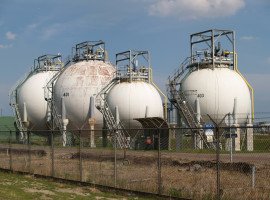
India’s largest state-owned refiner, Indian Oil Corporation (IOC), has produced its first batch of sustainable aviation fuel at the country’s first commercial-scale SAF plant, which the government has now cleared for commercial supply.
IOC produced the fuel at the Panipat Refinery, in a landmark achievement for India’s efforts to reduce emissions, Petroleum and Natural Gas Minister Hardeep Singh Puri said.
“From transforming used cooking oil into aviation fuel to securing India’s first ISCC CORSIA certification for SAF production, IndianOil’s pioneering journey reflects the spirit of innovation, self-reliance and environmental stewardship that defines a rising India,” the official said.
“This milestone brings us closer to our vision of cleaner skies, strengthens our indigenous green fuel capabilities and lends fresh momentum to India’s energy transition and Net Zero 2070 aspirations.”
IOC chairman A S Sahney said on Tuesday that the Indian refiner is “proud to be at the forefront of India’s green energy transition.”
The Panipat Refinery will have the capacity to produce enough sustainable aviation fuel (SAF) so India could meet its 1% blending target for international flights in 2027, Sahney said at an industry event on Tuesday, as carried by Reuters.
The clean jet fuel, which can be made from used cooking oil, waste, or plants, reduces carbon dioxide (CO2) emissions by up to 80%, the aviation industry says.
However, SAF faces many challenges on the runway before it can take off. Scale and cost are the two biggest and interconnected challenges for the industry to begin replacing petroleum-based kerosene.
SAF can significantly reduce aviation emissions compared with conventional jet fuel, but global production this year is expected to be just 2.4 million tons, or just 0.8% of total jet fuel use, and it remains two to three times more expensive than conventional jet fuel, the International Air Transport Association (IATA) says.
IATA, Airbus, and Accenture last month released a study which estimates that corporate purchases could support between 1.0 million and 1.9 million tons of SAF by 2030, up from an estimated 323,000 tons in 2024.
“This is a strong demand signal for more SAF production, provided factors limiting corporate participation, such as unclear accounting rules, high prices, and purchasing complexity, are addressed,” IATA said.
By Tsvetana Paraskova for Oilprice.com
More Top Reads From Oilprice.com
- Japan Proposes an ‘Asian IEA’ to Protect Oil Supplies
- America’s Biggest Grid Operator Races to Keep Up With Data Center Boom
- Europe Has Already Drained 10% of Its Summer Gas Injections