The Union Cabinet, chaired by Prime Minister Narendra Modi, has approved a ₹14,500 crore Viability Gap Funding (VGF) scheme to support the development of 92 GWh of grid-scale energy storage systems across India. The scheme will be implemented over five financial years, from FY 2026-27 to FY 2030-31, and aims to accelerate energy storage deployment, strengthen grid stability and support the integration of renewable energy into the country’s power network. The initiative is expected to support new storage capacity equivalent to around 170% of India’s present grid-scale storage capacity and contribute towards meeting the estimated requirement of 411 GWh by FY 2031-32.
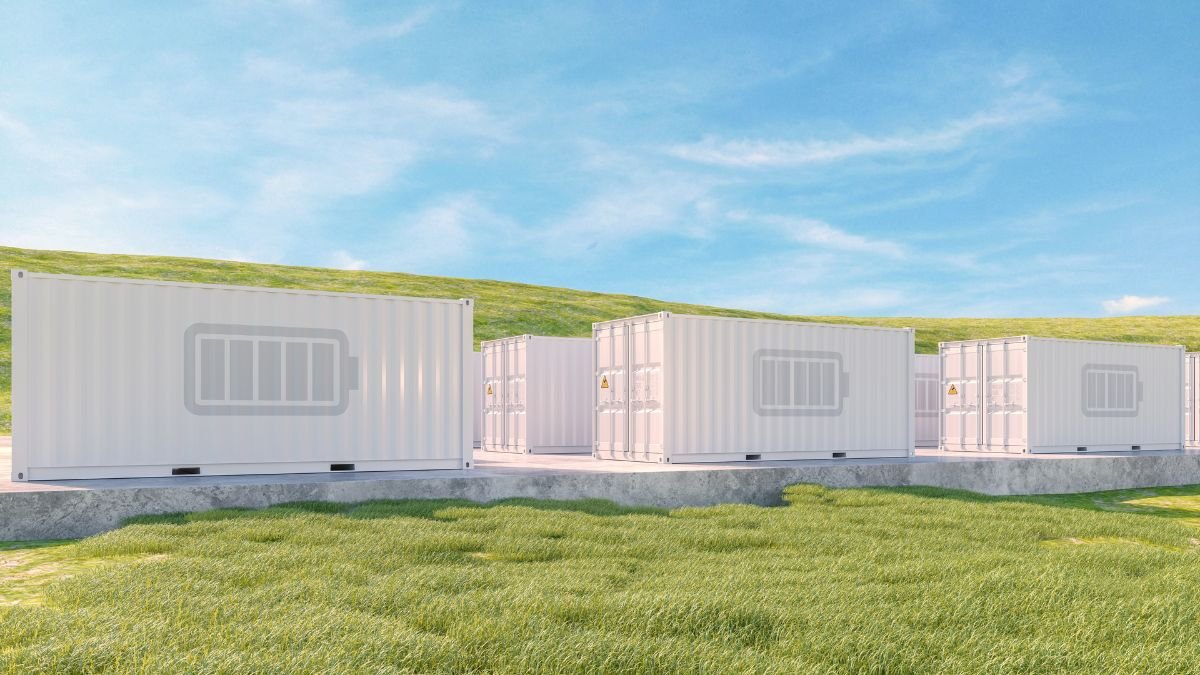
Under the approved scheme, 60 GWh will be allocated to Hydro Pumped Storage Projects (PSP), 30 GWh to Battery Energy Storage Systems (BESS) and the remaining 2 GWh to emerging energy storage technologies. The total estimated investment for developing these projects is approximately ₹97,600 crore. The government expects VGF support to improve project financial viability, attract private investment and encourage faster development of large-scale storage infrastructure.
The storage capacity will be allocated through a tariff-based competitive bidding process. Public and private sector electricity distribution companies will be eligible to receive VGF support for BESS and pumped storage projects. Projects based on alternative storage technologies will also be open to participation from public and private sector entities.
A key feature of the scheme is the introduction of a mandatory 40% Domestic Content Requirement (DCR) for BESS projects. The provision aims to encourage domestic manufacturing, strengthen local supply chains and reduce India’s dependence on imported battery components. It is also expected to create opportunities for investment in battery manufacturing and related technologies.
Industry stakeholders have welcomed the approval, highlighting its potential to address the growing need for flexible power infrastructure as India’s renewable energy capacity expands. Energy storage will play an important role in managing fluctuations in solar and wind generation, shifting excess daytime solar power to evening demand periods and improving the availability of electricity during peak hours. Storage deployment at renewable energy pooling stations could also help reduce power curtailment and improve the utilisation of transmission infrastructure.
However, industry experts have pointed out that the composition and implementation timeline of the scheme require careful attention. While battery storage projects can generally be developed within 12 to 18 months, pumped hydro projects may take five to seven years because of land requirements, water availability and environmental clearances. With the scheme covering FY 2026-27 to FY 2030-31, timely approvals and project execution will be important, particularly for the 60 GWh pumped storage component.
Questions have also been raised about the effectiveness of VGF support and the procurement framework. Industry representatives have emphasised that financial assistance should genuinely reduce project costs and the burden on electricity consumers rather than increase private developer margins. Transparent bidding conditions and appropriate procurement criteria will therefore be essential.
Rupam Raja – Head, Energy Storage, AMPIN Energy Transition
“VGF-type interventions are meant to subsidize essential emerging technologies like BESS to reduce its financial burden on the rate payers. In India, however, BESS bids with VGF are loading risks on the emerging technology and using the VGF to boost private margins. GOI should ensure that the right procurement criteria are enforced such that VGF serves its rightful purpose.”
Dilip Mehta. Director, Technical Services, Hexa Climate
“The composition deserves more attention than the headline. Of the 92 GWh, 60 is pumped storage and only 30 is BESS, and those are not comparable projects: a battery system is a twelve-to-eighteen-month exercise, a pumped storage project runs five to seven years with land and water clearances. For a scheme ending FY2030-31, that is where the schedule risk sits. The funding works out to roughly Rs 15.8 lakh per MWh against project costs near Rs 1.06 crore, so support of about 15 percent. The 40% domestic content requirement is sound in intent, but should track domestic cell capacity actually commissioned rather than the scheme calendar.”
Navneet Daga, Co-founder & CEO, Zenergize
“The ₹14,500 crore VGF scheme is an important intervention in making large-scale energy storage commercially viable in India. The allocation of 30 GWh for Battery Energy Storage Systems creates a substantial opportunity to accelerate deployment and attract private investment. As renewable energy capacity expands, BESS will become increasingly important in managing fluctuations in power generation, meeting peak demand and improving grid reliability. The 40% domestic content requirement is particularly significant as it can encourage investment in technology development, local capabilities and stronger domestic supply chains. However, scaling up will require more than financial support. Battery costs, system integration, power conversion efficiency, thermal management, safety standards and long-term operational performance will all influence project economics. The focus must now be on developing reliable, cost-effective storage technologies and capabilities that can operate at scale and support India’s evolving power infrastructure.”
Abinand Basant – Deputy Managing Director, Kshema Power India
“The Union Cabinet’s approval of a ₹14,500 crore VGF scheme for 92 GWh of grid-scale storage (60 GWh pumped hydro, 30 GWh BESS, 2 GWh emerging tech) is a timely and significant move. At roughly 170% of today’s installed storage, and leveraging an estimated ₹97,600 crore of investment, it directly addresses the core challenge of high renewable penetration: shifting solar generation into the evening peak and firming variable wind output. Storage co-located at RE pooling stations will also reduce curtailment and lift utilization of the transmission assets being built out under GNA. The 40% domestic content requirement for BESS is a welcome nudge towards localizing the battery value chain, though cell manufacturing scale will determine how far import dependence actually falls. Execution matters now: timely tendering, pumped hydro land and environmental clearances, and robust grid interconnection will decide how quickly this capacity moves from sanction to commissioning.”
Udit Garg, Managing Director, Kundan Green Energy
“The Viability Gap Funding (VGF) plan of ₹14,500 crore for India is an important step towards creating a robust energy storage ecosystem and transitioning to clean energy. With the increasing capacity of renewable energy, there will be a need for energy storage to overcome the intermittency of solar and wind energy sources to ensure that energy can be stored and utilized when it is required as per the load demand.”
The 92 GWh storage capacity will open doors for investments, technology and private sector participation. The right balance between Battery Energy Storage System and Pumped Hydro Storage will be key to fulfilling the grid needs. It is equally important to develop a robust manufacturing ecosystem to reduce reliance on imports and enhance the sustainability of the projects.
But the success of this plan will hinge on its implementation, policies, financing, and improved grid infrastructure. This can prove to be a game changer for India’s renewable energy plans and long term Grid stability of India.
Discover more from SolarQuarter
Subscribe to get the latest posts sent to your email.
RELATED ARTICLES
Subscribe Today
GET EXCLUSIVE FULL ACCESS TO PREMIUM CONTENT
SUPPORT CLEANTECH JOURNALISM
EXPERT ANALYSIS OF AND EMERGING TRENDS
TOPICAL VIDEO WEBINARS
Get unlimited access to our EXCLUSIVE Content and our archive of subscriber stories.
Exclusive content this week
Latest article