The European Commission has introduced the EU Clean Industrial Deal and the Affordable Energy Action Plan, designed to align climate goals with competitiveness through a unified growth strategy. This set of legislative measures seeks to lower energy costs, support energy-intensive sectors, and enhance the clean-tech industry. It focuses on six key business drivers, aiming to reduce bureaucracy and foster skills development and quality employment across Europe.
The Institute for Energy Economics and Financial Analysis (IEEFA) supports the EU’s renewed focus on decarbonization, aiming for cleaner and more efficient industrial growth through clean energy, enhanced electrification, grid flexibility, digitalization, and efficiency. The initiative to lower electricity costs and separate electricity bills from fluctuating gas prices is particularly commendable. However, the IEEFA cautions against ongoing support for LNG and carbon capture and storage (CCS), as these approaches go against market trends and may ultimately harm Europe’s competitiveness, job market, and climate leadership.
Improving gas markets for fair energy prices
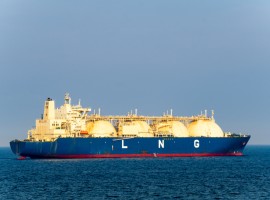
The EU’s new Affordable Energy Action Plan improves coordination on energy security. However, investing in overseas LNG projects could lock the EU into excessive contracts, potentially hindering efforts to lower energy prices. Excess LNG volumes may struggle to find buyers in Europe, where demand is declining, and re-exporting surplus LNG could prove challenging.
The EU has made progress in diversifying energy supplies, with flat gas consumption in 2024, a 16% decrease in LNG imports, and improved gas storage measures. However, increased LNG imports since 2022 have led to price volatility and high costs. The push by some Member States to become ‘gas hubs’ has resulted in an uncoordinated approach to LNG infrastructure development.
Ana Maria Jaller-Makarewicz, Lead Energy Analyst for Europe, emphasized that the EU should focus on diversifying energy sources, reducing gas demand, and improving coordination between Member States to efficiently use existing gas and LNG infrastructure. She also noted that following Japan’s model won’t shield the EU from high energy prices, as LNG costs for Japan have been rising since 2021, especially after Russia’s war on Ukraine.
State aid measures for carbon capture and storage
The European Commission has introduced a framework to support industrial decarbonisation, renewable energy, and CCS, aiming to facilitate the transition to net zero. The framework includes mechanisms like funding for up to 30% of direct investment, tax advantages through accelerated depreciation, loans or guarantees for 30-75% of remaining costs, and additional EU and national support, potentially covering up to 75% of project costs.
While IEEFA appreciates that supported CCS projects must demonstrate permanent carbon storage or use, and that no funding will go to highly polluting fossil fuels like coal, oil, diesel, or lignite, it remains skeptical about CCS as a decarbonisation solution. An IEEFA analysis of European projects revealed that CCS is technically underdeveloped, may not succeed, and could cost taxpayers over €140 billion for current proposals. The risks of CCS are significant.
Andrew Reid, Energy Finance Analyst for Europe, states that relying on CCS as a climate solution would require European governments to implement extremely high subsidies to support a technology with a history of failure.
Decoupling electricity bills from gas price volatility
To tackle high electricity costs from fluctuating fossil fuel prices, the EU Commission proposes a pilot program for corporate power purchase agreements with the European Investment Bank, aiming to provide stable, long-term energy costs for industrial consumers, according to IEEFA.
Kevin Leung, Sustainable Finance Analyst at IEEFA, explains that long-term power purchase agreements make renewable energy assets more appealing to investors. However, investors prefer large, creditworthy off-takers to reduce risks. He suggests that European Investment Bank guarantees could help smaller industrial consumers access affordable energy, while also boosting the investment appeal of renewable assets.
Improving the Carbon Border Adjustment Mechanism
To address high electricity costs from fluctuating fossil fuel prices, the EU Commission proposes a pilot programme for corporate power purchase agreements with the European Investment Bank, aiming to stabilize long-term energy costs for industrial consumers, according to IEEFA.
Despite weak carbon prices, the EU leads the global carbon pricing market. IEEFA expects the Carbon Border Adjustment Mechanism (CBAM) to drive global emissions reductions and introduce new carbon pricing outside the EU. The Commission plans CBAM reviews in 2025, including simplification of reporting to focus on major polluters. Other initiatives include expanding CBAM coverage and establishing a task force to support international carbon pricing policies.
Andrew Reid, Energy Finance Analyst at IEEFA, supported the EU’s focus on the largest polluters in the CBAM and its efforts to expand sector coverage and promote global carbon pricing. He highlighted Europe’s leadership in carbon pricing through the EU Emissions Trading System, emphasizing that CBAM prevents emissions offshoring and drives a global shift toward lower-carbon industrial production.