MIT-Led Study Finds Liquid Air Energy Storage a Promising Low-Cost Grid Solution

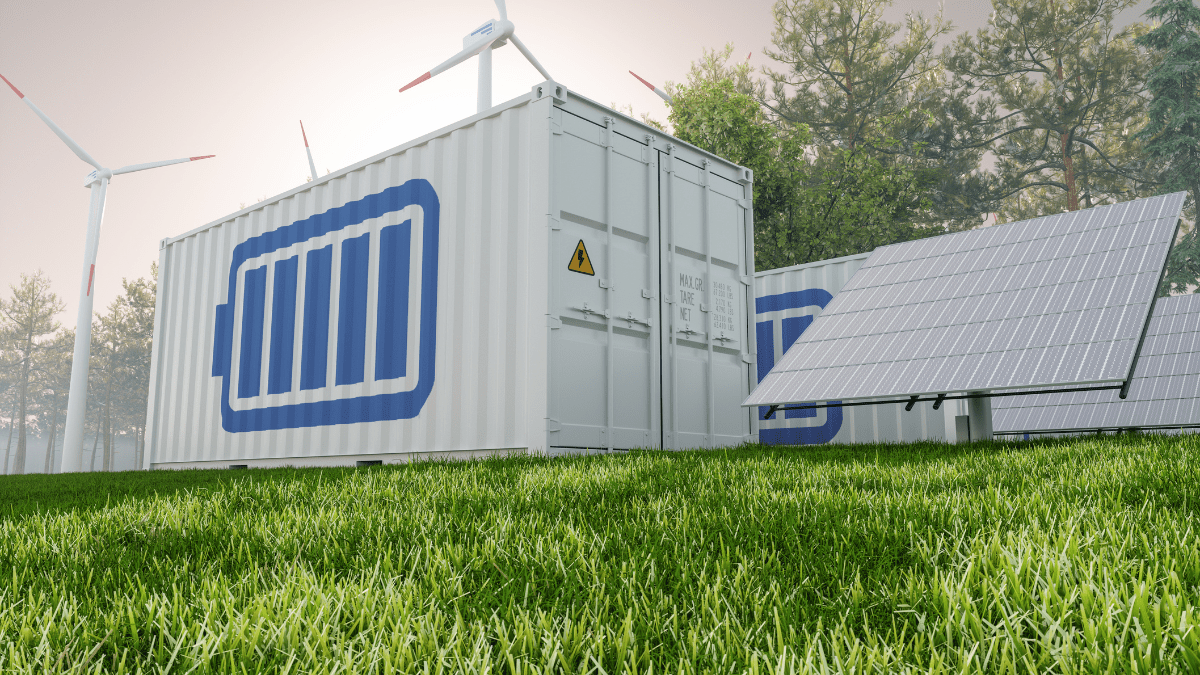
Representational image. Credit: Canva

A new study by researchers from MIT and the Norwegian University of Science and Technology (NTNU) identifies liquid air energy storage (LAES) as a highly promising and potentially low-cost solution for long-duration energy storage in future carbon-free power grids.

As grids increasingly rely on intermittent renewable sources like solar and wind, the need for scalable, reliable storage becomes critical. LAES works by drawing in ambient air, cooling it to a liquid state using surplus electricity, storing it in insulated tanks, and later reheating it to drive turbines and regenerate electricity when needed. The process emits no pollutants and uses only air and electricity, making it one of the cleanest storage options available.

Funded by the MIT Energy Initiative’s Future Energy Systems Center, the team developed a model simulating LAES viability under eight decarbonization scenarios across 18 U.S. regions through 2050. Findings revealed that LAES could be economically viable in select regions like Texas and Florida—especially under aggressive climate targets.

One key advantage of LAES is its flexibility: it can be deployed almost anywhere and leverages commercially available components without relying on rare or expensive materials. Co-location with industrial processes could also enhance efficiency by using available waste heat or cold.

While current economics may not yet fully favor the technology, the study found that capital subsidies of 40–60% could make it viable under realistic scenarios. With a levelized cost of storage (LCOS) around $60/MWh, significantly lower than lithium-ion or pumped hydro, LAES may soon become a cornerstone of resilient, sustainable energy systems.

The study is published in the journal Energy.

 

  • Related Posts

    Weekly Tech Insights: LONGi Advances Hi-MO X10 & Hi-MO 9, Growatt Explores Floating Solar, JinkoSolar Expands Sunny 365 Solar-Storage, Hoymiles Powers Rooftops with MIT-5000-8T

    LONGi and AGS International have deployed Hi-MO X10 645 W modules for a grid-connected warehouse rooftop project in Riyadh, delivering approximately 200 kWp of installed solar capacity. The technology focus…

    Green Energy Stocks Show Mixed Performance As Indian Markets Trade Flat (21 August 2026)

    The Indian stock market remained largely range-bound on August 21, 2026, with benchmark indices showing little movement. The S&P BSE SENSEX remained steady at 77,540.83 points, while the NIFTY 50…

    Have You Seen?

    Iranian Oil Supply to China Is Rapidly Drying Up

    • August 21, 2026
    Iranian Oil Supply to China Is Rapidly Drying Up

    Nigeria Eyes $50 Billion Offshore Oil and Gas Investment Boom

    • August 21, 2026
    Nigeria Eyes $50 Billion Offshore Oil and Gas Investment Boom

    East African Nations Offered 30% Share of Dangote’s Kenya Mega-Refinery

    • August 21, 2026
    East African Nations Offered 30% Share of Dangote’s Kenya Mega-Refinery

    Saudi Oil Exports from Mediterranean Soar with Shuttles North to Avoid Houthis

    • August 21, 2026
    Saudi Oil Exports from Mediterranean Soar with Shuttles North to Avoid Houthis

    Ukrainian Drone Attack Hits Lukoil Refinery Deep in Russia 

    • August 21, 2026
    Ukrainian Drone Attack Hits Lukoil Refinery Deep in Russia 

    China’s Teapots Look Beyond Iranian Oil amid U.S. Blockade

    • August 21, 2026
    China’s Teapots Look Beyond Iranian Oil amid U.S. Blockade

    Court Upholds Trump Admin Order to Restart SYU

    • August 21, 2026
    Court Upholds Trump Admin Order to Restart SYU

    Whisky waste-to-biomethane plant to meet 4% of Scotland’s gas demand

    • August 21, 2026
    Whisky waste-to-biomethane plant to meet 4% of Scotland’s gas demand

    CCS projects could put pressure on US Midwest CO2 supply

    • August 21, 2026
    CCS projects could put pressure on US Midwest CO2 supply

    CO2 tightness hits US Southeast as brewers halt production

    • August 21, 2026
    CO2 tightness hits US Southeast as brewers halt production