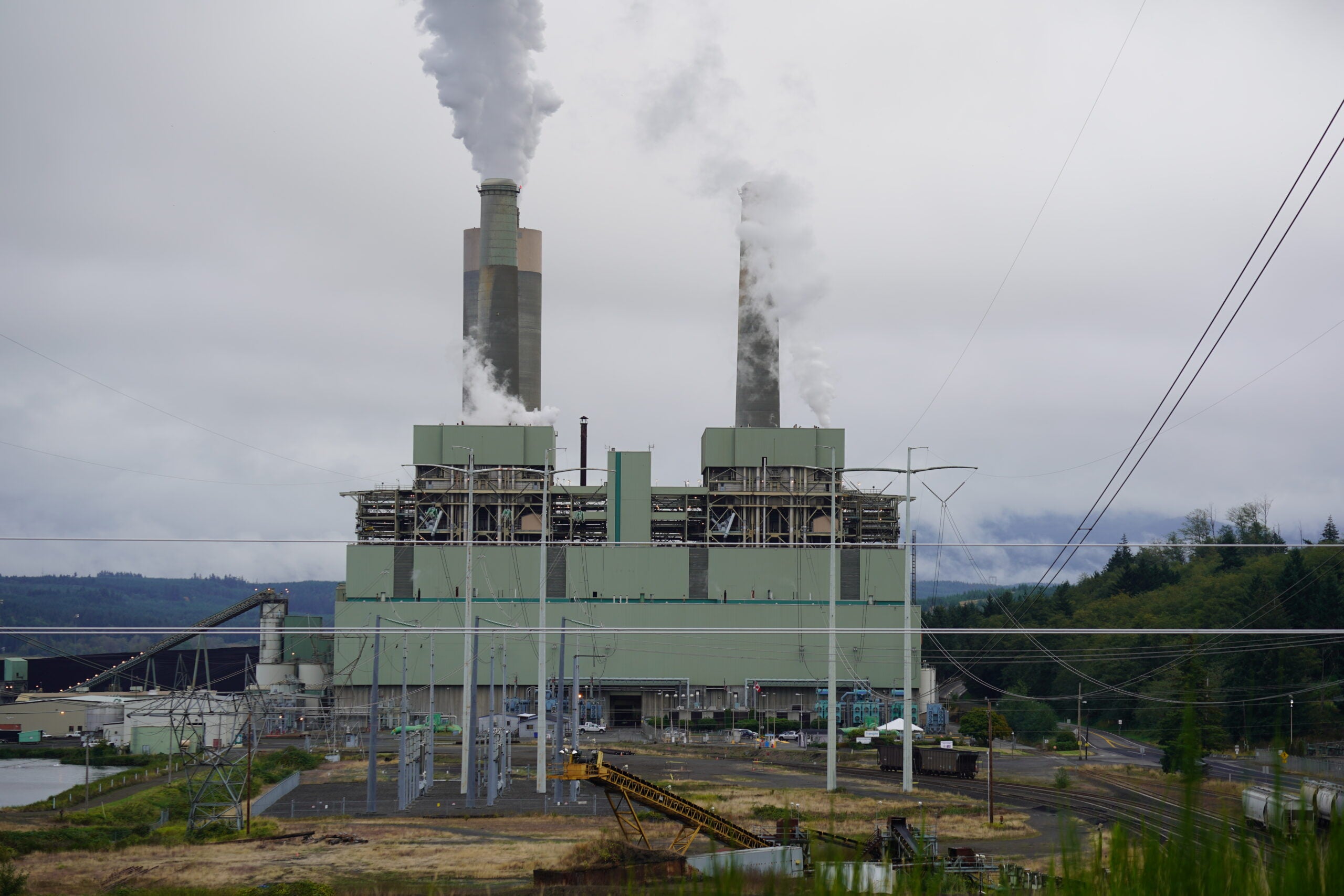
Dennis Wamsted and Seth Feaster at the Institute for Energy Economics and Financial Analysis recently wrote a commentary looking at Energy Capital Partners’ (ECP) deal to take over ownership of the General James M. Gavin coal-fired power plant in Ohio. The 2,709-MW Gavin plant is ranked as the fifth-largest carbon dioxide-emitting power plant in the U.S. ECP has said it is invested in the U.S. energy transition, leading to questions about its interest in a coal-fired facility. Wamsted and Feaster’s piece is reprinted here with permission. .
- A new private equity firm is poised to take ownership of the highly polluting Gavin coal-fired power plant in Ohio.
- The plant is being acquired by a private equity firm that claims to be “a leading investor in the energy transition.”
- The purchase by Energy Capital Partners (ECP) is part of a package deal, and three gas-fired plants acquired by the private equity firm will be separately managed.
- The acquisition of Gavin, however, means that some public, union and corporate retirement funds associated with ECP could end up owning a piece of the largest privately held carbon dioxide (CO2) emitter in the U.S.
Energy Capital Partners (ECP), a private equity firm with roughly $20 billion in assets under management is set to become the next owner of the 2,709-megawatt (MW), two-unit General J M Gavin coal-fired power plant.
The fifth-largest carbon dioxide (CO2) emitting power plant in the United States, the Ohio facility has released more than 100 million tons of CO2 in the seven years since American Electric Power sold it in 2017 to a partnership dubbed Lightstone that was formed by ArcLight Capital and Blackstone, two large private equity firms.
Gavin is one of only five plants in the U.S. to reach that rarified emissions total during this seven-year period, a level of unfortunate consistency that has annually placed it among the 10 dirtiest U.S. coal plants, averaging 14.62 million tons of CO2 emissions annually. (A calculator developed by the Environmental Protection Agency shows that it would take 3.1 million cars driving for an entire year to generate a similar amount of CO2.)

ECP, headquartered in Summit, N.J., and founded by former Goldman Sachs partner Doug Kimmelman in 2005, has five principal infrastructure funds with 111 reported limited partners (LPs) invested in them.
If the sale closes, investment managers for those LPs, which include public, union and corporate retirement funds worldwide, should scrutinize their holdings, since they could end up owning a piece of the largest privately held CO2 emitter in the United States.
Financial details of the transaction are not yet public, but the companies are required to file certain information at the Federal Energy Regulatory Commission (FERC) to sell electricity in U.S. power markets. The information in this note was pulled from that filing and .
According to ECP’s FERC filing, it will separate the Lightstone assets into two entities. One will control Lightstone’s three gas-fired plants: Lawrenceburg, a 1,190MW combined cycle facility in Indiana; Waterford, an 875MW combined cycle plant in Ohio; and Darby, a 480MW facility comprised of six 80MW gas turbines, also in Ohio. These three plants will be bought outright by ECP and its investment funds and placed under the control of a company dubbed Airborne Gas Purchaser LLC. Moody’s has previously cited the strong operational performance of these gas units as a key rationale for its B2 rating of Lightstone’s debt.
Gavin and its CO2 emissions will be managed separately, indicating that ECP knows they are a problem, and put under the control of General Coal Purchaser LLC. This entity initially will be 100 percent controlled by ECP, but the company says it may sell as much as 40 percent of the Gavin plant to another firm, Javelin Global Commodities. While touting the gas plants’ strong performance, Moody’s latest analysis (released before the ECP purchase) highlighted the “ongoing environmental risks faced by the nearly 50-year-old Gavin plant.”
Javelin was founded nine years ago by two former traders from Goldman Sachs, Peter Bradley and Spencer Sloan. , Javelin is now the largest coal exporter in the U.S. The Gavin purchase would be its first foray into the energy generation sector, according to ECP’s FERC filing.
Given its business focus, Javelin likely would not be troubled by its potential stake in Gavin. It may be a different story for ECP, whose website identifies it as “a leading investor in the energy transition, specializing in electricity and sustainable infrastructure.”
The company, which owns Calpine, a large independent power producer that mainly runs gas-fired power plants and has investments in solar and battery storage, notes elsewhere that it “is on the forefront of energy transitions.”
There is nothing sustainable or transitional about Gavin. If ECP wants to be a leader in the ongoing electricity transition, it should announce plans to close its new coal asset. Otherwise, it is just another investor looking to make a dollar while pushing the costs of its climate-changing CO2 emissions onto the public.
—This commentary was reprinted with permission from the Institute for Energy Economics and Financial Analysis. .