In a market comment sent to Rigzone on Monday morning, Aaron Hill, Chief Market Analyst at FP Markets, noted that, as of early trading this morning, both WTI and Brent “are up a whopping 14 percent and 16 percent … respectively”.
“These are just incredible moves, trading near highs seen in 2022 when Russia invaded Ukraine,” Hill highlighted in the comment, which pointed out that WTI and Brent “rallied an eye-popping 35 percent and 27 percent last week, respectively”.
“To put this into context, the rally in WTI was its largest one-week gain on record and the biggest one-week jump for Brent since early 2020,” Hill said.
In a separate statement sent to Rigzone today, Hill outlined that markets are pricing in a “significant geopolitical risk premium tied to escalating tensions involving Iran and the wider Middle East”.
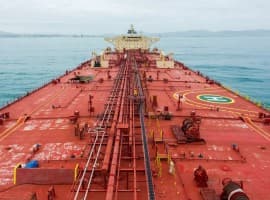
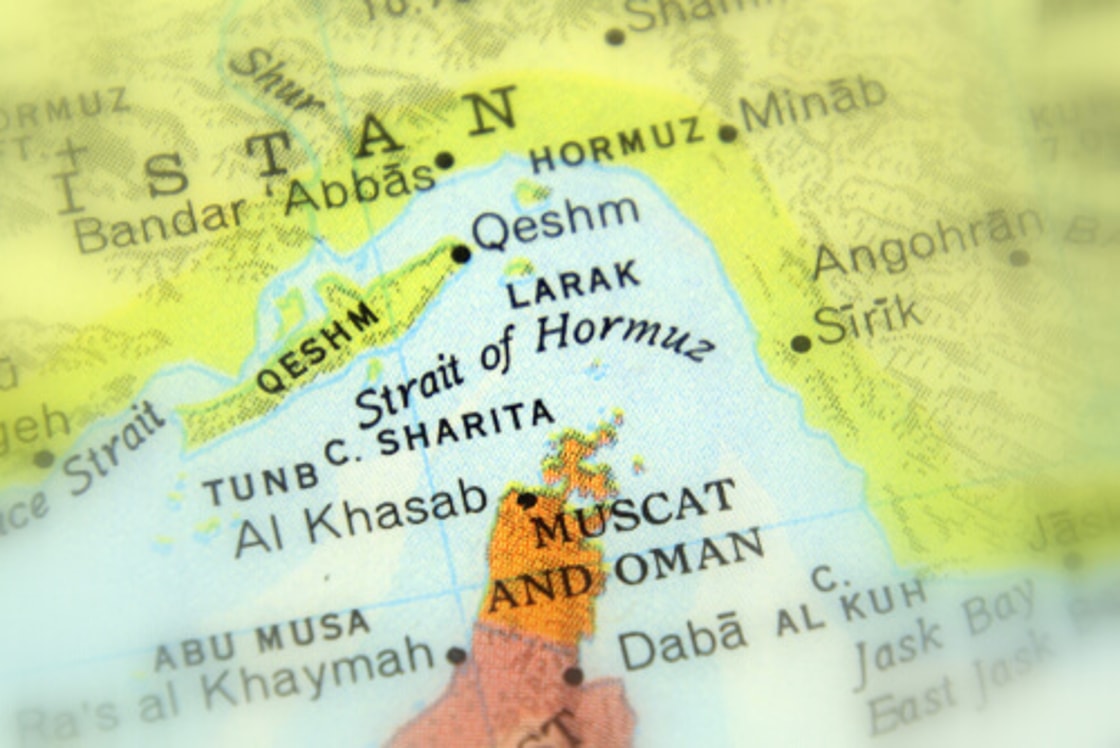
“The potential threat to shipments through the strategically critical Strait of Hormuz, which carries roughly one-fifth of global oil flows, has intensified fears of supply disruption at a time when global inventories remain relatively tight,” he added.
“While softer labor market data has raised some concerns about economic momentum, those demand side worries are currently being overshadowed by supply risk and security uncertainty in the region,” Hill continued.
“As a result, energy markets are trading in a highly sensitive environment where geopolitical developments are likely to remain the dominant driver of price direction in the near term, with any escalation capable of pushing crude even higher while signs of de-escalation could quickly trigger a sharp pullback,” he warned.
Erik Meyersson, Chief EM Strategist at Skandinaviska Enskilda Banken AB (SEB), stated in a report sent to Rigzone by the SEB team on Sunday that markets are increasingly pricing in the regional war and warned that containing global market spillovers depend on key elements of the conflict.
“Continued disruption of the Strait of Hormuz squeezes energy markets and may continue as long as Iran retains retaliation capabilities,” Meyersson said in the report.
“Efforts to facilitate increased transit via naval escort and insurance mechanisms are underway, but ultimately depend on efforts to suppress Iran militarily,” he added.
In an oil flash note sent to Rigzone late Friday by Natasha Kaneva, J.P. Morgan’s head of global commodities strategy, analysts at the company, including Kaneva, warned that tanker availability in the Gulf had “collapsed”.
“Kpler counts just 14 VLCCs (including three Iran‑linked) in‑region, down from 64 before the conflict,” the analysts stated in that report.
“At the current loading pace, the remaining capacity will likely be exhausted by the end of this week. From next week, producers will increasingly divert barrels into onshore tanks, accelerating builds and pushing the region closer to forced production shut‑ins,” they warned.
In an exclusive interview with Rigzone on Friday, Art Hogan, Chief Market Strategist at B. Riley Wealth, highlighted that the price of Brent crude “just surged past $90 a barrel for the first time in two years as the escalating conflict in Iran continues to fuel a meteoric rally that shows no signs of slowing down”.
“The last time the global benchmark cleared the psychologically important $90 level was April 16, 2024. Brent crude futures were trading at $91.11 a barrel on Friday, while West Texas Intermediate futures were at $88.96,” he pointed out.
“The move came after Kuwait was forced to reduce production at some of its oil facilities. The country is suffering storage issues as Iran has effectively shut down the Strait of Hormuz, the main way to ship oil out of the Persian Gulf,” Hogan said.
“Unless and until we start to see product shipments through the Strait of Hormuz, energy prices will remain elevated,” Hogan warned.
In a statement sent to Rigzone on Friday, Andrea Remyn Stone, CEO of Zema Global, said markets were pricing in a short-term supply shock following the disruption of oil and LNG flows through the Strait.
“Strategic petroleum reserve releases and gas storage drawdowns in Asian countries, particularly China, will be important indicators to monitor in assessing the duration and severity of supply impacts,” Stone said.
“The challenge is that, in periods of geopolitical disruption, complexity rises faster than transparency. Data is fragmented, reporting lags reality, and confidence in the full risk picture becomes harder to maintain,” Stone added.
The last time Brent closed above $100 per barrel was on August 29, 2022, where it came in at $105.09 per barrel. Earlier that year, on March 8, Brent closed at $127.98 per barrel. Brent rose sharply from a close of $70.75 per barrel on February 26, 2026, to a close of $92.69 per barrel on March 6. At the time of writing, Brent is trading near $108 per barrel.
To contact the author, email