Monday, 25 November 2024
_70752.jpg)
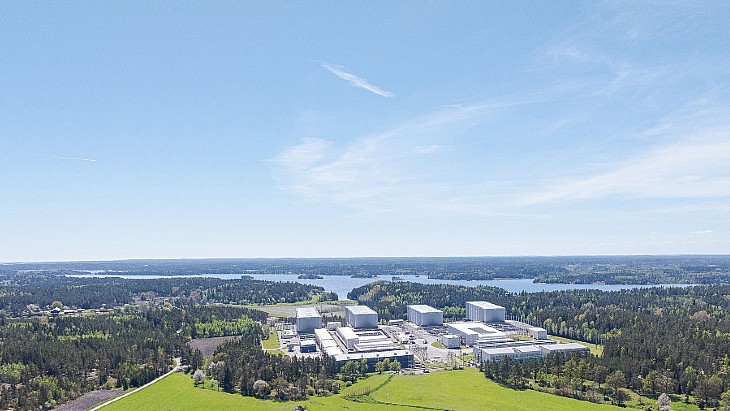
In September 2022, following a 14-year site selection process, Nagra proposed Nördlich Lägern in northern Switzerland as the site of a deep geological repository, while a used fuel encapsulation plant would be built at the existing Zwilag interim storage facility in Würenlingen in the canton of Aargau. The entrance to the repository, the so-called surface facility, would be constructed in the Haberstal area in the community of Stadel in canton of Zürich.
Applications for general authorisation consist of a safety report and a security report, as well as a report justifying the choice of the site. They also include an environmental impact study report and a report on the concordance with regional planning. With each application, Nagra defines the site of the installation (size and location of the main structures) as well as the maximum limit of exposure of people to radiation in the vicinity of the installation. For deep-geological disposal, the maximum capacity of the repository, the exclusion criteria and the temporary subsoil protection zone around the repository site must also be defined. In addition, there is the concept for the observation phase and the final closure of the installation. Nagra attached the corresponding files to its applications, which it submitted on 19 November.
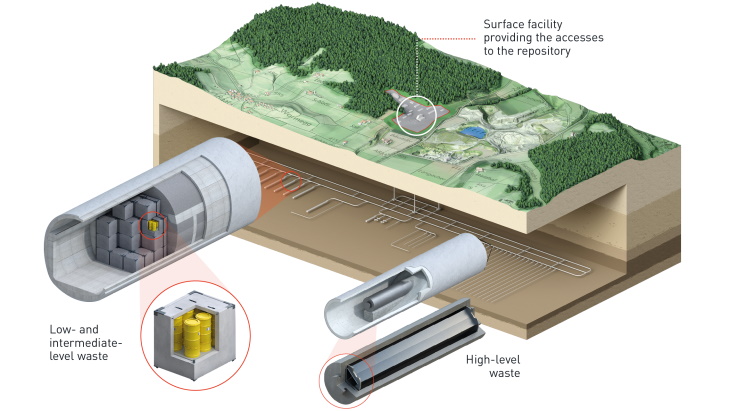 The concept of the Swiss repository(Image: Nagra)
“We are demonstrating that we can construct and operate this deep geological repository safely – even if it will be challenging,” said Nagra CEO Matthias Braun. “We are also showing that the repository is compatible with environmental protection. With this application, we are laying out the facts needed for Switzerland to decide on the safe geological disposal of the nation’s radioactive waste.”
The competent federal departments will examine by spring 2025 whether all the documents required by law have been provided. Nagra will then publish the entire application documentation and all the scientific reports online – three years earlier than required by law. The authorities will then begin a detailed examination of the content of the applications. The Swiss Federal Nuclear Safety Inspectorate (ENSI) and the Federal Nuclear Safety Commission (CNS) will then begin examining the content of the applications. This assessment is expected to be completed by 2027.
The Swiss Federal Office of Energy will issue the general authorisations based on the examination carried out by the authorities and, in particular, on the opinions of the federal departments concerned and the cantons. According to current planning, the Federal Council will decide on the application in 2029 and Parliament in 2030. A national referendum is expected to take place in 2031.
Nagra said: “With this step, Nagra wants to enable an early and meaningful debate about the project – in parallel with the technical review of the application by the authorities. Nagra will be available for questions and discussions.”
“The cross-generational project of deep geological disposal needs to be debated as broadly as possible and should be legitimised as a result of a direct democratic process – in Switzerland, this includes a national referendum,” Braun noted.
Once the general authorisation for the repository comes into force, geological studies will be carried out underground in the area of implantation (through the creation of an underground laboratory), with the aim of acquiring more in-depth knowledge with a view to the construction of the repository. The application for a building permit, then later the application for an operating permit, can then be submitted. According to current planning, the repository could come into operation and the first radioactive waste could be stored there from 2050.