The New Safe Confinement (NSC) is the largest moveable land-based structure built – with a span of 257 metres, a length of 162 metres, a height of 108 metres and a total weight of 36,000 tonnes equipped – and with a lifetime of 100 years, it has been designed to allow for the eventual dismantling of the ageing makeshift shelter built over the destroyed Chernobyl unit 4 in a matter of just months after the 1986 accident and the management of radioactive waste. It has also been designed to withstand temperatures ranging from -43°C to +45°C, a class-three tornado, and an earthquake with a magnitude of 6 on the Richter scale. The process of sliding the entire arched structure from its assembly point into position over unit 4 was completed on 29 November 2016.
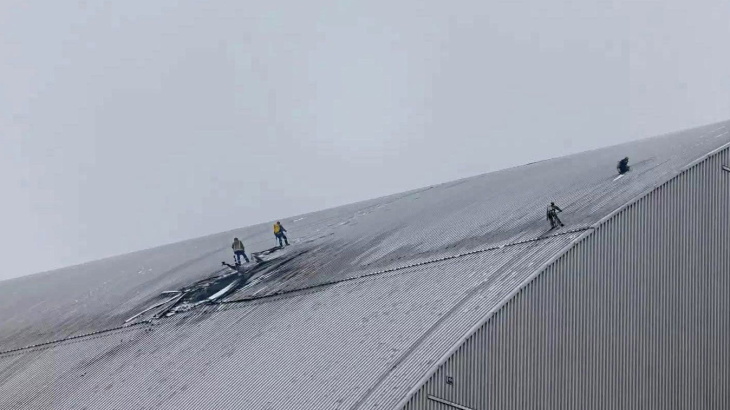
A drone strike on 14 February last year caused a 15-square-metre hole in the external cladding of the NSC, with further damage to a wider area of about 200-square-metres, as well as to some joints and bolts. It took about three weeks to fully extinguish smouldering fires in the insulation layers of the shelter. Temporary repair work was carried out before the winter to prevent weather damage.
French firms Bouygues Travaux Publics and Vinci Construction Grands Projets – who previously formed the Novarka consortium responsible for the original design and construction of the NSC – have now completed a preliminary technical assessment of damage sustained by the structure.
The assessment identified a series of potential repair activities – both temporary protective measures and longer-term restoration works. These include: temporary protection and stabilisation measures, such as weatherproofing of the roof and repairs to damaged steel components; restoration of the external cladding, together with additional repairs required to re-establish sufficient airtightness of the NSC annular space; repair or replacement of sealing joints affected by the damage; testing and re-commissioning of the annular space ventilation system following completion of repairs; restoration of leak-tight membranes within the NSC structure; and restoration of the main crane system, which is essential for safe internal operations.
The assessment identifies the restoration of full NSC functionality by 2030 as a key objective, to limit the risk of corrosion of the steel arch structure and maintain long-term safety. However, it says that this timeline would only be met if site access and security conditions allow works to proceed, and that construction activities begin by around the end of 2027. The assessment stresses that the schedule remains subject to significant uncertainty and would need to be refined once detailed designs, regulatory approvals, and procurement strategies are defined.
The assessment concludes that it is not yet possible to provide a reliable cost estimate for the repair works. However, based on the current level of information, the total cost “could be in the order of EUR500 million”. It says a more robust cost estimate would depend on: completion of a detailed repair design; confirmation of procurement routes and market conditions; clarification of security-related constraints; and alignment with regulatory and donor requirements.
“The assessment is intended to provide an initial technical basis for understanding the nature of the damage, potential repair pathways, and key constraints,” said the European Bank for Reconstruction & Development (EBRD), which led the project to fund and construct the NSC. “It does not constitute a final repair design, investment decision, or implementation plan. Further engineering, regulatory review, and donor coordination would be required before any works could proceed.”
The report will be presented to the 31 March meeting of the International Chernobyl Cooperation Account, which was established in November 2020 by the EBRD at the Ukrainian government’s request to support a comprehensive plan for Chernobyl.
“In October last year, the plant’s staff and the SES units managed to carry out a number of urgent measures and close the hole in the outer cladding of the Confinement damaged by a Russian drone,” said Serhii Tarakanov, Director General of SSE Chornobyl NPP (ChNPP) on 9 March after a working meeting of representatives from ChNPP, the EBRD and the French companies. “This made it possible to get through the autumn-winter period relatively smoothly and to prevent excessive ingress of precipitation into the structure. However, this solution was only temporary. Now it is necessary to undertake comprehensive repairs and full restoration of the NSC functionality.
“It is very important to restore the function of containing radioactive substances within the NSC, as well as active anti-corrosion protection to ensure the functioning of the Confinement for the designed 100 years. After completing the comprehensive repair work within the specified time frame (by 2030), we will be able to move on to the implementation of the main task for which the New Safe Confinement was built – dismantling the unstable structures of the Shelter Object and transforming it into an environmentally safe system.”