Between 1967 and 1978, thousands of barrels of mostly low-level radioactive waste were emplaced in a total of 13 former mining chambers at the Asse II mine on behalf of the federal government. However, the facility has proven unstable and retrieval of the waste has been legally mandated since 2013.
Germany’s Federal Company for Radioactive Waste Disposal (BGE) has announced it “made significant progress” in its preparations for the retrieval of radioactive waste from the Asse II mine at the beginning of August.
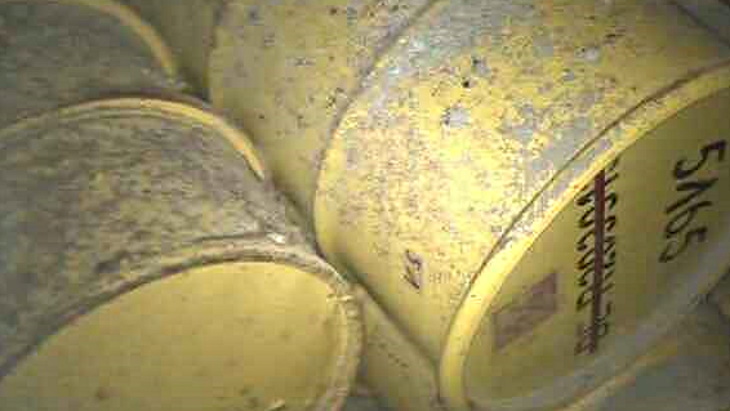
“Through a tennis ball-sized hole, we were able to take a look into Storage Chamber 12 for the first time in decades,” said Iris Graffunder, Chair of the Management Board of BGE. “Our first impression is that at least the visible barrels are in good condition. Now we will find out the exact composition of the chamber atmosphere and measure the activity levels in the chamber. For this, we need more space and will have to expand the borehole.”
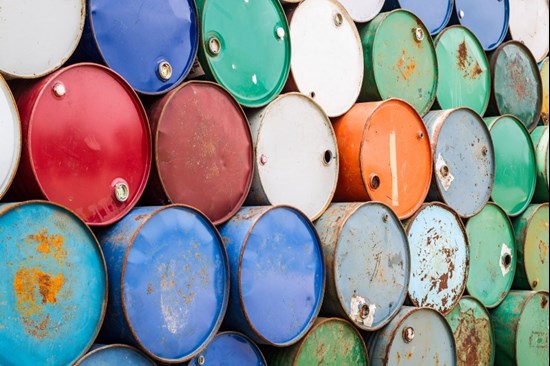
Storage Chamber 12 contains 7,464 containers, including 6,747 drums and 717 so-called ‘lost concrete shields’ (drums encased in concrete). The containers were stacked horizontally. Storage took place in 1973 and 1974. The eventual formation of a sump containing contaminated solution in the access area to this storage chamber led, among other things, to the Asse II mine being placed under nuclear law in 2009.
Storage Chamber 12 is one of the highest radon emitters in the Asse II mine. At the end of May 2024, miners began the targeted drilling into the chamber under the highest radiation protection standards. At a depth of 750 metres, a borehole about 117 metres long was drilled to access the chamber. On 6 August, radiation protection measurements during drilling showed elevated radon levels, indicating that the chamber had been reached.
A planned gas measurement will reveal the composition of the chamber atmosphere and the factors that influence it. Further geological exploration is also underway. Preliminary investigations revealed that the chamber ceiling was deeper than expected. The first images from the chamber confirm these radar and magnetic measurements. A planned 3D scan is intended to provide a more complete picture of the emplacement chamber.
All of the measured values obtained will be utilised in the further planning of retrieval and in future licensing procedures. Among other things, they will allow BGE to determine which recovery technologies can be used in Storage Chamber 12.
BGE – a federally owned company within the remit of the Federal Environment Ministry – took over responsibility as operator of the Asse II mine and the Konrad and Morsleben repositories from the Federal Office for Radiation Protection in April 2017. It is also tasked with searching for a repository site to dispose of the high-level radioactive waste generated in Germany on the basis of the Site Selection Act that came into force in May 2017.
According to current planning, retrieval of the radioactive waste stored in Asse II is scheduled to begin in 2033. Currently, costs of about EUR4.7 billion (USD5.5 billion) are expected until retrieval begins, including the costs of keeping the mine open and implementing the emergency planning precautions. The costs for retrieval, interim storage, and final disposal after 2033 have not been taken into account.