The filing marks the start of formal pre-application engagement with the Nuclear Regulatory Commission (NRC), and is a key milestone in its strategy to deploy “proven large-scale nuclear power in support of significant US electricity demand driven by data centres, artificial intelligence, advanced manufacturing and broader electrification”, the Montreal, Canada-headquartered company said.
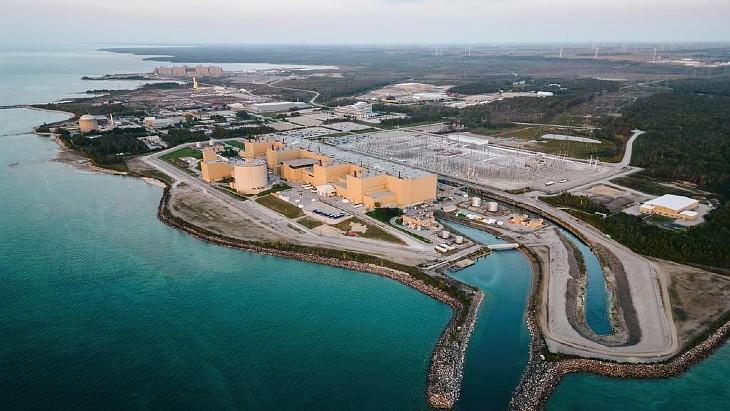
CANDU – for Canada Deuterium Uranium – technology is a Canadian reactor design that uses heavy water (deuterium oxide) as a moderator and coolant, and fuelled using natural uranium (as opposed to enriched uranium). The first prototype unit – with a gross capacity of only 25 MWe – was connected to the grid at Rolphton, Ontario in 1962. Since then, some 34 units have been built around the world, including all 17 of the reactors currently operating in Canada, building up nearly 1,000 reactor-years of experience. It has demonstrated strong operational and safety performance internationally, in Canada, Romania, Argentina, South Korea, and China, and – as well as generating electricity – co-produces medical radioisotopes: CANDU reactors in Canada produce 50% of the world’s supply of cobalt-60, used to sterilise about 40% of the world’s single-use medical devices as well as in cancer treatment.
AtkinsRéalis is the original equipment manufacturer (OEM) and exclusive licence holder of CANDU technology: the intellectual property belongs to the Canadian government, and is held on its behalf by Crown corporation Atomic Energy of Canada Ltd.
“As the United States enters a new chapter in its civilian nuclear program, AtkinsRéalis is uniquely positioned, as the steward of CANDU technology, to help advance the country’s ambitious energy policy through proven, low-cost reactor technology with a world-class reputation,” said the company’s President and CEO Ian Edwards. “This Notice of Intent marks a critical milestone in the development of CANDU’s international market. It’s also the first step in a process that supports our ambition to provide the US with the reliable, affordable and safe large-scale nuclear power that is central to providing energy security and creating investment, jobs and economic opportunity in the country.”
The Enhanced CANDU 6 design is a 700+ MW-class pressurised heavy water reactor that uses natural uranium fuel and online refuelling, enabling continuous operation without requiring to shut down for refuelling, the company said.
NRC design certification approves a nuclear power plant design, independent of an application to construct or operate a plant. It is achieved through the NRC’s rulemaking process, and is founded on the staff’s review of the application, which addresses the various safety issues associated with the proposed nuclear power plant design, with opportunities for public participation in the regulatory process.
AtkinsRéalis said it is engaging US utilities, state governments and prospective “anchor power purchasers”, including hyperscale data centre operators and large industrial users, to evaluate potential deployment opportunities, and is focusing on existing nuclear sites and jurisdictions with supportive nuclear policy frameworks to reduce siting risk and accelerate timelines.
“CANDU reactors strengthen US energy security in a very tangible way as they use natural uranium and do not require enrichment, ultimately reducing reliance on foreign enrichment services,” said Joe St Julian, President, Nuclear, AtkinsRéalis. “That fuel flexibility, combined with decades of on time and on budget performance, will give the United States greater control over its nuclear fuel supply chain, which is of paramount importance in the current geopolitical climate, while delivering dependable, low-carbon baseload power.”
AtkinsRéalis’ announcement comes just days after which targets winning at least four new international markets for CANDU technology by 2040.