After years of delays, Australia’s largest undeveloped oil project could progress to a final investment decision in 2027 as the energy crisis amid the Iran war has heightened the need of homegrown resources.
Carnarvon Energy Ltd, a junior explorer that holds 10% in the Dorado oil discovery offshore Western Australia, believes that a final investment decision to develop the project could be made in late 2027, Carnarvon’s chief executive Philip Huizenga told Bloomberg in an interview on Friday.
Australian energy giant Santos is the operator and majority holder with an 80% stake, while Taiwan’s CPC holds the remaining 10% equity in Dorado, an oil discovery made in 2018 and estimated to contain gross 2C contingent resources of 344 million barrels of oil equivalent.
“Dorado has come right back to the top of Santos’ thinking. It’s an oil project at a time when there’s a need for energy security in Australia,” Carnarvon’s Huizenga told Bloomberg.
Santos hasn’t signaled an FID, but it said in its investor briefing day last week that the Bedout Basin, which contains the Dorado discovery, would be appraised for scale with three wells in 2027 to test the integrated oil and gas prospects in the northern part of the basin.
Dorado, the largest undeveloped oil project in Australia, is a high-return, short payback-cycle project, and has the potential to provide increased energy security, according to Santos.
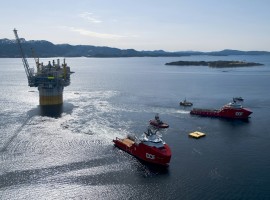
An initial development would involve the production of oil and condensate through a floating production, storage, and offloading (FPSO) vessel, while a second phase would entail gas production to backfill Santos’ domestic gas infrastructure in Western Australia.
Despite the fact that it is a major gas and LNG producer, Australia relies on imports for most of its transportation fuel supply. The situation became worse after a fire broke out at one of the only two refineries in the country.
Since 2013, Australia has permanently closed five out of its seven refineries, which has increased its reliance on imported fuel. But the Iran war and the fuel crunch in Asia led to extraordinary measures in Australia such as halving the fuel excise on gasoline and diesel for three months and securing shipments of diesel and gasoline, including from Brunei, South Korea, and even China.
By Michael Kern for Oilprice.com
More Top Reads From Oilprice.com
- Brazil Launches World-First Ethanol-Powered Grid Engine
- EU Says No Jet Fuel Shortage Coming Despite Middle East Supply Loss
- UK Conservatives Blast Labour North Sea Ban as ‘Utter Madness’