©Budweiser Brewing Group
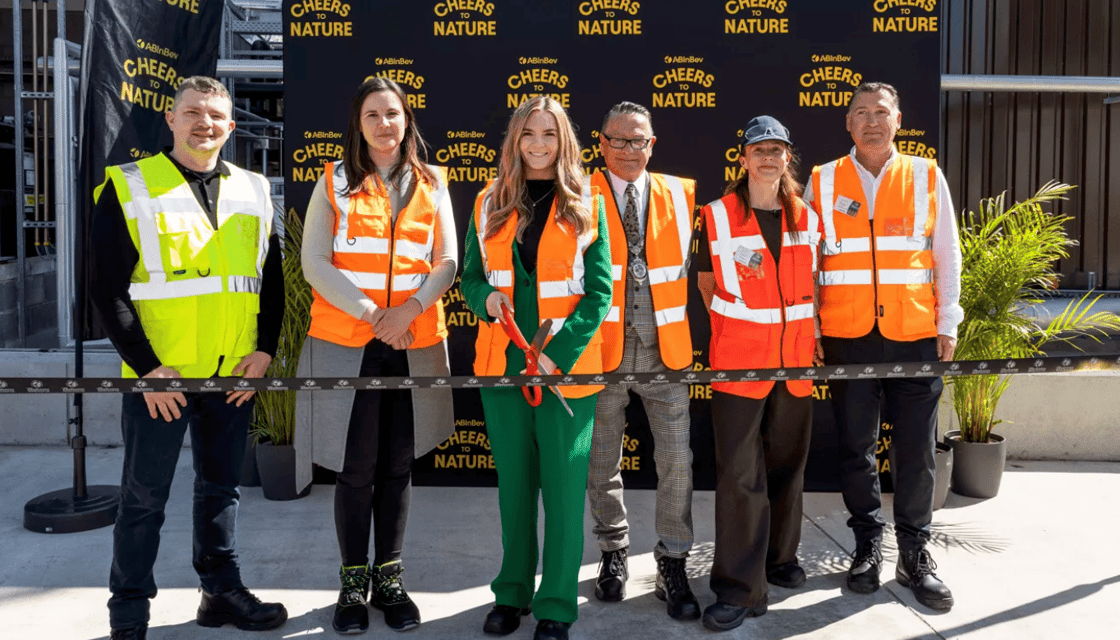
Industrial wastewater treatment firm Global Water & Energy recently installed a biogas recovery system at Budweiser Brewing Group’s Samlesbury brewery in the UK.
As part of the on-site water treatment process, organic material is broken down, which produces biogas as a by-product. This is re-injected into the brewery’s energy system and used as renewable heat. As a result, the brewery has reduced gas consumption by 5-8% and lowered CO₂ (Scope 1) emissions.
Uli Ombregt, Business Unit Manager of Global Water & Energy, said the system supports Budweiser Brewing Group’s operational needs while contributing to its sustainability ambitions.
“By turning wastewater into renewable energy, this project shows how industrial water treatment can create real environmental and operational value,” he said.
The brewery, which has been brewing since 1972, employs around 500 people, making it a significant contributor to the northwest economy. It received a £7.8m investment in 2025.
Breweries generate significant wastewater and spent grain, making them ideal hubs for biogas production.
Through anaerobic digestion, these by-products generate methane-rich gas that can offset natural gas consumption for on-site heating and electricity, or be purified into food-grade CO2.
Austrian pioneer Gösser Brewery uses anaerobic digestion to convert its spent grains and wastewater into biogas for thermal steam production and electricity.