Breakthrough in Solar Energy: Scientists Achieve Record 31.16% Efficiency in Perovskite Solar Cells

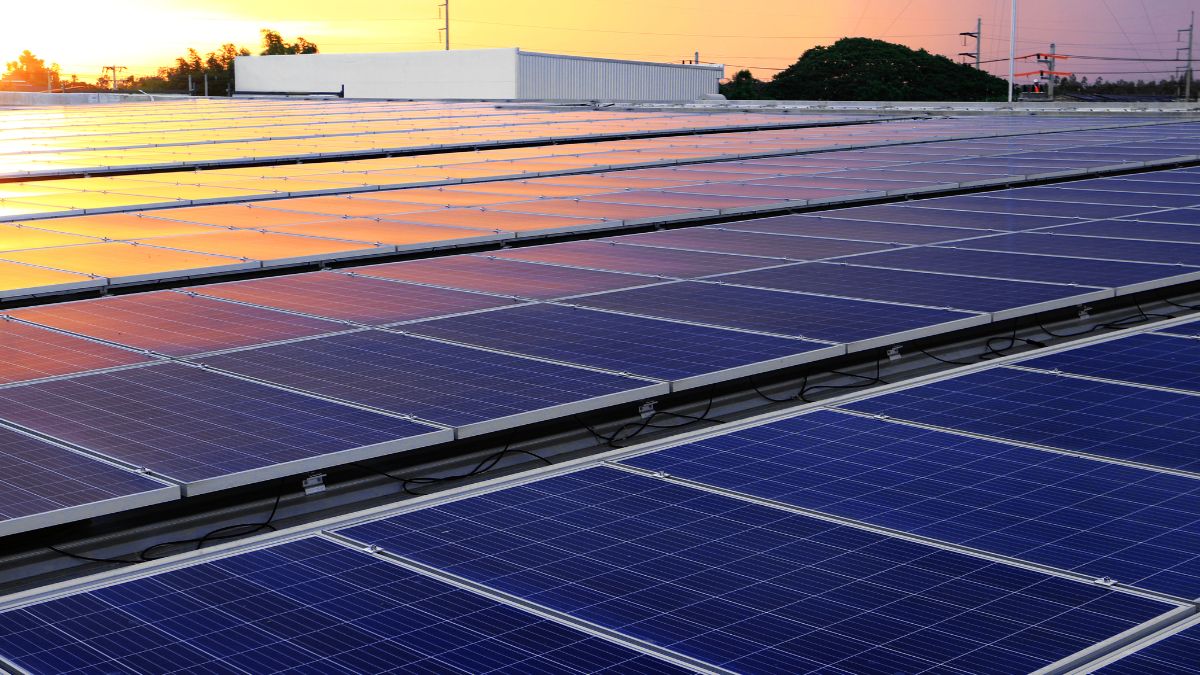
Representational image. Credit: Canva

A groundbreaking advancement in solar technology has been achieved, with researchers successfully developing a perovskite solar cell (PSC) that reaches an impressive 31.16% power conversion efficiency (PCE). This milestone, reported in the Journal of Alloys and Compounds, represents a significant leap forward in renewable energy research.

The breakthrough comes from a collaborative effort among scientists from institutions in India, Sweden, and beyond. By integrating a novel layered design combining two-dimensional (2D) and three-dimensional (3D) perovskite materials, the team has improved both the stability and efficiency of solar cells. This innovative approach could pave the way for more durable and commercially viable solar technologies.

Perovskite solar cells have long been hailed as a promising alternative to traditional silicon-based panels due to their high efficiency and lower manufacturing costs. However, issues related to long-term stability have hindered widespread adoption. The latest research overcomes these challenges by leveraging Dion-Jacobson phase 2D perovskites, which provide enhanced protection to the underlying layers, thereby improving durability.

The optimized solar cell structure demonstrated superior performance metrics, including higher current density and voltage output. These findings underscore the potential of perovskite technology to revolutionize the solar industry, bringing it closer to mainstream deployment.

As the world seeks cleaner and more efficient energy solutions, this development marks a crucial step toward making solar power more accessible and reliable. Industry experts believe that with further refinements, perovskite-based solar panels could soon become a game-changer in the global shift toward sustainable energy.
 

  • Related Posts

    Australia Awards 15 Battery Storage Projects Under CIS Tender 8, Adding 4.2 GW/16.1 GWh Capacity

    Representational image. Credit: Canva The Albanese Government has announced 15 successful large-scale battery energy storage projects under Capacity Investment Scheme (CIS) Tender 8, marking a major step in Australia’s transition…

    B.Grimm Power Subsidiary Acquires Future Green Tech to Expand Solar Power Portfolio

    Representational image. Credit: Canva B.Grimm Power Public Company Limited has announced that its subsidiary, B.Grimm Greenery Company Limited (BGG), has acquired 100% of the shares of Future Green Tech Company…

    Have You Seen?

    Qatar Offers First Crude Loadings to Buyers Since War Began

    • June 26, 2026
    Qatar Offers First Crude Loadings to Buyers Since War Began

    China’s Crude Imports Set to Hit Weakest Level Since 2016

    • June 26, 2026
    China’s Crude Imports Set to Hit Weakest Level Since 2016

    Kazakhstan Cuts Gas Output after Drone Strike on Russian Processing Plant

    • June 26, 2026
    Kazakhstan Cuts Gas Output after Drone Strike on Russian Processing Plant

    Hormuz Shipping Confidence Is Still Shaky

    • June 26, 2026
    Hormuz Shipping Confidence Is Still Shaky

    Saudi Arabia Set to Slash Oil Prices as Hormuz Reopens

    • June 26, 2026
    Saudi Arabia Set to Slash Oil Prices as Hormuz Reopens

    Baghdad Hosting EU Energy Talks After Iraq Floats OPEC Exit

    • June 26, 2026
    Baghdad Hosting EU Energy Talks After Iraq Floats OPEC Exit

    US electricity demand to rise 21% by 2030

    • June 26, 2026
    US electricity demand to rise 21% by 2030

    Oil Set for Hefty Weekly Losses as Tankers Exit Strait of Hormuz

    • June 26, 2026
    Oil Set for Hefty Weekly Losses as Tankers Exit Strait of Hormuz

    Trump Clean Energy Tax Credit Cutoff Drives Project Rush as Prices Set to Soar

    • June 26, 2026
    Trump Clean Energy Tax Credit Cutoff Drives Project Rush as Prices Set to Soar

    Podcast | AI, semiconductor growth & the future of specialty gases

    • June 26, 2026
    Podcast | AI, semiconductor growth & the future of specialty gases