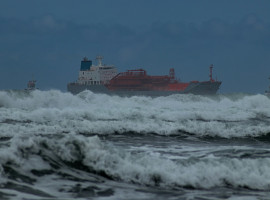
The Middle East’s largest remaining oil export corridor came under renewed pressure on Monday after Yemen’s Houthis announced a complete ban on Israeli shipping in the Red Sea, risking a further widening of the shipping crisis beyond the Strait of Hormuz.
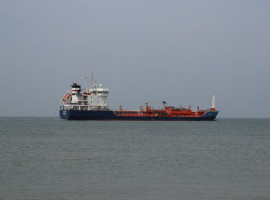
The announcement comes as the Red Sea has assumed a far larger role in global oil trade following months of disruption around the Strait of Hormuz. Saudi Arabia has increasingly relied on its East-West Pipeline system and the Red Sea export terminal at Yanbu to move crude to international markets, allowing shipments to bypass the Persian Gulf and the risks associated with Hormuz. Tanker traffic through the corridor has risen sharply as buyers sought alternative routes for Middle Eastern crude.
In a statement, the Houthis said they were imposing a “complete and total ban” on Israeli maritime navigation in the Red Sea and warned that Israeli vessels would be considered legitimate military targets. The group also claimed responsibility for missile strikes against targets near Tel Aviv.
In April, senior Houthi officials threatened to close the Bab el-Mandeb altogether if the conflict continued to intensify.
Any expansion of Houthi operations around Bab el-Mandeb would place additional pressure on a global oil market that is already struggling to adapt to reduced flows through Hormuz.
The Houthi statement comes as Israel and Iran traded fire on Monday, with new attacks, including an Israeli strike on an Iranian petrochemical complex just hours after U.S. President Donald Trump demanded that Tel Aviv halt its aggression.
Oil prices spiked 5% in early morning trading, before paring some of those gains. By 7:38 a.m. ET, Brent crude was trading at $94.68, up 1.71% on the day, while the U.S. benchmark, West Texas Intermediate (WTI) was trading up 1.77% at $92.14.
By Charles Kennedy for Oilprice.com
More Top Reads From Oilprice.com
- Australia’s 344-Million-Barrel Oilfield Could Finally Get the Green Light
- Israel Hits Iranian Petrochemical Plant as War Escalates
- China Delays 500,000 Bpd Of Refining Capacity As Hormuz Disruptions Deepen