By
1 hour ago 3 min read
Behind-the-meter gas-based power solutions are emerging as one of the primary workarounds for data centre developers facing grid and permitting constraints.
Paul Fukumoto, Director Technology & Product Solutions at FuelCell Energy, told a recent that on-site fuel cell systems are being positioned for operators facing delays in grid connections and tightening environmental regulations.
“On-site power is a definite push by data centres because of the lack of utility power,” he said, pointing to growing challenges around infrastructure buildout and access to reliable electricity.
Data centre developers are increasingly competing for limited grid capacity, with new projects often facing multi-year wait times for upgrades.
At the same time, air permitting, particularly in urban and non-attainment regions, has become a key bottleneck for deploying conventional gas-fired generation.
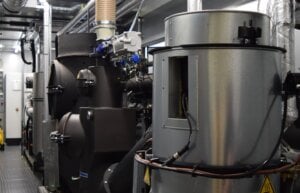
Fuel cells, which convert gas electrochemically rather than through combustion, are viewed as a lower-emissions alternative. “We have minimal NOx, SOx or particulate matter… that enables fast permitting,” Fukumoto explained.
A new anchor demand for gas?
Data centres require continuous, high-reliability power, creating a potential long-term demand base for natural gas and renewable gas streams.
FuelCell Energy’s systems can operate on natural gas, biogas, and hydrogen blends. “We are fuel flexible… we can run on natural gas, biogas, or blends of hydrogen,” Fukumoto said.
While hydrogen demand remains limited in the near term, this flexibility points to a broader trend: infrastructure is increasingly being built with future decarbonisation pathways in mind.
The most immediate differentiator lies in emissions.
Traditional on-site power solutions, such as gas turbines and reciprocating engines, face growing scrutiny due to their emissions profile. By contrast, fuel cells’ non-combustion process significantly reduces criteria pollutants.
“Fuel cells…have extremely low air pollutant emissions, which means you can site more megawatts…in a densely populated area,” Fukumoto said, adding.
This dynamic could shift the competitive balance within gas-based generation technologies, particularly where permitting risk and timelines dominate project economics.
Efficiency gains reinforce gas’ role
Beyond power generation, combined heat and power configurations could also improve overall site efficiency.
Waste heat from fuel cells can be repurposed for absorption chilling, reducing the energy required for cooling – one of the largest non-IT loads in data centres.
“We can increase the efficiency… to about 70% by producing chilled water,” Fukumoto said, describing how heat recovery can reduce overall energy consumption.
The emergence of behind-the-meter solutions reflects a broader shift in how large-scale energy users are approaching supply.
Rather than relying solely on grid expansion, developers are increasingly exploring decentralised energy models combining on-site generation, storage and grid connections.
Hear more from Paul Fukumoto of FuelCell Energy in gasworld’s Gas to GPUs webinar, exploring how combustion-free fuel cells can help data centres overcome grid constraints and permitting challenges.