The Ksi Lisims LNG project has received an environmental assessment certificate from the British Columbia authorities that brings it closer to the start of construction. The federal government also granted the project its environmental approval.
CBC reported that, per the certificate, the project will have to comply with a number of strict environmental requirements, including mitigation measures in case local ecosystems are affected by Ksi Lisims LNG operations.
Like all other conventional energy projects in Canada, Ksi Lisims has also experienced loud opposition from environmentalists, but the British Columbia government has decided to go ahead with its approval, perhaps not least because it has at least one First Nation behind it—the Nisga’a Nation is one of the stakeholders in the Kis Lisims project.
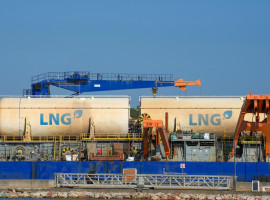
The facility will involve a floating production vessel with the capacity to produce some 12 million tons of liquefied natural gas annually. The markets for this LNG will be in the Pacific Basin, per the project’s website, with a focus on Asia, where demand for low-emission fuels is growing.
If built, the Ksi Lisims facility will be the second LNG project to be built in Canada in less than a decade, despite the previous federal government’s stance that there was no business case for building LNG trains. The current government, while still publicly committed to a transition from oil and gas to low-carbon electrification, has signaled eagerness to utilize Canada’s hydrocarbon resources.
Indeed, Prime Minister Mark Carney named the Canada LNG project among five “nation-building” projects for approval that are expected to yield close to $44 billion in income for the Canadian state. The project is Phase 2 of the Kitimat facility that should double its production capacity, which currently stands at 5.6 million tons. The peak capacity of the Canada LNG project is set at 14 million tons.
By Irina Slav for Oilprice.com
More Top Reads From Oilprice.com
- Sanctioned Russian Tanker Unloads at Indian Port
- California Passes Bill to Boost Oil Production Amid Refinery Shutdowns
- Yale Scientists Crack the Code on Turning Plastic Waste Into Fuel