Following the 2011 Fukushima Daiichi accident, caused by a huge tsunami along Japan’s coast, experts from Chernobyl – whose unit 4 was destroyed in 1986 – helped advise and share their experience in overcoming the immediate consequences.
Now, with Japanese specialists developing innovative robotic solutions to sample and remove fuel from the destroyed core of its damaged units, Chernobyl officials have been visiting to find out more and “assess the possibilities of using robotic systems and remote monitoring technologies” for handling fuel-containing materials and the future dismantling of the original shelter over the ruins of the Ukraine plant’s unit 4.
The four-day technical event from 2 November in Fukushima, focused on sharing knowledge and practical experience in nuclear power plant decommissioning. SSE Chornobyl (ChNPP) attendees included senior experts from the used fuel management department and the decommissioning department.
Specialists from Japan Atomic Energy Agency’s Centre for Remote Control Technology Department demonstrated software for creating 3D models of buildings using drones and robotic platforms which enable surveys in high-radiation areas that allow users to virtually visit the facility. They also demonstrated the robotic ‘arm’ used for remote sampling of fuel-containing materials which were formed as a result of the melting of nuclear fuel during the accident.
Maksym Protsenko, Head of the Engineering Centre for SSE Chornobyl NPP, said the visit had been very valuable for them, recalling that: “In 2011, ChNPP specialists provided assistance to Japanese colleagues … our experts applied their own experience to help overcome the immediate consequences of the accident.”
Now, SSE Chornobyl said, “Japanese specialists have gained significant experience and they can now share it with their Ukrainian colleagues. Such cooperation is important for both parties, as decommissioning nuclear power plants is a complex and lengthy process that requires modern engineering solutions, high-tech equipment, an appropriate level of radiation and environmental safety, and thorough planning.
“The acquired knowledge and practical experience will help ChNPP specialists assess the possibilities of using robotic systems and remote monitoring technologies, as well as find new approaches to handling fuel-containing materials and dismantling unstable structures of the Shelter Object.”
Background
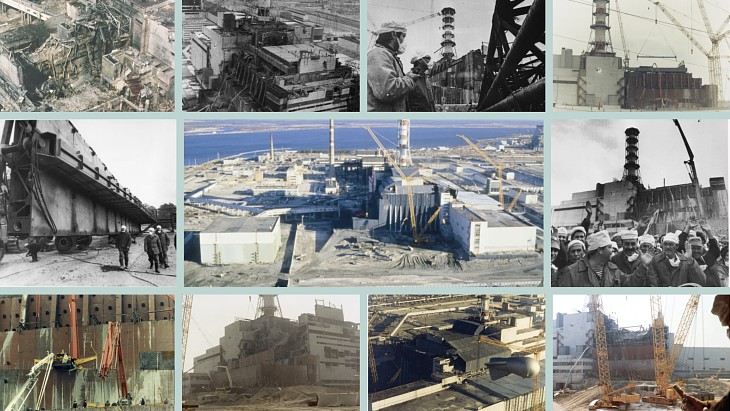
Chernobyl unit 4 was destroyed in the April 1986 accident (you can read more about it in this ) with a shelter constructed in a matter of months to encase the damaged unit, which allowed the other units at the plant to continue operating. It still contains the molten core of the reactor and an estimated 200 tonnes of highly radioactive material.
However that shelter was not designed for the very long-term, and so the New Safe Confinement – the largest moveable land-based structure ever built – was constructed to cover a much larger area including the original shelter. The New Safe Confinement has a span of 257 metres, a length of 162 metres, a height of 108 metres and a total weight of 36,000 tonnes and was designed for a lifetime of about 100 years. It was built nearby in two halves which were moved on specially constructed rail tracks to the current position, where it was completed in 2019.
With the giant New Safe Confinement in place there were plans to make safe and dismantle the original shelter. However a drone strike last year caused fires and considerable damage to the structure, with a study earlier this year putting the estimated repair costs at around EUR500 million (USD577 million). The aim of the restoration project work is to restore the protective qualities of the New Safe Confinement to allow planning for safety work on the original shelter to resume.
Read more:
The Fukushima Daiichi accident took place 25 years after Chernobyl’s. On 11 March 2011 a major earthquake struck Japan. It was followed by a 15-metre tsunami which disabled the power supply and cooling of three reactors at the Fukushima Daiichi nuclear power plant and all three cores largely melted in the first three days. More than 100,000 people were evacuated from the area as a precaution because of radioactive releases in the wake of the accident. After two weeks, the three reactors were stable and official ‘cold shutdown condition’ was announced in mid-December.
According to World Nuclear Association, there have been no deaths or cases of radiation sickness from the nuclear accident but there have been 2,313 disaster-related deaths among evacuees from Fukushima prefecture, which are in addition to the 19,500 killed by the earthquake and tsunami. Since the accident, work has been taking place to safely decommission the reactors and the surrounding areas, with large areas of the evacuated areas now back open for people to live in.
Since the accident, work has been taking place to safely decommission the reactors and the surrounding areas, with large areas of the evacuated areas now back open for people to live in. The full decommissioning process for Fukushima Daiichi is scheduled to last until 2051.