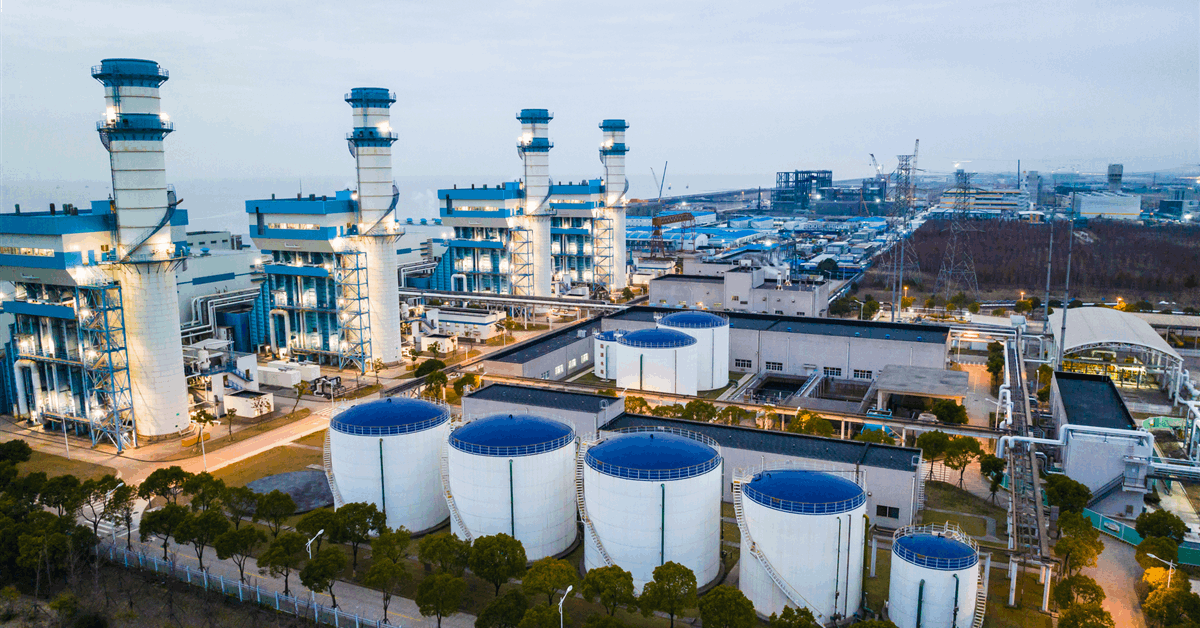
China’s natural gas producers are lobbying Beijing to increase the number of power plants that run on the fuel, in a bid to help prop up faltering demand.
The power sector – which currently accounts for 18 percent of China’s gas consumption – is viewed by the industry as a key engine of growth, according to people involved in advising on energy policy. Under the sector’s latest proposal, China would build nearly 70 gigawatts of new gas-fired capacity by 2030, an almost 50 percent increase from 2025’s estimated level, they said, asking not to be named as the plan is not public.
The government has started collecting proposals as it drafts China’s next five-year plan, which will be ratified by the National People’s Congress in March 2026. The strategic blueprint will outline economy-wide targets that balance growth, decarbonization and energy security goals.
China’s gas demand, once fast-expanding, has slowed over the last few years due to weaker industrial activity, booming renewable-energy supply and a continued reliance on coal. An unseasonably warm winter and strong inventories have prompted analysts to cut forecasts for China’s imports of liquefied natural gas in 2025, with deliveries slated to fall compared to the previous year.
For domestic drillers, which have increasingly leaned on gas as oil consumption too stutters, expanding the amount that can be sold to the power sector offers a way to offset weaker growth in heating and elsewhere. Slowing urbanization and improved air quality have essentially ended a decade-long coal-to-gas transition among households.
China is advancing energy market reforms that will favor more cost-effective sources of electricity generation. Although gas power is more expensive than solar, which currently trades at less than half the price, it’s able to ramp up more quickly than baseload coal or nuclear. That agility could secure the fuel a larger role in the power mix, even if clean energy ultimately dominates and limits utilization rates.
Any potential buildout still faces major hurdles. Seaborne gas imports are prohibitively expensive compared to domestic coal or renewable sources. Domestic alternatives have to wrestle with the technical challenges and expense of tapping harder-to-reach shale and coalbed methane reserves. Storage constraints also limit gas’s ability to play a larger role in meeting peak demand and handle seasonal spikes.
Generated by readers, the comments included herein do not reflect the views and opinions of Rigzone. All comments are subject to editorial review. Off-topic, inappropriate or insulting comments will be removed.