China’s state oil majors are racing to keep up with the nation’s breakneck energy transition, shifting operations from loss-making gasoline and diesel to alternative fuels and high-end chemicals.
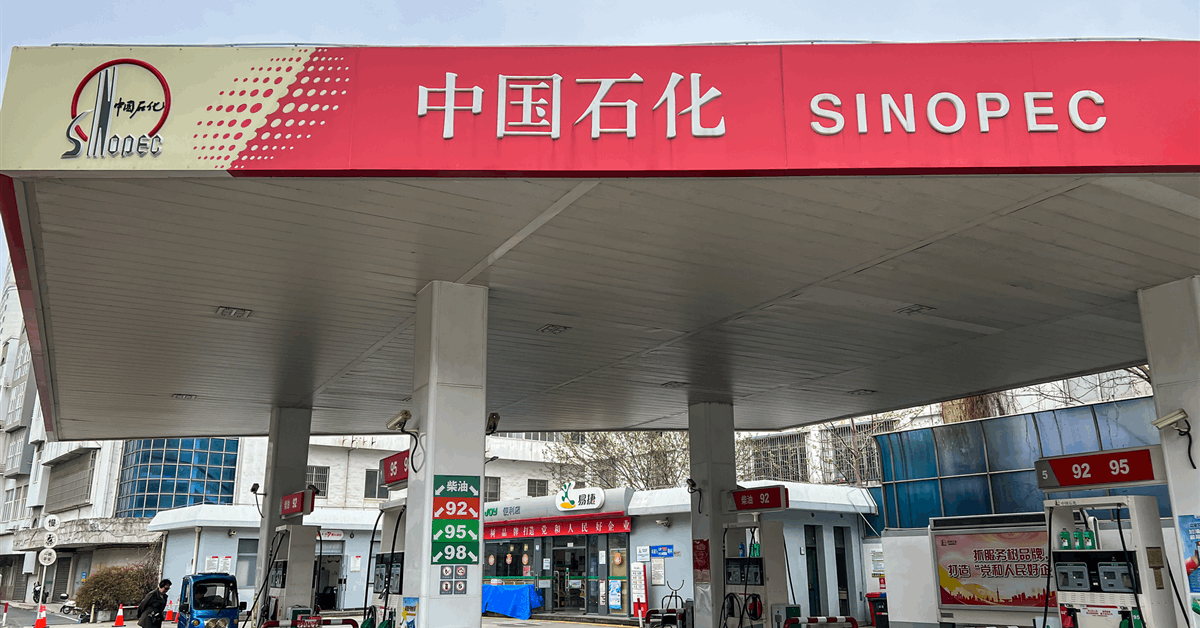
Over the past week, both PetroChina Co. and Sinopec have reported first-half earnings blunted by weaker international oil prices and crumbling demand for fossil fuels at home. Their response, according to executives, will be to revamp downstream businesses and extend their reach to more specialized, higher-value products.
Sinopec’s 36 percent drop in net income was led by a 59 percent tumble in operating profit at its mainstay refining business and deepening losses at its chemicals unit. PetroChina fared better only because it’s less dependent on those segments, which still saw a combined decline of 19 percent compared to last year.
More broadly, oil processing is among the worst performing industries in China and has lost money over the first seven months of the year, according to government data. The rapid electrification of cars, trucks and trains means demand for traditional transport fuels has almost certainly peaked.
Chinese gasoline consumption will “face quite a lot of pressure” in the second half, PetroChina’s Chief Financial Officer Wang Hua said at an earnings briefing in Hong Kong on Wednesday. He cited electric charging and the use of natural gas as a fuel as key threats to demand.
Chemicals makers, particularly bulk suppliers to industries like plastics, have also struggled this year with overproduction relative to demand. Indeed, the whole downstream sector is now bracing for a sweeping overhaul as the government campaigns against the involutionary pressures burdening the economy.
That will put a lot of capacity on the chopping block. Sinopec will speed up the elimination of outdated facilities and control investment in chemicals during the government’s next five-year plan that begins in 2026, President Zhao Dong said at an earnings briefing in Hong Kong last week.
High-end chemicals will be a “critical investment direction” to feed substantial demand growth from aircraft, drones, robotics, batteries and new energy vehicles, Chairman Hou Qijun said at the same briefing.
PetroChina’s prescription for the second half also involves turning to more specialized compounds. Those include relatively mundane items like paraffin and lubricants, to low-sulfur marine fuel, carbon fibers and materials that insulate high-voltage cables, according to its earnings report.
Cleaner Gas
Both companies are also leaning into cleaner-burning gas and electric vehicles to loosen oil’s grip on their profits.
PetroChina said its liquefied natural gas refueling stations saw volumes rise 59 percent in the first half. For electric charging stations, the jump was 213 percent. Growing both will be a focus for the company in the second half, it said. The firm’s proposal to buy its parent’s gas storage businesses for $5.6 billion will only cement its lead in that market.
Sinopec, meanwhile, has worked to become an integrated energy provider in the first half, developing its EV battery networks and ranking No. 1 in the retail LNG market, Chief Financial Officer Shou Donghua told the briefing in Hong Kong.
For all of the recalibration downstream, both companies remain firmly committed to upstream growth in line with Beijing’s energy security goals. Offshore driller Cnooc Ltd., the third of China’s oil majors, which also reported earnings this week, has typically led those efforts. In practice, that has meant keeping oil output at least steady while raising gas production.