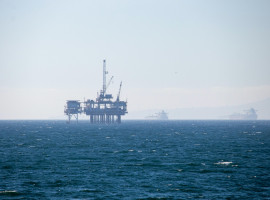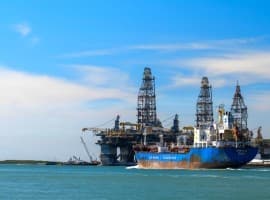
China’s state energy company CNOOC said today it had discovered a new oil field in the South China Sea that could contain over 100 million tons of crude oil, equal to around 733 million barrels.
Dubbed Huizhou 19-6, the field is located some 100 miles offshore the province of Shenzhen. Test drilling produced 413 barrels of crude oil and 68,000 cu m of natural gas daily, state news agency Xinhua reported.
‘;
document.write(write_html);
}
Deepwater and ultra-deepwater oil and gas deposits are garnering growing attention from oil and gas explorers as they run out of more easily accessible reservoirs in shallower waters and onshore. Last October, CNOOC reported record oil and gas production from a field called Deep Sea #1. The field was the company’s first ultra-deep project, an example of the pursuit of new, untapped resources that lie deeper under the sea in the push to secure local supply.
Domestic oil and gas production is crucial for China as it seeks to reduce its dependence on energy imports. To boost this domestic production, Beijing has been investing heavily in both onshore and offshore exploration. Deepwater drilling, however, comes with numerous challenges, including high temperatures and pressure, and complicated geological conditions. There are similar challenges in deeper than usual onshore drilling but it has not stopped Chinese energy majors from pursuing such exploration.
A CNPC project in the Tarim Basin in Northwestern China saw the state oil major experiment with drilling depths of up to 11,000 meters onshore. The drilling began in 2023. Last year, after 279 days of drilling, the drill broke the 10,000-meter mark, per Chinese media reports, making the well the deepest ever drilled in the country. It was also the deepest well drilled in Asia—and the fastest drilled well of over 10,000 meters. The well was completed in March last year.
By Irina Slav for Oilprice.com
More Top Reads From Oilprice.com
- Trump: 25% Tariff On Anyone Who Buys Venezuelan Oil & Gas
- Iraq Hands BP Final Approval for Kirkuk Oil Development
- India Turns Away Russian Oil Tanker As Sanctions Evolve