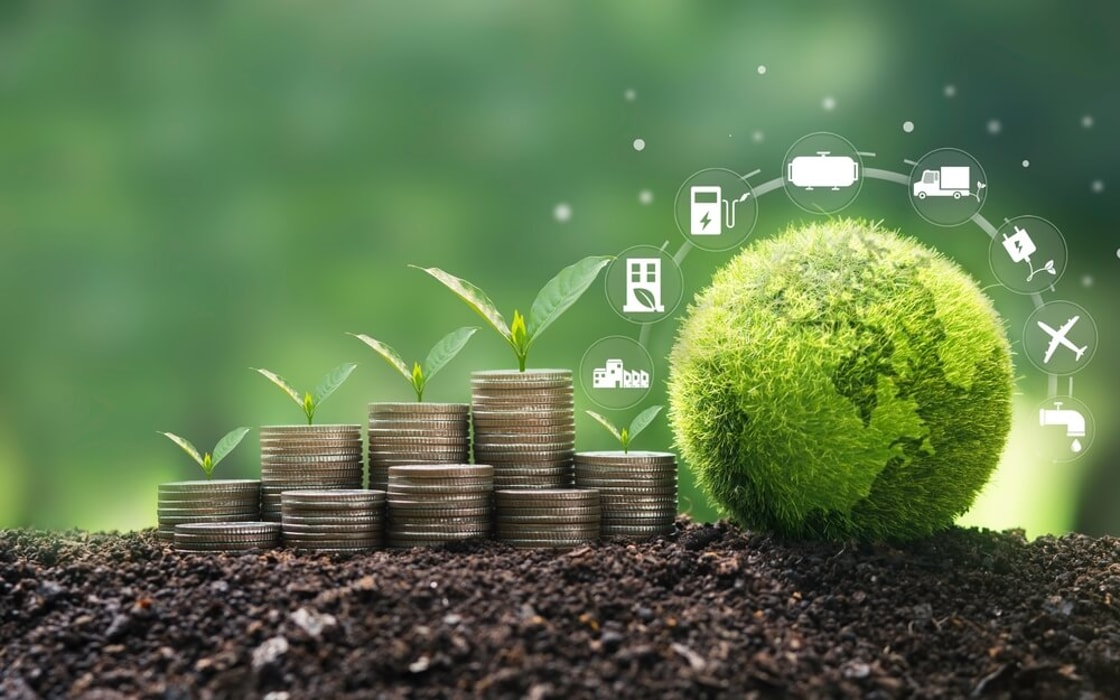
Clean industry plants are securing finance at their fastest pace as countries and companies seek to reduce exposure to volatile fossil-fuel markets and strengthen supply chains that will power future growth.
That was a key message in a new report from Mission Possible Partnership, Clean Industry Rising: the foundation of resilient value chains, supported by the Industrial Transition Accelerator, published alongside its latest Global Project Tracker.
It found 19 clean industry projects reached final investment decision (FID) in the past six months – more than double the rate recorded a year earlier, and worth an estimated $43bn.
The latest wave includes clean fuels, chemicals, fertilisers and metals projects: the industrial essentials needed to grow food, build infrastructure, manufacture goods and move the products that underpin modern economies.
The analysis shows that the global clean industry pipeline now represents a $4.7 trillion in potential investment, including nearly $1.5 trillion in industrial production assets and a further $3.2 trillion in associated renewable energy and storage build-out.
Faustine Delasalle, CEO of Mission Possible Partnership and Executive Director of the Industrial Transition Accelerator, said clean industry is rising as fossil-fuel dependence has highlighted exposure to price shocks, supply disruption, and economic crises, while continuing to fuel the climate crisis.
“Countries that build cleaner industrial systems can gain greater control over the essentials of their economies: energy, food, materials, and industrial goods that underpin every dimension of people’s lives,” she said.
Vicky Roberts-Mills, Global Head of Energy Transition, AXA XL, a leading global commercial insurance and reinsurance business, said the acceleration in clean industry in the latest data shows decarbonisation is not a “future bet” but present-day strategic priority for many companies.
“When insurers meaningfully engage with the projects that make a measurable difference right across a project lifecycle, we can unlock and scale the investment needed for the projects that matter most for supply chain resilience and long-term economic stability, helping to turn the pipeline into operating plants,” she said.
The findings point to a significant acceleration in the shift to decarbonised industrial production across some of the world’s most energy-intensive sectors, including aviation and shipping fuels, fertilisers, steel and aluminium. They arrive amid growing pressure from energy shocks, commodity market volatility and trade fragmentation are reinforcing the need for more resilient industrial systems.
China is moving fast
China remains a paradox. While it is the world’s largest consumer of fossil fuels, with coal accounting for over half of total energy production, it continues to power ahead with clean energy.
The economic powerhouse accounts for 68% of new clean energy FIDs recorded in the past six months, underlining the strength of its industrial strategy and its growing position in the technologies and equipment needed to build clean value chains.
But the geography of clean industry is diversifying. India’s project pipeline grew by 30% over the same period, strengthening its role at the forefront of the new industrial sunbelt – renewables-rich economies with the potential to turn clean energy resources into industrial advantage.
Clean fuels show how policy can unlock investment
Nine methanol plants, four sustainable aviation fuel (SAF) plants and three clean ammonia plants have reached FID over the past half year, reflecting a growing demand for cleaner fuels across aviation and shipping, and emerging interest in locally produced, green fertilisers for agriculture, the report found.
This momentum, undoubtedly fuelled by geopolitical instability and supply chain stress from the ongoing , highlights the impact of clear policy signals in moving clean industry forward.
Pioneering and Asia are helping accelerate investment into clean fuels by giving producers a clear route to securing long-term buyers and giving investors greater confidence in future revenues, while the current energy crisis triggered renewed interest in such mechanisms in countries like Australia.
Trade partnerships underpin more resilient and competitive supply chains
Diversified clean trade partnerships between countries with complementary strengths can support greater resilience, competitiveness and industrial growth.
Projects such as AM Green’s in India, producing clean ammonia, point to a model in which renewables-rich countries produce clean commodities for export and domestic markets, supported by international technology, finance and first buyers. Last week it also announced plans to expand green hydrogen-based ammonia operations at the .
These cross-border partnerships can help established industrial economies secure cost-competitive, cleaner inputs and more resilient supply chains, while opening new export markets and growth opportunities for emerging industrial powers.
These partnerships point to an economic opportunity that extends far beyond individual plants. Each project reaching FID creates commercial opportunities across a wider value chain – from clean power production and clean technology provision to infrastructure and plant construction, logistics and downstream manufacturing.
Across Europe and the US clean tech markets for industry are already worth tens of billions of dollars, showing that there is huge value to be seized beyond commodity production.
These opportunities remain under-recognised, and the window to seize them is narrowing as new clean technology leaders emerge and long-term partnerships get signed across new industrial supply chains, the report added.
It warns that further acceleration is not yet guaranteed and identifies three priorities for turning today’s momentum into a broader industrial shift: creating stronger markets for clean products; building mutually beneficial trade and commercial partnerships that connect clean technology leaders, low-cost clean energy regions with major industrial demand centres; and mobilising public and private finance to reduce the risk of investing in early projects.