By
LONDON, March 11 (Reuters) – The economic risks of the world’s heavy dependence on oil and gas have been laid bare twice in four years – first with Russia’s invasion of Ukraine and now with the U.S.-Israeli war on Iran – undermining U.S. President Donald Trump’s flagship push to double down on fossil fuels.
Get the Latest US Focused Energy News Delivered to You! It’s FREE:
The dramatic supply disruptions and price spikes unleashed by the latest Middle East conflict are likely to harden the resolve of many governments to accelerate the drive for greater energy self‑sufficiency – and that will include clean energy.
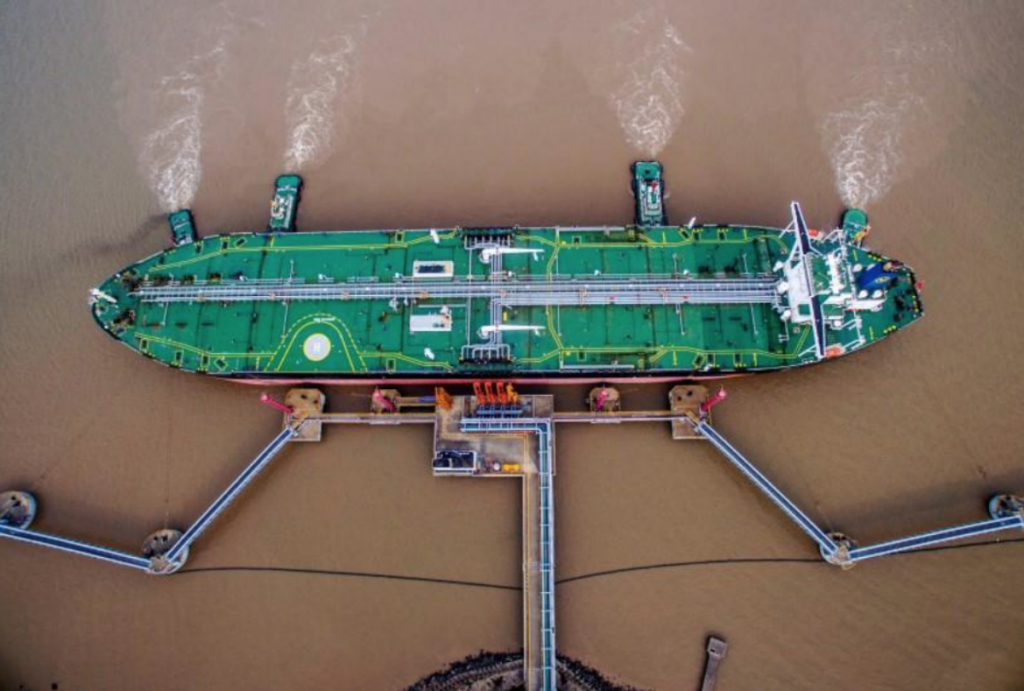
The ongoing Middle East conflict has seen the closure of the vital Strait of Hormuz, through which roughly 20% of global oil and gas shipments flow, sending shockwaves through energy markets.
While Brent crude prices have dropped from $119 per barrel on Monday – their highest level since June 2022 – to around $90, the global benchmark is still more than 24% higher since the start of the war.
In any case, the physical shortages that are rapidly developing are heaping pressure on economies worldwide, reviving fears of higher inflation, weaker industrial output and slower growth globally. The pain has been particularly acute in Asia, which relies on the Middle East for nearly 60% of its crude oil imports.
The latest crisis is a reminder that fossil fuels, like renewables, can be unreliable and volatile – and also that securing domestic sources of energy is critical.
This, in turn, is altering the debate about the global energy system’s two supposedly competing objectives: tackling climate change and ensuring access to cheap, reliable energy.
It turns out the latter may end up helping with the former.
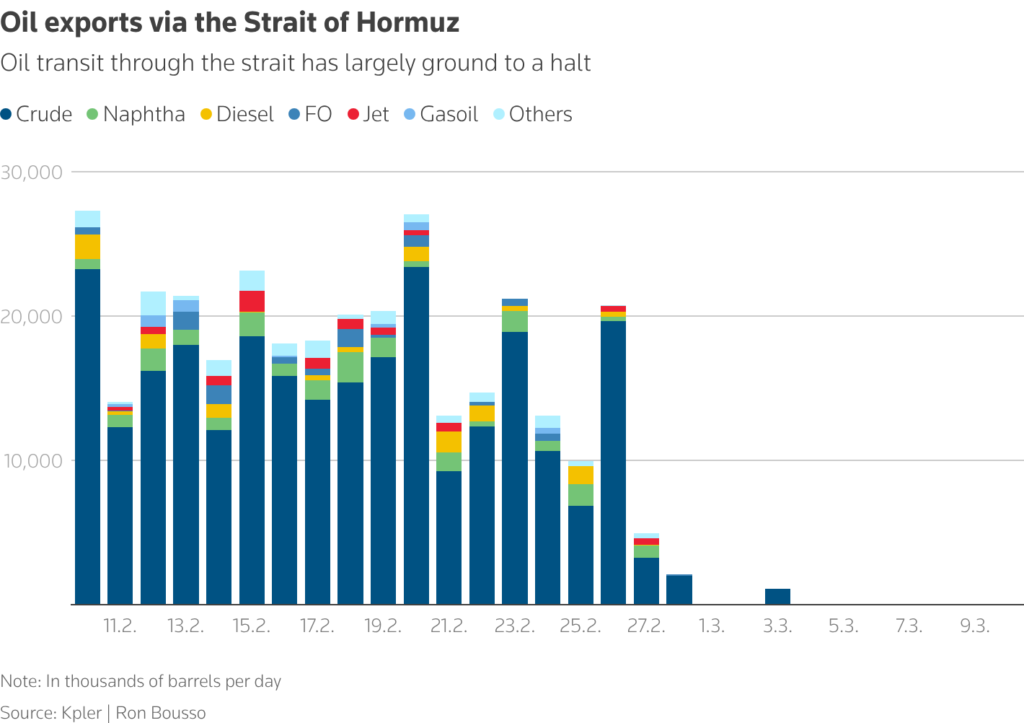
Oil exports via the Strait of Hormuz
THE ERA OF ENERGY SHOCKS
In the debate about whether to prioritize cutting fossil fuels or keeping energy cheap, the pendulum swung decisively toward the energy transition after the signing of the 2015 United Nations‑backed Paris climate agreement. This triggered a wave of investment in renewable power and a sharp pullback in spending on oil, gas and coal – the main sources of greenhouse gas emissions.
However, Russia’s full‑scale invasion of Ukraine in 2022 delivered a brutal wake‑up call.
Europe’s heavy reliance on imported Russian gas was exposed as a significant vulnerability when supplies collapsed, sending prices soaring and compounding global inflation just as economies were emerging from the COVID‑19 pandemic.
That extreme volatility forced governments from Europe to Asia into rapid action. Some fast‑tracked solar and wind projects to insulate their economies from future shocks. But many also ramped up domestic production of gas and coal, and others – notably China and India – embraced an unapologetic “all-of-the-above” approach.
The crisis highlighted a stubborn reality: fossil fuels remain deeply embedded in the global economy. Despite record growth in renewables last year, oil and gas still account for almost 60% of global energy demand, according to the Energy Institute, underscoring how far the world remains from any rapid exit – and how exposed it remains to future shocks.

Chart shows brent price
NO NET ZERO?
The Russia-Ukraine war is not the only force that has reshaped energy geopolitics over the past decade. Another tectonic shift is the rise of the U.S. as the world’s top oil and gas producer, powered by the shale revolution.
Since taking office more than a year ago, Trump has championed U.S. “energy dominance,” seeking to unleash fossil fuel development while rolling back support for renewable energy.
The Trump administration, alongside a growing chorus of politicians globally, has attacked net‑zero ambitions, which refer to the point where greenhouse gas emissions are balanced by the amount removed from the atmosphere.
U.S. Energy Secretary Chris Wright slammed net-zero as a “destructive illusion” during an International Energy Agency (IEA) meeting last month, arguing that the shift to renewables imposes unnecessary costs on consumers already strained by inflation.
The price tag attached to building new renewable power systems is certainly daunting.
Global investment in renewables would need to climb to about $1.4 trillion per year by 2030, from roughly $624 billion in 2024, to meet emissions‑reduction targets, according to the International Renewable Energy Agency (IRENA). The IEA estimates that spending on electricity grids alone must rise by around 50% by 2030 from today’s roughly $400 billion a year.
Even if these enormous sums were met, the notion that the world can quickly switch from fossil fuels to renewables is clearly unrealistic.
But when viewing the situation through the lens of energy security, it makes a lot of sense for governments to look beyond fossil fuels. Indeed, it appears negligent not to.
Consider that in the past week, a single country has been able to upend the global energy system by blocking one waterway that is a mere 39 kilometers (24 miles) wide at its narrowest point. If that were to persist, it could bring significant segments of the global economy to a veritable standstill.
Governments will take notice, especially the most vulnerable economies, and will likely seek to develop more domestic sources of energy, whether they be fossil fuels or renewables.
The push for energy security may thus end up doing what climate policy alone could not: pushing countries to move faster toward a more diversified and resilient energy system.
The opinions expressed here are those of Ron Bousso, a columnist for Reuters.
Ron Bousso; Editing by Marguerita Choy
Share This:
More News Articles