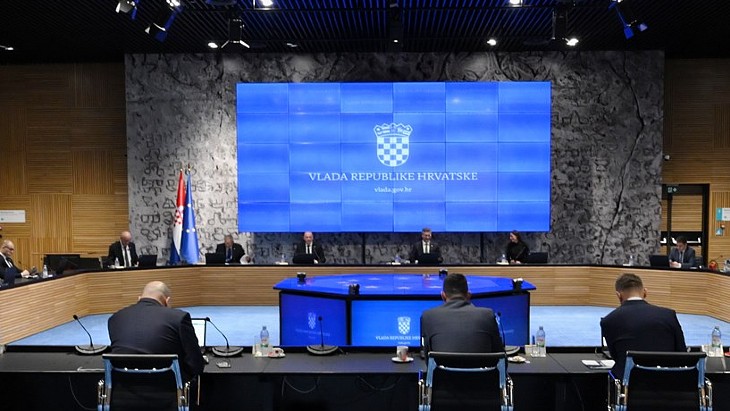
Economy Minister Ante Šušnjar said: “The goal is for nuclear energy to participate in at least 30% of the total energy mix by 2040. With this law, Croatia not only chooses a new source of energy, but makes a strategic decision that confirms its commitment to energy security, climate responsibility and technological progress.”
The draft law sets out a legal framework for the development of nuclear energy, including a commitment that the minister responsible will ensure the start of planning for the development of nuclear energy for civil purposes within six months from the adoption of the law, with the government adopting a plan for the development of nuclear energy for civil purposes within 12 months.
Šušnjar said that activities were beginning relating to the preparation of studies and strategies to establish the “optimal way to realise the project of a future nuclear power plant on the territory of Croatia”.
According to the official government announcement, the thinking behind the draft law is that, with electricity demand growing rapidly and the need for energy security, nuclear can provide the low-carbon, stable, secure and cost-effective energy the country requires.
Croatia does not have nuclear energy capacity in the country, but it is the co-owner with Slovenia of the Krško nuclear power plant close to its border. That plant provides about 16% of Croatia’s electricity needs.
Last year Croatia established a Working Group for Nuclear Energy tasked with preparing studies on potential types and locations for nuclear units in the country. It said working group members would “analyse the financial and economic aspects of SMR (small modular reactor) technology compared with conventional large nuclear power plants, in order to make the best decision for Croatia”.
In the past Croatia has considered joining with Slovenia in its plans to build a second reactor at Krško, as an alternative to building new capacity itself. Slovenia is currently embarking on the National Spatial Plan phase for new nuclear capacity at Krško, with a referendum, on whether to go ahead with it, due to be held at the end of 2027 or early 2028. There has not yet been any public agreement announced on whether the new unit would be a joint project between Slovenia and Croatia.
Croatia is one of the signatories of the declaration to triple nuclear capacity by 2050.