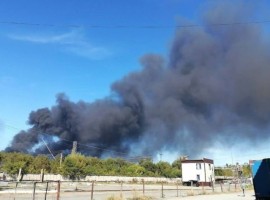
Unprofitable coal-fired power plants and uncertainty about electricity and natural gas prices and the cost of carbon emission allowances have forced Czech energy firm Sev.en to decide to close three coal plants by March 2027 at the latest.
Sev.en, owned by Czech energy investor and billionaire Pavel Tykac, on Wednesday said it would close its coal-fired power plants at Pocerady, Chvaletice, and Kladno at the earliest possible legal deadline, December 2026, or in March 2027 at the latest.
The closure of the three major coal plants will remove 2.4 gigawatts (GW) of baseload power off the Czech grid in a little over a year.
The Czech Republic has pledged to phase out coal-fired power generation by 2033.
However, the lack of profitability is forcing Sev.en to end operations at its three plants much sooner.
Currently, the economics are very unfavorable for the power generators using domestic brown coal, Sev.en said in a statement. The expected near-term prices of electricity and the cost of emission allowances threaten permanent losses at the coal-fired power plans.
In addition, there are uncertainties about the cost of emission allowances, the price of natural gas, and the pace at which renewables will switch on to the power system in the country, Sev.en said.
“All of these facts have forced us to terminate the operation of our coal-fired power plants – Po?erady Power Plant, Chvaletice Power Plant, and Kladno Heating Plant at the earliest possible legal deadline, i.e. in December 2026, at the latest in March 2027,” the company noted.
Last year, coal and coal products held the largest share, 25.3%, of Czechia’s energy supply, followed closely by oil and oil products with a 25.1% share, according to estimates by the International Energy Agency (IEA).
Nuclear power accounted for 20.6% of the total energy supply, and natural gas held a 15.2% share.
By Charles Kennedy for Oilprice.com
More Top Reads From Oilprice.com
- Iran Oil Stockpile Surges to Two-Year High on China Demand Slowdown
- Indian Banks Eye Return to Russian Oil Trade
- Sanctions Snarl Lukoil—Baghdad Pays Up to Protect 480,000 bpd of Oil Production