Wednesday, 21 May 2025
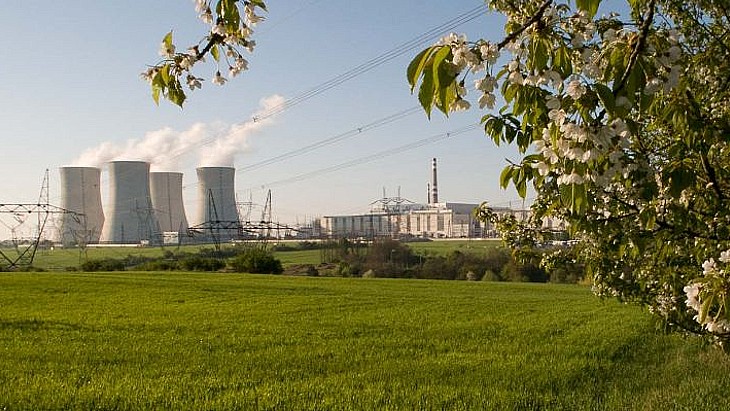
The Czech Republic is planning new nuclear capacity and in July last year announced Korea Hydro & Nuclear Power (KHNP) was the preferred bidder, ahead of France’s EDF. EDF brought a case to the Czech competition authority challenging the tender process, which was dismissed last month. That cleared the way for the planned signing of the official contracts with KHNP on 7 May. However EDF succeeded in securing a last-minute court injunction in a Czech regional court on 6 May to stop the contract being signed until its case relating to the tender process has been heard in court.
On Monday the project development company Elektrárna Dukovany II appealed to the Czech Supreme Administrative Court to get the injunction lifted, with KHNP also filing an appeal on Tuesday. A court spokeswoman said on Wednesday: “At this moment, basic procedural steps are being carried out. The case file will be requested without delay and the cassation appeals will be sent to the parties to the dispute for their comments. The judges are already familiarising themselves with the case. The case is prioritised in the relevant chamber and, given its nature and importance, will be heard as a priority.”
In addition to the court cases, it also emerged last week that Séjourné, European Commissioner for Industrial Strategy, had written on 2 May to ask for the contract signature to be postponed because the European Commission had already started a preliminary review “to assess whether potential foreign financial contributions received by the Party (KHNP) constitute foreign subsidies and, if so, whether those foreign subsidies distort the internal market with respect to the project”. The Czech Ministry of Industry and Trade dismissed the request, calling it a “courtesy letter” that was not legally binding.
On Tuesday Vlček held virtual talks with Ferracci, saying afterwards: “During today’s meeting with French Energy Minister Ferracci, we discussed the progress of the unsuccessful bidder EDF, where I expressed my concerns about the violation of the national interests of the Czech Republic. At the same time, I emphasised that energy security should come first, and that the implementation of the largest project in the history of the Czech Republic is in the interest of the entire European Union.”
He added: “The tender was completely transparent, it was carried out according to rules based on the methodology of the International Atomic Energy Agency and agreed to by all bidders, and the offers were evaluated by hundreds of experts.”
After his second meeting, with Séjourné, Vlček said: “Our discussions were constructive. We agreed that we must act quickly and that political discussions will always be preceded by expert discussions. The Ministry of Industry and Trade will continue to provide the European Commission with maximum cooperation so that the project continues and all issues are clarified.”
He said there was an agreement to start consultations under the leadership of the Director General of the European Commission’s Directorate-General for Internal Market, Industry, Entrepreneurship and SMEs, involving his ministry and the Czech competition office with the aim being to “clarify all legal and technical issues related to the EPC contract”.
At the time of the selection of KHNP in July 2024, Prime Minister Petr Fiala said the aim was to reach the signing of contracts for the initial unit by the end of March 2025, with the target for test operation of the first new unit being 2036 and commercial operation in 2038. He said the winning tender “based on the evaluation of experts, offered better conditions in most of the evaluated criteria, including the price”. The KHNP bid was for a cost of around CZK200 billion (USD8.6 billion) per unit, if two units were contracted.
It was announced at the end of April that the Czech state – which already owns 70% of CEZ – was going to purchase 80% of shares in the Elektrárna Dukovany II project, with CEZ retaining a 20% stake. The 80% stake was valued at CZK3.6 billion (USD163 million).
The Czech Republic currently gets about one-third of its electricity from the four VVER-440 units at Dukovany, which began operating between 1985 and 1987, and the two VVER-1000 units in operation at Temelín, which came into operation in 2000 and 2002.