Humanitarian charity Direct Relief has updated on its investments in a wide range of health interventions, from repairing oxygen plants to supplying oxygen concentrators and distributing pulse oximeters. Since the start of the pandemic five years ago more than $25m has been spent.
In the latest update, the organisation has completed medical oxygen projects in Libya and Colombia.
When Cyclone Daniel caused catastrophic flooding in the coastal Libyan city of Derna in 2023, Al-Wahda Hospital’s ICU was overwhelmed. Without a centralised oxygen distribution system, the hospital was forced to use oxygen cylinders.
The cylinders, though portable, are heavy and bulky, making them extremely difficult to transport during emergencies like the Derna flood. That delay posed a major risk to patients at Al-Wahda Hospital.
“In most cases, they struggled with having those oxygen cylinders on time,” said Mohammed Eshkal, Head of External Relations at Shaikh Tahir Azzawi Charity Organisation, or Staco, a Libyan nonprofit focused on health, education, and disaster relief.
With grant funding from Direct Relief, Staco oversaw the installation of an oxygen distribution network at Al-Wahda Hospital that pumps oxygen to patients at their bedsides through a piped system, removing the need for cylinders.
The new infrastructure has already significantly improved patient health outcomes. According to staff, approximately 200 people per month directly benefit from the new oxygen delivery system, especially those with critical and ongoing oxygen needs.
Direct Relief provided Staco with $78,000 in grant funding for the project. The funds also covered training for hospital personnel to ensure they can operate and maintain the oxygen system for the long term.
Colombia, like Libya, faces significant shortfalls in medical oxygen access. Three hospitals in rural Colombia now have access to reliable, high-quality medical oxygen thanks to a collaboration between a Colombian nonprofit, government agencies, and Direct Relief.
To fund the construction of these three projects, Direct Relief supplied a $650,000 grant to its longtime partner Banco de Medicamentos, a Colombian aid group that stores and distributes medications across the country. The organisation has been responding to the Venezuelan migrant crisis in the country for years.
With input from the Colombian health ministry and the Pan American Health Organization, or PAHO, Banco de Medicamentos overhauled medical oxygen systems at three hospitals across the country. Previously, the hospitals’ oxygen systems could not meet their patients’ needs due to deterioration and design issues.
Juan Pablo Reyes, Banco de Medicamentos’ Head of Legal and Regulatory Affairs, said it is a widespread problem in the country.
“This is sad to say, but choosing public hospitals in need of help or improvements in Colombia is not a difficult job,” said Reyes. “Most of them lack the most basic facilities and equipment. This is a dramatic situation here.”
The three hospitals are in the rural municipalities of Cereté, San Marcos, and Cumbal. Before this project, their medical oxygen systems were functional but insufficient, with several safety risks, design flaws, and missing parts.
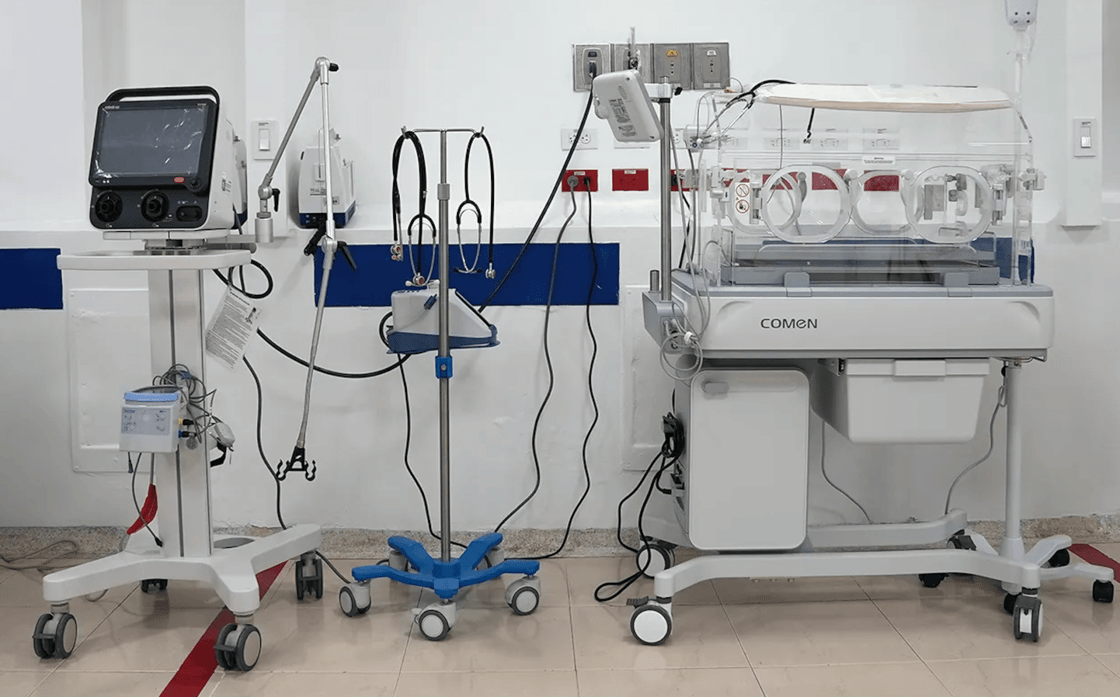
In addition to creating safer and more reliable oxygen systems, the upgrades also allowed the hospitals to expand care. The increased capacity enabled Hospital San Diego in Cereté to add six neonatal beds, allowing them to treat infants who need intensive care. The new beds are expected to save many infants’ lives.