The U.S. Department of Energy is launching a $1.9 billion funding effort aimed at rapidly expanding the capacity of the nation’s power grid by upgrading existing transmission lines.
This is instead of building entirely new ones.
The initiative, called Speed to Power through Accelerated Reconductoring and other Key Advanced Transmission Technology Upgrades—mercifully shortened to SPARK—will fund projects that replace existing transmission wires with higher-capacity conductors and deploy advanced grid technologies designed to squeeze more electricity through existing infrastructure.
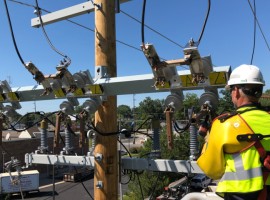
Building entirely new transmission lines can take a decade or more once permitting fights and land disputes enter the picture. Reconductoring takes a simpler route: replacing the wires already strung across existing towers with higher-capacity conductors that can carry more power.
The Department of Energy said the funding will help utilities meet rapidly rising electricity demand while improving reliability and lowering costs for consumers.
Secretary of Energy Chris Wright said the program is part of a broader effort to modernize the grid under President Donald Trump’s executive order in hopes of expanding American energy production.
Electricity demand in the United States is accelerating again after years of stagnation, driven by data centers, electrification, and new industrial loads. Power systems are also being pushed harder by extreme weather events and the shifting mix of generation resources.
Assistant Secretary for Electricity Katie Jereza said the program is intended to increase grid capacity while improving day-to-day reliability.
The SPARK funding builds on the DOE’s existing Grid Resilience and Innovation Partnerships program, which authorized up to $10.5 billion over five years to strengthen transmission infrastructure and deploy advanced grid technologies.
Unlike traditional transmission projects, the new funding specifically emphasizes rapid deployment technologies—particularly reconductoring—that can increase transfer capacity using existing infrastructure corridors.
Concept papers for SPARK funding are due April 1, with full project applications due May 19. The Department of Energy expects to announce selected projects during the summer of 2026.
The urgency behind programs like SPARK reflects a reality the power sector has been warning about for years: the U.S. grid is already operating close to its limits in many regions. When demand spikes during extreme heat or cold, operators routinely lean on every available megawatt to keep the system balanced. Expanding transmission capacity—even by upgrading the wires already hanging on existing towers—may not be the flashiest solution. But as electricity demand climbs and the system grows more complex, squeezing more power through the infrastructure we already have could become one of the fastest ways to keep the lights on.
By Julianne Geiger for Oilprice.com
More Top Reads From Oilprice.com
- Why $100 Oil Isn’t Going to Spark a New Shale Boom
- The Chokepoint Economy: What Happens When Everything Breaks at Once
- Fujairah Oil Terminals Resume Operations After Drone Attack