In 2025, the European Bank for Reconstruction and Development (EBRD) invested nearly US$2 billion (€1.72 billion) through 120 projects across Central Asia and Mongolia, representing one of the strongest operational years in the region in over a decade. Uzbekistan was the largest recipient of funding for the sixth consecutive year, receiving over US$1 billion (€880 million). Kazakhstan followed with almost US$440 million (€378 million), Mongolia received US$218 million (€188 million), the Kyrgyz Republic US$212 million (€183 million), and Tajikistan US$100 million (€88 million).
Nearly one third of the Bank’s investments were allocated to sustainable infrastructure, another third supported local banks for on-lending to small and medium-sized enterprises (SMEs), women and young entrepreneurs, as well as for climate resilience and resource efficiency initiatives. Around 15 per cent of loans were directed to private companies in manufacturing and services, often stimulating foreign direct investment. Overall, 68 per cent of projects supported private entrepreneurial initiatives, while 53 per cent focused on promoting green economy projects.
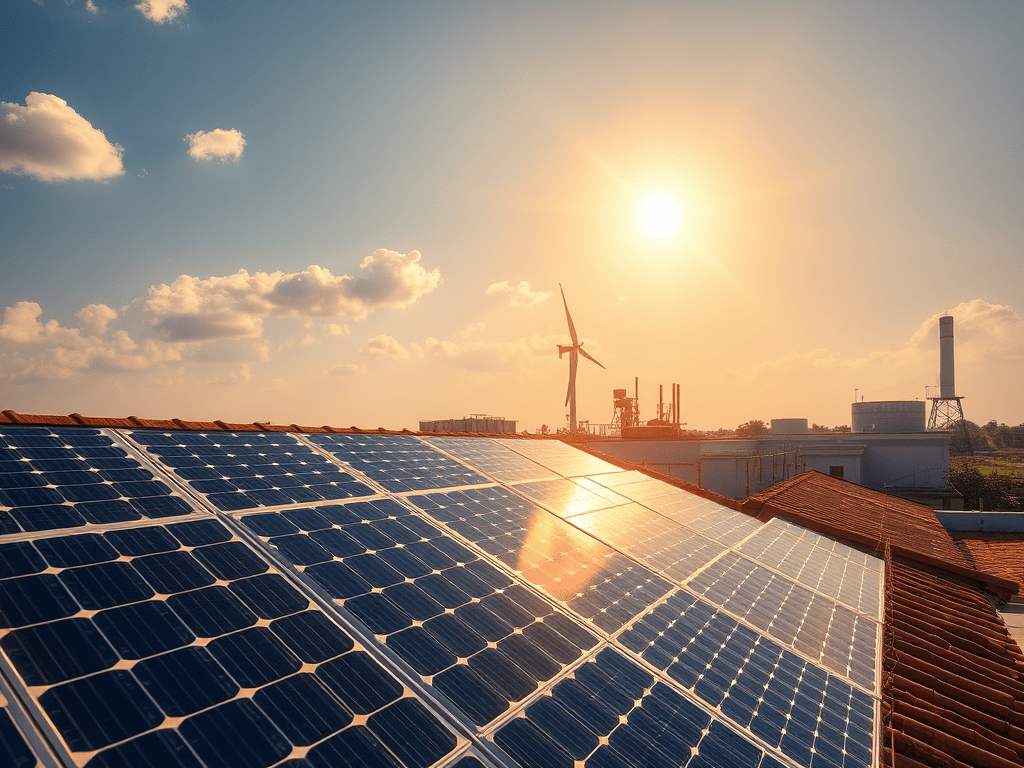
In renewable energy, the EBRD supported major projects in Uzbekistan and Tajikistan. In Uzbekistan, a US$142 million (€121 million) financing package will fund the development of Central Asia’s largest combined solar photovoltaic plant, with a capacity of 1 GW, and a battery energy storage system of 1,336 MWh, implemented in partnership with ACWA Power. The project also marks the first investment by Japanese partners in Uzbekistan’s renewable energy and battery storage sector.
Another Uzbek project involves up to US$195.5 million (€168.5 million) for a 300 MW greenfield solar plant and a 75 MWh battery energy storage facility in the Kashkadarya region, owned and developed by Masdar, a global clean energy company. In Tajikistan, the Qairokkum hydropower plant completed commissioning of all six units, increasing its capacity from 126 MW to 174 MW and providing reliable electricity to 500,000 people in the Sughd province.
The Bank also advanced sustainable infrastructure across the region. In Uzbekistan, a sovereign loan of up to US$250 million (€240 million) will modernize 110 irrigation pumping stations in ten regions, reducing electricity consumption by 251,000 MWh annually and cutting CO₂-equivalent emissions by more than 117,000 tonnes. In Kazakhstan, a financing package of up to €45 million from the EBRD and the European Union will expand cargo handling capacity at the port of Aktau, a key element of the Transcaspian Corridor.
In Tajikistan, the EBRD provided a sovereign loan of up to €38 million, alongside a US$86.7 million (€83.5 million) grant from the Asian Development Bank, to upgrade and expand the Dangara–Guliston road, an essential link connecting the north and south of the Khatlon region, which generates over half of the country’s agricultural output. In the Kyrgyz Republic, a €62 million sovereign loan will fund a 53 km, 500 kV transmission line between Kemin and Balykchy and a new substation in Balykchy. Additional financing from the EBRD and EU, amounting to €23.8 million, supported reconstruction and automation of the Western Great Chui Canal, the country’s largest irrigation system, while €38 million facilitated upgrades to critical water infrastructure in the Jalalabad and Naryn regions.
Urban sustainability projects also progressed under the EBRD Green Cities programme. The city of Osh in the Kyrgyz Republic joined the initiative, with plans to improve water treatment facilities and adopt greener public transport, supported by a €14.7 million loan and an €8.3 million grant. In Mongolia, the Bank provided up to US$34.9 million (€33.5 million) to build a specialized cardiovascular hospital in Ulaanbaatar under its Green Cities Action Plan.
In the financial sector, the EBRD directed a significant portion of its investments to the real economy through partner financial institutions. In Mongolia, nearly 74 per cent of funding was channelled through banks, including an A/B loan of up to US$147 million (€135 million) to XacBank under the Youth in Business programme, the Bank’s largest transaction with a Mongolian bank to date. A US$20 million (€16.8 million) loan to Khan Bank established the EBRD’s first agribusiness-dedicated facility in Mongolia and Central Asia, while a US$20 million (€17.2 million) package to Golomt Bank supported women- and youth-led enterprises and facilitated trade.
In Uzbekistan, transactions with partner banks such as Hamkorbank, Ipak Yuli Bank, and Universalbank accounted for almost 39 per cent of the Bank’s activity, providing US$125 million (€108 million) to support SMEs and green investments. In Kazakhstan, three loans totaling US$60 million (€57.6 million) were provided to Bank CenterCredit to support SMEs led or owned by women and young entrepreneurs. KMF Bank received US$25 million (€22.9 million) for women entrepreneurs, and Arnur Credit received US$7 million (€6 million) under the Youth in Business programme.
Overall, in 2025, the EBRD supported more than 4,600 SMEs in Central Asia and Mongolia through advice, training, mentoring, and other development services. Three regional companies, Kazakhstan’s Jana Post and LST Agro, and Tajikistan’s Oilai Barakat joined the EBRD Blue Ribbon programme for fast-growing and high-potential SMEs. The Bank also launched its first regional Star Venture programme, uniting high-potential startups from Kazakhstan, the Kyrgyz Republic, Tajikistan, and Uzbekistan to strengthen regional connectivity, accelerate innovation, and support growth beyond the region.
Additionally, the EBRD signed 31 risk-sharing agreements with 26 companies, committing to share half the loan risk to unlock development opportunities for domestic businesses. The Bank also marked the 10th anniversary of its Women in Business programme, which over the past decade has provided more than 100,000 women entrepreneurs with financial support totaling around US$365 million (€305 million) and offered advice, training, and mentoring to more than 17,000 women. The EBRD is the largest institutional investor in Central Asia, having financed 1,250 projects for more than €21 billion to date, supporting sustainable development, private sector growth, and green investments across the region.
Subscribe to get the latest posts sent to your email.