By
58 min ago 2 min read
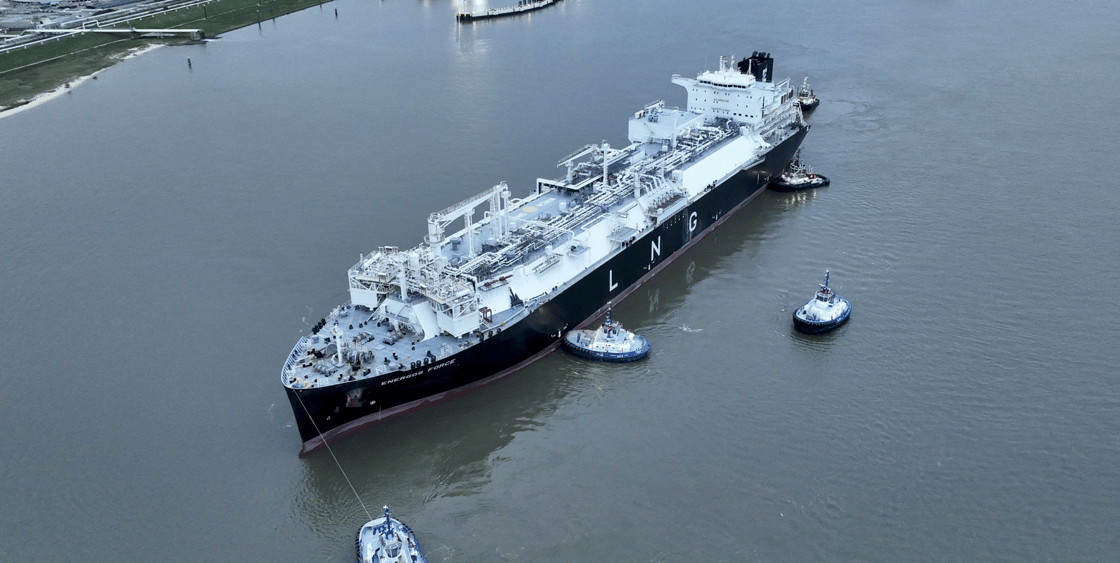
Energos Force has arrived in Stade, Germany, marking a major milestone in the development of new LNG import infrastructure for the German market.
The Energos-owned floating storage and regasification unit (FSRU) docked at the Stade-Bützfleth industrial port this week, where it will support Deutsche Energy Terminal as preparations continue towards commissioning. Its total LNG storage capacity is 174,000 cubic metres.
The arrival puts the FSRU in position to perform its critical role in the LNG value chain — receiving LNG cargoes, regasifying gas and enabling it to be fed into Germany’s gas grid.
The import terminal is set to . Once operational, the Stade facility is expected to have the capacity to feed up to 3.2 bcm of natural gas into the German grid in 2027.
The project brings together Energos Force, the dedicated marine infrastructure and the wider terminal facilities required to establish a new LNG import route for Germany. Niedersachsen Ports constructed the dedicated jetty for the FSRU.
European underground natural gas storage facilities are currently at approximately 68% capacity as of mid-September, marking a historically low level heading into the winter heating season.
Germany faces particularly tight margins, with national storage tracking closer to 56% to 69% full, raising concerns over winter supply security and potential price spikes.
Ongoing geopolitical tensions and shipping disruptions (such as those affecting the Strait of Hormuz and halting Qatari exports) have tightened global LNG availability, intensifying direct bidding competition between Europe and Asian buyers.
New Wood Mackenzie research has found without new field investment, the EU will import over 98% of its gas by 2050.
“The gap between doing nothing and maximising domestic production potential is roughly three years of current EU gas demand,” it states.
“The policy and investment decisions made in the next five years will determine which side of that gap the bloc lands on.”